Daniel O'Connell Quotes
Repeal and Repeal alone is and must be the grand basis for all future operations, hit or miss, win or lose. The people will take nothing short of that …. I say there can be no other basis for association [of Ireland with Britain] save the Repeal, the glorious Repeal
Daniel O'Connell, 1775-1847, Irish Nationalist Leader & Lord Mayor of Dublin, Irish Member of the British Parliament, Call for the Repeal of the Act of Union and the Restoration of the Irish Parliament, 1841
Sourced by: Eigen's Political and Historical Quotations


A delegation from Sinn Fein, headed by Arthur Griffith and Michael Collins, had negotiated a treaty of Irish Independence except that it did not cover Northern Ireland where the majority of the people wanted to stay a part of Britain. For 700 years, the Irish had fought for independence, and finally they got it for the vast majority of Ireland and the overwhelming majority of the Catholics of Ireland. The alternative to agreeing to the treaty was to continue the war between the IRA and the British Troops. At the time, the IRA was just about totally beaten and probably could not hold out another month. De Valera, a very shrewd politician, as the leader of Sinn Fein (and the IRA) would normally have headed the Irish Delegation. But he chose not to because he realized that they would never get independence for all 32 counties of Ireland as the British would not leave the Northern Ireland Protestants to their fates against their will. The best Ireland could get was Independence for all of Catholic majority Ireland. And he knew that public opinion would oppose giving up even one county becuse that was what the leaders had told the people for years. So De Valera let his two associates take the popular blame after he denounced the treaty with his famous quotation {639690}. Shortly after that, Michael Collins, the brilliant military Commander of the IRA who signed the treaty was assassinated. To many, it was as if De Valera had pulled the trigger. The treaty was ratified by a 7 vote margin by the Dail as there was no army left to fight, and the angry Irish electorate voted for De Valera as Ireland’s first President. The politician had won; the patriot had died.


He was executed by the English for his part in the Easter Uprising. Given to his daughter Nora Connolly on eve of his execution by the British.


The Catholic majority was politically dominated by the Protestant minority in Ireland and the English Parliament generally sided with and supported the Protestants. O’Connell was open to Ireland being a part of the British Empire if it was the majority Catholic Ireland that was a part of the Empire.


Executed by the English for his part in the Easter Uprising.

He was elected to Parliament while in jail and never took his seat as he died as the result of a hunger strike in jail.

The “Defenders” were the Catholic terrorists who along with their Protestant Orange Order counterpart were in sporadic acts of violence and terrorism with no military objective. The French Army was not to sail for Ireland where they would link up with The Defenders and take Ireland from the English. The invasion failed when terrible weather forced the French troop ships carrying more than 45,000 invading soldiers to cut their anchor cables and return to France.


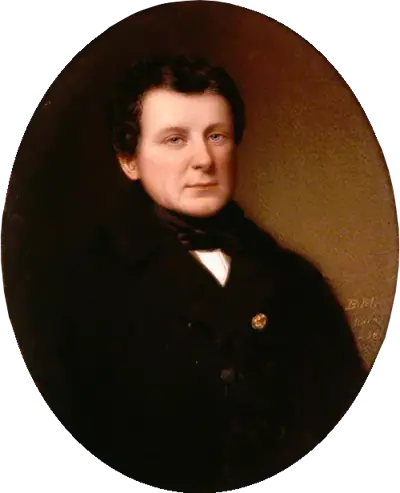
Daniel O'Connell, hailed in his time as The Liberator, was the acknowledged political leader of Ireland's Roman Catholic majority in the first half of the 19th century. His mobilisation of Catholic Ireland through to the poorest class of tenant farmer helped secure Catholic emancipation in 1829 and allowed him to take a seat in the United Kingdom Parliament to which he had twice been elected. At Westminster O'Connell championed liberal and reform causes (he was renowned internationally as an abolitionist) but failed in his declared objective for Ireland: the restoration of a separate Irish Parliament through repeal of the 1800 Acts of Union. Against the background of a growing agrarian crisis and, in his final years, of the Great Irish Famine, O'Connell contended with dissension at home. Criticism of his political compromises and system of patronage led to a split in the national movement he had singularly led.
