D'Arcy McGee Quotes
We Irishman, Protestant and Catholic, born and bred in a land of religious controversy should never forget that we now live and act in a land of the fullest religious and civil liberties.
D'Arcy McGee, 1825-1868, Irish National and member of Canadian Parliament (Liberal), 1862
Sourced by: Eigen's Political and Historical Quotations


Not all the relations between Irish Catholic and Protestants were hostile. There was a commonality in their Irish nationality and many protestants—especially the educated and more sophisticated—were opposed to the restrictions imposed by England on the rights of the Roman Catholic to practice their religion. See {639274} for another example.


It took only 10 days after the First Continental Congress met for religious bigotry to arise. After hundreds of years of Catholic/Protestant strife, each sect looked upon the other, not only as theologically wrong, but dangerous to the liberty of the other. Unfortunately, the organied religions had acted so badly towards other religions, that everyone was justified in fearing the other religions. This quotation illustrates a then typical attitude of many American Protestants that the Catholic Church was a threat to national security. Ironically, in modern times, anti-Catholic bigots use this quotation to demonstrate that the United States was founded as a Christian Protestant nation—not a general Christian nation. A small, vicious anti-Catholic sentiment still exists, usually by a minority of right wing Protestant religious fundamentalists. Protestant England had just repealed the laws making Catholicism illegal, but this was regarded at that time as intolerable for the new America. This was one of the disputes which that the Founding Fathers were faced with later and one of the reasons that they were so absolute in the need for the 1st Amendment.


New Lanark was a Utopian commune organized by Owen.

Quintus Septimius Florens Tertullianus. This quote is historically very important as it is one of the first expressions of religious tolerance. Tragically, this principle was ignored by most Christians for over a millennium. Some Christians still ignore it. See {626754} for a modern example.

This is a particularly interesting historical quotation because it succinctly gives a history of the various horrors of religious strife in British history—a history that was very well known to the American Founding Fathers and the general American Colonial population. This history was the major driver behind the public insistence for the Bill of Rights and the 1st Amendment which erected a wall of separation between church and state with government never favoring or abetting any particular religion.


Islam was not very strong at this point and the followers of Muhammad were relatively few and the Medina area contained Arab Non-Believers, Jews as well as the new Muslims. Muhammad drew up this document and got the non Muslims to agree to it. Not only were Jews able to practice their religion freely (as were the non-Muslim Arabs) but there was not tax on the non Muslims that was imposed later when the Muslims were much stronger relative to others. Also, which surprises many Jews and Muslims alike, the Community – the Ulma – the People included the Jews and Arab Non Believers. Today it is only the Muslims.
While the violence between the two religious groups had been eliminated by the peace negotiations, the two religious groups were as socially and physically disparate as they had always been.


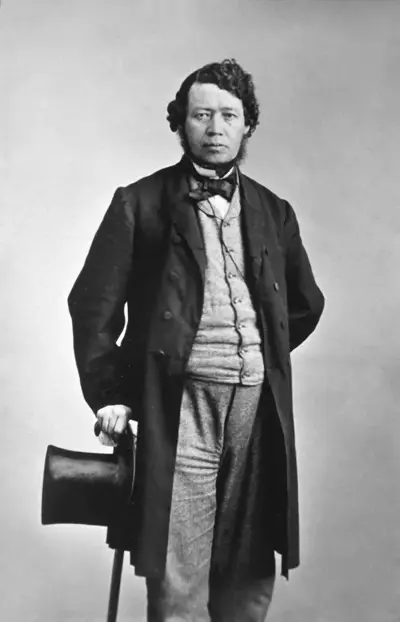
Thomas D'Arcy Etienne Grace Hughes McGee was an Irish-Canadian politician, Catholic spokesman, journalist, poet, and a Father of Canadian Confederation. The young McGee was a Catholic Irishman who opposed British rule of Ireland, and worked for a peasant revolution to overthrow British rule and secure Irish independence. He escaped arrest and fled to the United States in 1848, where he reversed his political beliefs. He became disgusted with American republicanism and democracy, and became intensely conservative in his politics and in his religious support for the Pope. He moved to Canada in 1857 and worked hard to convince the Irish Catholics to cooperate with the Protestant British (members of the church) in forming a Confederation that would make for a strong Canada in close alliance with Britain. His passion for Confederation garnered him the title: 'Canada's first nationalist'. He fought the Fenians in Canada, who were Irish Catholics that opposed the British and resembled his younger self politically. McGee succeeded in helping create the Canadian Confederation in 1867, but was thought to have been assassinated by Patrick J. Whelan in 1868.
