Muhammad Ali Jinnah Quotes
I once more want to impress upon all Muslims that they should fully co-operate with the Government and the officials in protecting their Hindu neighbor.
Anti Hindu prejudice has been a problem for Pakistan from the beginning of its founding.
Muhammad Ali Jinnah, 1876-1948, Founder of Pakistan and First Governor General, Message, January 9, 1948
Sourced by: Eigen's Political and Historical Quotations

This sura illustrates why peace treaties between Islamic and non Islamic countries are difficult to negotiate and enforce. For some fundamentalist Muslims, even making a peace treaty with Israel would constitute a transgression of the word of God. Nonetheless, the first treaty that the United States ever made was with a Muslim nation—Tripoli.

The Koran is even more discriminatory regarding Jewish & Christian clerics: {584380}.


This was a document prepared by the Caliph and presented to Christians in Syria to sign if they wanted peace and to be free from assault in Islamic lands. For centuries thereafter these, and variations of them, were conditions imposed on Christians and Jews in Islam lands. Some of these can be recognized as variants of conditions that American and other coalition troops were required to adhere to in Saudi Arabia during the Gulf War. By today’s standards this was highly discriminatory and a gross imposition on a minority. However at the time, this was one of the more liberal doctrines. Jews and Christians otherwise could live in Muslim lands, practice their religion, work there, live where they would, acquire property, practice professions, and even achieve high office. Jews and Christians rose to the highest ranks of Islamic government administrators including Prime Ministries. Their persons were safe from assault and derisions all provided they followed the Pact of Umar or its current version. In contrast Jewish and Muslim minorities in Christian nations were treated much more harshly. They could practice only a few occupation, were constantly under physical attack, were forced to live in ghettos, had their property seized, and in many cases were tortured and killed.
This sura has been in great controversy throughout the Muslim Empires. In part it separates many of the Arab cultures from the Ottomans. The latter had an organized meritocracy whereby Jews, Christians and other “heathens” of exceptional talent were sought out for advisory and leadership positions. In part this was justified as requiring that the Caliph and the Sultans had the power of life and death over their key appointees, hence they had to be slaves and other suras prohibited Muslims holding other Muslims in slavery. Even in modern times some Muslim countries have had key non-Islamic appointees and others would not. In historical practice, the Ottoman Empire utilized far more Christians and Jews that those societies involved Muslims until relatively recent historical times.


Nasr Hamid Abu Zayd, 1943-2010, was an modernistic Egyptian Islamic Scholar and a Professor at the University of Cairo. One of his writings argued that the discriminatory tax that the Koran specified for Christians and Jews in an Islamic nation was not fair or consonant with modern thought regarding freedom of religion and the rights of minorities. Some fundamentalist were outraged and charged him with Apostacy for criticizing a Koranic prescription. He was convicted and lost his professorship. That was the least of his problems. Since he was an apostate, he was not a Muslim the Egyptian Courts ruled, and therefore his wife, a Muslim, could not legally remain married to her. His marriage was legally dissolved and he was threatened with death by fundamentalists forcing him and his wife to go into exile in Holland where he taught at the Utrecht University. He never returned.

Half the population of Amsterdam was at the time non Western in origin including many Muslims. Cohen was one of the few major Dutch leaders who worked to make multiculturalism work. However, there were so many religious Muslim extremists already active in the Netherlands, that it was very difficult. The Dutch had elected a Muslim as a member of Parliament and whole many Muslims were very proud of this, the religious extremists were furious. She was a woman, and she did not believe or advocate that Holland adopt Sharia (Islamic) law. She was an Islamic reformer who was opposed to Sharia even in Muslim states. The most successful Islamic nation, Turkey, does not allow Sharia law, and Indonesia, the largest of the Muslim nations also does not follow it.


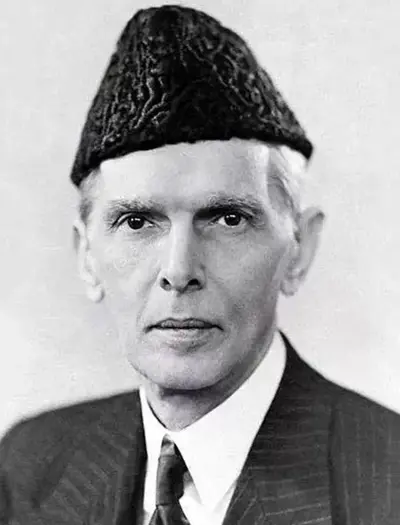
Muhammad Ali Jinnah was a barrister, politician and the founder of Pakistan. Jinnah served as the leader of the All-India Muslim League from 1913 until the inception of Pakistan on 14 August 1947, and then as the Dominion of Pakistan's first Governor-General until his death. He is revered in Pakistan as the Quaid-i-Azam ("Great Leader") and Baba-i-Qaum ("Father of the Nation"). His birthday is observed as a national holiday in Pakistan.
