August Strindberg Quotes
When people drink, they talk, and talk is dangerous!
Strindberg, August. The Red Room. Translated by Ellie Schleussner, G. P. Putnam's Sons, 1913.


Ale has too often been praised by poets
The longer you drink the less sense your mind makes of things
Modern research has shown that the earliest deleterious effect of alcohol is impaired judgment and perception. It is fascinating that in this important set of advice from the chief God Odin, this was the problem that was focussed upon.


In some societies, drunkenness is an extenuating circumstance which diminishes moral and legal guilt. In others it is not. In the United States is sometimes is and sometimes is not. Generally, a drunk person will not be relieved of all guilt but often the charge will be lessened—for example from murder to manslaughter. Aristotle suggested, and in some Islamic countries it is observed that the person who commits a crime while drunk is punished twice—once for the crime and once for being drunk.

Before we had national prohibition, many Southern states and counties outlawed alcohol. “Wets” were those who wanted to allow drinking of alcohol. “Drys” were those who did not. The South was “dry” and voted overwhelmingly for national prohibition, and later voted to keep it even when a majority of the country voted to repeal it. The irony was that the South has always been, and still is, one of the highest alcohol consumption regions and has had much alcoholism. Hence Roger’s humor.

This has always been a problem for the US Military. Attempts at prohibition have been bad for morale, and there is a cultural tradition that military men drink alcohol. However in the Gulf War, our military men and women stationed in Saudi Arabia could not drink as a consequence of the Islamic prohibition of alcohol in Saudi Arabia. There has never been, in the history of our military a period with fewer courts martials, and discipline problems in general. Very few assaults, rapes and murders.

This is one of the earliest observations of the fact that after drinking alcohol, a person is apt to speak without his usual inhibitions and judgment. This has been the downfall of many politicians and is the largest problem of maintaining secrecy and confidentiality.

Samuel Langhorne Clemens, 1835-1910. The Congressmen who voted for Prohibition in the next century had not read or believed this quotation of Twain’s.


This is a wonderful historical quotation which illustrates the effect of Prohibition on Norway—most of which was negative. Despite the fact that this article had been published in a leading American journal, virtually no one paid attention to it when Prohibition was being debated and instituted in America a few years later. Another aspect of the quotation is the economic effect. It illustrates how easy it is to start a trade war that was completely unintended. Also how a country, in this case Portugal and Spain, will make foreign policy decisions of which their poorer people bear the brunt.
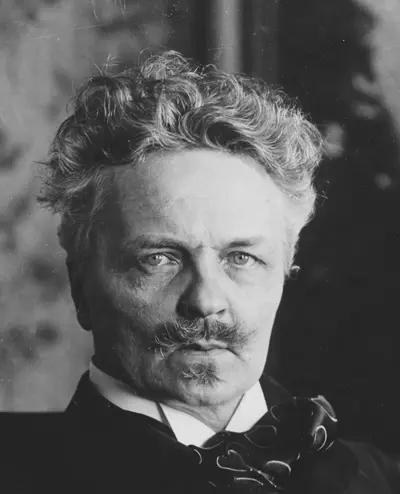
Johan August Strindberg (/ˈstrɪn(d)bɜːrɡ/, Swedish: [ˈǒːɡɵst ˈstrɪ̂nːdbærj] (listen); 22 January 1849 – 14 May 1912) was a Swedish playwright, novelist, poet, essayist and painter. A prolific writer who often drew directly on his personal experience, Strindberg's career spanned four decades, during which time he wrote more than sixty plays and more than thirty works of fiction, autobiography, history, cultural analysis, and politics. A bold experimenter and iconoclast throughout, he explored a wide range of dramatic methods and purposes, from naturalistic tragedy, monodrama, and history plays, to his anticipations of expressionist and surrealist dramatic techniques. From his earliest work, Strindberg developed innovative forms of dramatic action, language, and visual composition. He is considered the "father" of modern Swedish literature and his The Red Room (1879) has frequently been described as the first modern Swedish novel.
