Jean-Jacques Burlamaqui Quotes
With regard to what is done in drunkenness, this state, voluntarily contracted, does not hinder the imputation of a bad action.
In some societies, drunkenness is an extenuating circumstance which diminishes moral and legal guilt. In others it is not. In the United States is sometimes is and sometimes is not. Generally, a drunk person will not be relieved of all guilt but often the charge will be lessened—for example from murder to manslaughter. Aristotle suggested, and in some Islamic countries it is observed that the person who commits a crime while drunk is punished twice—once for the crime and once for being drunk.
Jean-Jacques Burlamaqui, 1694–1750, Swiss Counsel of State & Political Philosopher, The Principles of Natural Law, Chapter XI, 1748
Sourced by: Eigen's Political and Historical Quotations


Ale has too often been praised by poets
The longer you drink the less sense your mind makes of things
Modern research has shown that the earliest deleterious effect of alcohol is impaired judgment and perception. It is fascinating that in this important set of advice from the chief God Odin, this was the problem that was focussed upon.


Nathaniel Gordon was the first American slave trader to be executed after the slave trade was made illegal. The Erie was his slave ship where, as was typical, many of the captured Blacks, died as a result of the inhuman conditions. Although Gordon was the first person executed in America, the act making the slave trade an act of piracy dated from 1820. See {68753} .

This has always been a problem for the US Military. Attempts at prohibition have been bad for morale, and there is a cultural tradition that military men drink alcohol. However in the Gulf War, our military men and women stationed in Saudi Arabia could not drink as a consequence of the Islamic prohibition of alcohol in Saudi Arabia. There has never been, in the history of our military a period with fewer courts martials, and discipline problems in general. Very few assaults, rapes and murders.

This is one of the earliest observations of the fact that after drinking alcohol, a person is apt to speak without his usual inhibitions and judgment. This has been the downfall of many politicians and is the largest problem of maintaining secrecy and confidentiality.


Rush ran the hospitals for the Revolutionary Army and talked to many officers and enlisted men, and also observed much of the British military practices.

U-Tube (Google) was faced with a very difficult decision when a Coptic Christian Islamaphobe produced and posted “Innocence of Muslims” a hateful video intended to inflame and insult Muslims. Despite the terrible content, U-Tube determined that the film did not violate their free speech standards and would not be censored. However, there were violent riots and demonstrations in reaction in a number of Muslim nations. People were being killed. So U-Tube decided to block the video in Egypt, Libya, Indonesia, and India (not a majority Muslim nation but had over 200 million Muslims). Galperin and others however made this important moral point. In essence to avoid unreasonable, and immoral violence, we censor materials and allow the perpetrators of violence to also force Americans to abandon the value of freedom of speech and freedom to read. There is a RIGHT to insult someone or their religion or their God. There is a right for all to, if they wish, view a video regardless of how hateful it is. There is NO moral responsibility for violence for ever publishing ANYTHING. The insulted person who resorts to violence is morally responsible and NO ONE ELSE. However some argue that, from a more fundamentalist point of view, the Muslim Holy Book REQUIRES blasphemers to be put to death. But, and often forgotten, the Jewish and Christian Old Testament requires the SAME death penalty for Blasphemy. So modernists insist that to follow holy books literally can often be immoral, and proper morality requires the ignoring of the “word of God”. It is a difficult question and while one can argue for or against the U-Tube Google decision, but taking either side of this question is reasonable and we all do the best we can with a ethically terribly difficult problem.

He was one of the national leaders who adopted the policy of extermination of the Armenians.


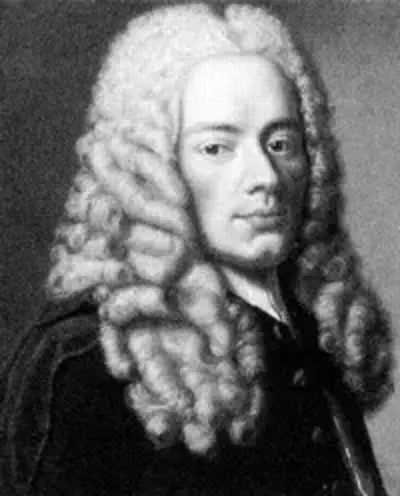
Jean-Jacques Burlamaqui was a Genevan legal and political theorist who popularised a number of ideas propounded by other thinkers.
