Robert H. Michel Quotes
When legislation is rewritten in secret and passed without members even present, let alone voting ... something is wrong.
Robert H. Michel, U. S. Congressman (Republican, IL), New York Times, June 18, 1989
Sourced by: Eigen's Political and Historical Quotations


In the beginning of the 21st century some lobbyists were so powerful that they were actually in Congressional committee markups and other closed meetings and writing or helping to write actual legislation. In prior years lobbyists would send notes or make suggestions as to wording, but were not part of the group of Congressmen actually doing the drafting. The Republican majority took this practice so far that they had lobbyists in the committee rooms drafting legislation and refused to allow the minority party members in the meeting. So lobbyists got to draft legislation favorable to the organizations that paid them while elected congressmen were not allowed to participate or even observe who was in the room and what they were doing. Lobbying scandals in 2005 and 2006 began to curtail some of these most egregious practices. Democrats, when they were in the majority sometimes surreptitiously would accept written “language” suggested for laws and then would use the “suggestions” in their draft of the legislation. So the effect and the lack of ethics was often the same but the method more subtle. These unethical practices go back even to Daniel Webster who was regularly paid a monthly bribe to care for the interests of the railroads and he introduced legislation sought by the industry and company that was paying him. At least that overt a practice has been outlawed, but so many others remain.


The Senator had introduced an amendment that would prohibit the President from attempting to influence members of Congress. It failed.


This is a very important historical and political quotation. The first clause shows us that earmarks and private bills for the benefit of individuals and their commercial enterprises are not a new form of corruption; they have existed ever since there have been legislatures.
The most important aspect of this quotation is the SECOND clause. Very frequently, this is quoted alone without the context of the first clause. Taken alone, the meaning seems to be that the more corrupt governments pass the most laws, and there is an implication that fewer laws mean less corruption. This interpretation fits perfectly with the conservative ideology of the late 20th and early 21st centuries that believed that the smaller the government, the better; the fewer the laws passed, the better. However with the context of the first clause, we see that what Tacitus was criticizing the legislature that passed many earmarks and bills benefitting special interests. The more of these that were passed, the more corruption he argued. So he did not object to laws per se. He was not opining on the relationship between the number of laws and a corrupt government if the laws are for general benefit and not for special interests. Out of context, it might appear that Tacitus was supporting the small government, conservative philosophy. In context, he is arguing against earmarks and special interest legislation and supports what we call “good government” which has been bipartisan in America with parts of each party agreeing with Tacitus and other parts of each party trying to pass earmarks and special interest legislation.


She and her husband had been flown across the country for a campaign fundraiser by a private businessman in his corporate jet. Republican Speaker of the House Dennis Hastert was also on the flight. Her husband was censured for an ethical violation but Hastert was not.

Hollings who was one of the senior experienced senators was offended by the degree to which the George W. Bush Administration and the Republican leadership had turned to lobbyists to draft legislation and amendments to pending legislation. Lobbyists often have specialized information that members of Congress do not have, so there has been in modern times communications between lobbyists and members of Congress and their staffs. However, during the Bush Presidency the practice reached an extreme where lobbyists would even write the legislative language and give it to the members in whom they had invested by giving them large campaign contributions and many perks. K Street is the fanciest street in Washington DC with some of the most expensive office space. A substantial proportion of the lobbyists have K Street offices, hence the metaphor.
It has become so expensive for a member of Congress to conduct a campaign, for many members, raising money is their number one priority. To make matters worse, more and more members are being challenged in primaries for their own party’s nomination. In 2010, John McCain, the Republican Party presidential standard bearer, and veteran Senator was challenged for his party’s Arizona Senate nomination, He had to spend $20 million on his primary campaign in a small “inexpensive” state. Then he had to spend even more in the General election against his Democratic opponent. Almost everyone agrees that it is a terrible burden for the men and women of Congress, but no one quite knows how to solve the problem and still adhere to the First Amendment.


Norquist was a modern day Party Boss. He controlled a number of large PACS conservative lobbyists. His “issue” at the time was that no one should allow Congress to do anything unless it was agreed that under no circumstances that would there be taxes of any kind passed and no tax loopholes would be closed. He required Republican candidates and members to sign a pledge before he would give them any campaign money. About 90% did. A generally agreed bad law was a tax subsidy for farmers who grew corn for ethanol. Most Americans wanted to repeal it. Norquist sent letters to the Republicans telling them that voting for repeal was ok and he would not see it as violating their pledge. See Norquist’s response {623265} .
Actually, Clinton was historically wrong. There have been several occasions in American history where an unelected party boss was able to control and veto the Congressional actions of members of their own party. However. The earlier occasions were in the 19th century—Norquist was the first of the party bosses to amass that kind of control in modern times.


Roosevelt was responding to proposals that the Governor have the power to remove state and local officials for corrupt acts earlier in their career. With a number of big city political machines nominating and electing officials who had previously been convicted of corruption, there was a movement to give this authority to the Governor. In Boston, Mayor Curley was elected while he was in jail serving time for Corruption as an example. Still for FDR and many others, that was the prerogative of the electorate, and must not be usurped by a governor. In states where corruption was totally rampant, like Texas, the reformers passed laws making convicted criminals ineligible to serve in public office.


Despite having passed the House and a majority of the Senate favoring McCain’s bill, a filibuster was led by a few holdouts from his own party. Patiently, McCain assembled sufficient Senate support to break the filibuster.

The House, under the control of the majority leadership, does not have to be very efficient or reasonable with respect to its own procedures. Leaderships of both parties care little of their caucus members read the legislation or not so long as they vote the party line as instructed by the leadership.

No one had a majority of the Electoral College and the election was thrown into the House of Representatives. Henry Clay was the Speaker of the House, and had a grudge against Jackson. He convinced several of the State congressional delegations to vote for John Quincy Adams, and when Adams was President, he made Clay the Secretary of State, then the most powerful cabinet position. Hence Jackson’s characterization.
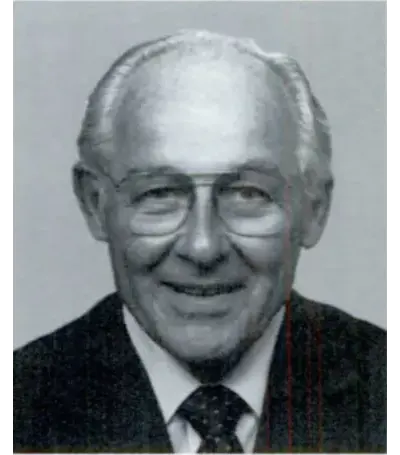
Robert Henry Michel was an American Republican Party politician who was a member of the United States House of Representatives for 38 years. He represented central Illinois' 18th congressional district, and was the GOP leader in Congress, serving as Minority Leader for the last 14 years (1981–1995) of a decades-long era of Democratic Party dominance of the House.
