Louise Slaughter Quotes
If I invite a lobbyist to come in and help write a bill, I have sold out…. It is my responsibility to write legislation…. I have had it up to here with bills that have been written by lobbyists to the benefit of them and the detriment of the people.
In the beginning of the 21st century some lobbyists were so powerful that they were actually in Congressional committee markups and other closed meetings and writing or helping to write actual legislation. In prior years lobbyists would send notes or make suggestions as to wording, but were not part of the group of Congressmen actually doing the drafting. The Republican majority took this practice so far that they had lobbyists in the committee rooms drafting legislation and refused to allow the minority party members in the meeting. So lobbyists got to draft legislation favorable to the organizations that paid them while elected congressmen were not allowed to participate or even observe who was in the room and what they were doing. Lobbying scandals in 2005 and 2006 began to curtail some of these most egregious practices. Democrats, when they were in the majority sometimes surreptitiously would accept written “language” suggested for laws and then would use the “suggestions” in their draft of the legislation. So the effect and the lack of ethics was often the same but the method more subtle. These unethical practices go back even to Daniel Webster who was regularly paid a monthly bribe to care for the interests of the railroads and he introduced legislation sought by the industry and company that was paying him. At least that overt a practice has been outlawed, but so many others remain.
Louise Slaughter, U. S. Congresswoman (Democrat, NY), House Rules Committee Hearing, March 2, 2006
Sourced by: Eigen's Political and Historical Quotations

In 1987 Toshiba Corporation of Japan illegally sold sophisticated technical equipment to the Russians. Congress was considering legislation that would punish Toshiba, but the proposed sanctions were softened:


While New York City and a few other jurisdictions—states and local—have more stringent laws and ethical standards for politicians than does Congress and Federal Officials, but most have lower standards. In some of the jurisdictions judges can try cases and rule in favor of a company or wealthy individual who gave the judge the money to campaign with and get elected.

Mises is one of the very few economic conservatives who opposed companies getting involved with lobbying or politics in any way. He, like some others, saw the negative public effect that business produces when it does get deeply involved in politics, but he uniquely observed that the businesses themselves suffered as a result of the involvement in politics. Obviously very few business leaders of the 21st century agreed with Mises’ earlier views.

Virginia at the time had very lax political ethical laws and regulations for politicians and in that year, both the Republican Governor and the Republican Attorney General had accepted large gifts from businessmen of the state which in other states would have been considered as bribes and be illegal. The rules in Virginia were so lax, that expensive gifts were given to members of politician’s family. In one case that year, a businessman paid for the Governor’s daughter’s expensive wedding. With both houses of the state legislature also in Republican hands, there was no oversight or investigations. It was only though the efforts of the press that the facts emerged. Although in 2013 it was Republicans who were corrupt, the same lax rules had prevailed for years and when the Democrats were in power the Democrats made no effort to tighten the ethics laws and rules. Corruption and denial of its existence characterized Virginia at that time. In 2013, the Republican speaker of the House actually had the temerity to state that since Virginia politicians were so honest, ethical rules and laws were not needed. See {633807}.


Rafael Edward "Ted" Cruz" Rafael Edward ""Ted"" Cruz


The Congressman, who had not been previously an enthusiastic leader for this type of reform, found himself with a chance to become Majority Leader of the House of Representatives. The previous leader was under indictment and was linked, along with other Republican Congressman to a Lobbyist who had pleaded guilty to bribing Congressmen. Another Republican Congressman had plead guilty to the felony of accepting bribes. The party that Controlled Congress was fearful of a voter backlash over the corruption—especially the role of lobbyists in giving money to Congressional campaigns. Bainor became a reform leader.
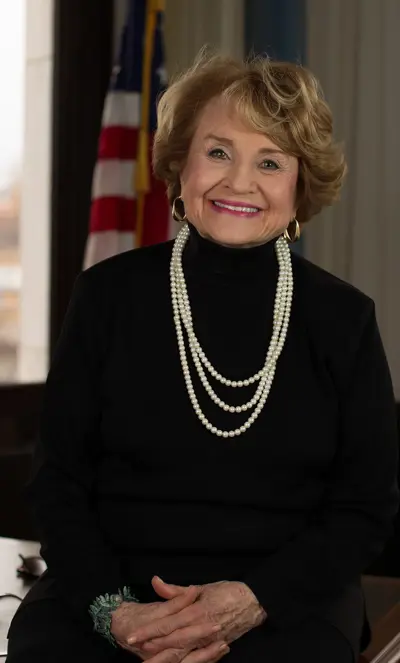
Dorothy Louise Slaughter née McIntosh was an American politician elected to sixteen terms as a United States Representative from New York, serving from 1987 until her death in 2018. She served as the Dean of the New York Congressional Delegation for the last few terms as Congresswoman before her death.
