Karen Tumulty Quotes
So often the seeds of a Congressional ethics scandal are sown by the reforms of the last ethics scandal.
Karen Tumulty, Political Correspondence, Congressional Ethics Enforcement, Woodrow Wilson Center, C-SPAN, January 16, 2007
Sourced by: Eigen's Political and Historical Quotations

The Congressman, who had not been previously an enthusiastic leader for this type of reform, found himself with a chance to become Majority Leader of the House of Representatives. The previous leader was under indictment and was linked, along with other Republican Congressman to a Lobbyist who had pleaded guilty to bribing Congressmen. Another Republican Congressman had plead guilty to the felony of accepting bribes. The party that Controlled Congress was fearful of a voter backlash over the corruption—especially the role of lobbyists in giving money to Congressional campaigns. Bainor became a reform leader.

implicit in the weak ethics rules of the U.S. House of Representatives
The House Majority Leader Tom Delay, with a history of ethics violations, got caught in some very serious ones and convinced the House majority leadership to change the rules of the Ethics Committee to prevent the minority from initiating any investigations or inquiries. The Ethics Committee was the only House committee that has an equal number of majority and minority members and before this change, either side would initiate an inquiry.


Senator McCain, on the current lobbying scandal, in particular, and the state of the government’s relationship with lobbyists in general.

She was the first Black woman to be elected to Congress and was the first Black woman to actively campaign for the Presidency


See {640687}. He was then very worried about the influence of money in politics and was willing to risk his own reelection by limiting his contributions. And he was the Republican presidential candidate so his policy was particularly unusual. A century later money in politics had ballooned to a much larger problem as Taft’s action had little or no effect on the overall relationship between money and politics outside of his campaign.

While New York City and a few other jurisdictions—states and local—have more stringent laws and ethical standards for politicians than does Congress and Federal Officials, but most have lower standards. In some of the jurisdictions judges can try cases and rule in favor of a company or wealthy individual who gave the judge the money to campaign with and get elected.


Between the politicians and the financial industry lobbyists the laws are written so that there is sufficient room for enough self dealing so that members of Congress can get rich using methods that are questionable but have been legislated as legal and the Congressional rules have been written so that they are “not unethical”. Many members of Congress leave the institution much wealthier than when they entered but have received salaries that are insufficient to build that kind of wealth. Many then accept lobbying or other jobs at very high pay representing the people and corporations who have been the subjects of their legislative efforts. Other members do not avail themselves of the “legal” self dealing as the practice is not universal.
Virginia at the time had very lax political ethical laws and regulations for politicians and in that year, both the Republican Governor and the Republican Attorney General had accepted large gifts from businessmen of the state which in other states would have been considered as bribes and be illegal. The rules in Virginia were so lax, that expensive gifts were given to members of politician’s family. In one case that year, a businessman paid for the Governor’s daughter’s expensive wedding. With both houses of the state legislature also in Republican hands, there was no oversight or investigations. It was only though the efforts of the press that the facts emerged. Although in 2013 it was Republicans who were corrupt, the same lax rules had prevailed for years and when the Democrats were in power the Democrats made no effort to tighten the ethics laws and rules. Corruption and denial of its existence characterized Virginia at that time. In 2013, the Republican speaker of the House actually had the temerity to state that since Virginia politicians were so honest, ethical rules and laws were not needed. See {633807}.


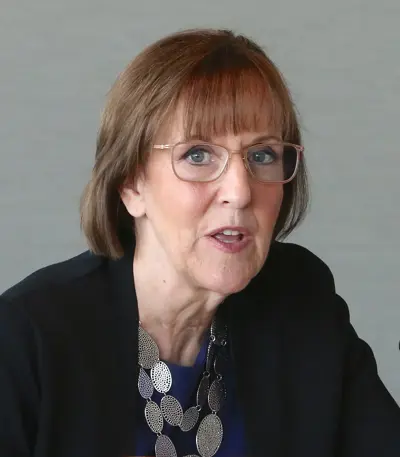
Karen Tumulty is a political columnist for The Washington Post. Before joining the Post, Tumulty wrote for Time from October 1994 to April 2010. She was a Congressional Correspondent, as well as the National Political Correspondent based in Washington D.C. for the magazine.
