John Adams Quotes
When the legislature is corrupted, the people are undone.
John Adams, 1735-1826, 2nd President of the United States (Federalist, MA), A Defense of the Constitution of Government of the United States of America, January 1787
Sourced by: Eigen's Political and Historical Quotations


Bryan had reached the point where he advocated public financing of campaigns.


Abramoff had bribed over 100 Congressional offices by a combination of campaign donations, paid golf junkets all over the world, free elegant meals at his own fancy Washington Restaurant, free tickets for the Congressmen, their staffs and their major constituents, to Concerts and sporting events including his own Skyboxes, and promises of future employment at very high salaries. Ironically, we was convicted of cheating some of his lobbying clients and did a jail term, but his “bribery” was technically usually legal. In addition to Abramoff, only one Congressman was charged and convicted of corruption, when many if not most had engaged in these corrupt practices. Congress makes the rules with loopholes so that what is bribery and corruption in any other setting is often not against the law if Congress is involved.

This is a very important historical and political quotation. The first clause shows us that earmarks and private bills for the benefit of individuals and their commercial enterprises are not a new form of corruption; they have existed ever since there have been legislatures.
The most important aspect of this quotation is the SECOND clause. Very frequently, this is quoted alone without the context of the first clause. Taken alone, the meaning seems to be that the more corrupt governments pass the most laws, and there is an implication that fewer laws mean less corruption. This interpretation fits perfectly with the conservative ideology of the late 20th and early 21st centuries that believed that the smaller the government, the better; the fewer the laws passed, the better. However with the context of the first clause, we see that what Tacitus was criticizing the legislature that passed many earmarks and bills benefitting special interests. The more of these that were passed, the more corruption he argued. So he did not object to laws per se. He was not opining on the relationship between the number of laws and a corrupt government if the laws are for general benefit and not for special interests. Out of context, it might appear that Tacitus was supporting the small government, conservative philosophy. In context, he is arguing against earmarks and special interest legislation and supports what we call “good government” which has been bipartisan in America with parts of each party agreeing with Tacitus and other parts of each party trying to pass earmarks and special interest legislation.


See {640687}. He was then very worried about the influence of money in politics and was willing to risk his own reelection by limiting his contributions. And he was the Republican presidential candidate so his policy was particularly unusual. A century later money in politics had ballooned to a much larger problem as Taft’s action had little or no effect on the overall relationship between money and politics outside of his campaign.


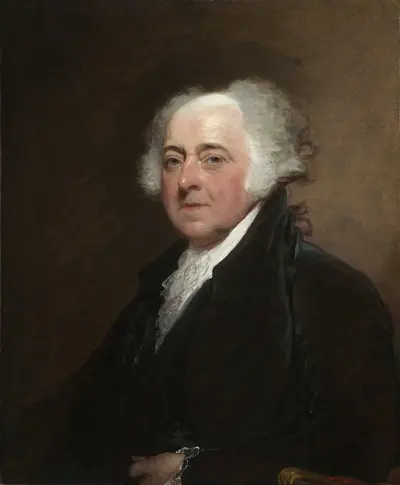
John Adams Jr. was an American statesman, attorney, diplomat, writer, and Founding Father who served as the second president of the United States from 1797 to 1801. Before his presidency, he was a leader of the American Revolution that achieved independence from Great Britain, and he served as the first vice president of the United States. Adams was a dedicated diarist and regularly corresponded with many important figures in early American history, including his wife and adviser Abigail Adams and Thomas Jefferson.
