Tacitus Quotes
Laws were passed, not only for national objectives but for individual cases, and laws were most numerous when the commonwealth was most corrupt.
This is a very important historical and political quotation. The first clause shows us that earmarks and private bills for the benefit of individuals and their commercial enterprises are not a new form of corruption; they have existed ever since there have been legislatures.
The most important aspect of this quotation is the SECOND clause. Very frequently, this is quoted alone without the context of the first clause. Taken alone, the meaning seems to be that the more corrupt governments pass the most laws, and there is an implication that fewer laws mean less corruption. This interpretation fits perfectly with the conservative ideology of the late 20th and early 21st centuries that believed that the smaller the government, the better; the fewer the laws passed, the better. However with the context of the first clause, we see that what Tacitus was criticizing the legislature that passed many earmarks and bills benefitting special interests. The more of these that were passed, the more corruption he argued. So he did not object to laws per se. He was not opining on the relationship between the number of laws and a corrupt government if the laws are for general benefit and not for special interests. Out of context, it might appear that Tacitus was supporting the small government, conservative philosophy. In context, he is arguing against earmarks and special interest legislation and supports what we call “good government” which has been bipartisan in America with parts of each party agreeing with Tacitus and other parts of each party trying to pass earmarks and special interest legislation.
Cornelius Tacitus, c. 55-c. 117, Roman Historian, Annals
Sourced by: Eigen's Political and Historical Quotations


In the beginning of the 21st century some lobbyists were so powerful that they were actually in Congressional committee markups and other closed meetings and writing or helping to write actual legislation. In prior years lobbyists would send notes or make suggestions as to wording, but were not part of the group of Congressmen actually doing the drafting. The Republican majority took this practice so far that they had lobbyists in the committee rooms drafting legislation and refused to allow the minority party members in the meeting. So lobbyists got to draft legislation favorable to the organizations that paid them while elected congressmen were not allowed to participate or even observe who was in the room and what they were doing. Lobbying scandals in 2005 and 2006 began to curtail some of these most egregious practices. Democrats, when they were in the majority sometimes surreptitiously would accept written “language” suggested for laws and then would use the “suggestions” in their draft of the legislation. So the effect and the lack of ethics was often the same but the method more subtle. These unethical practices go back even to Daniel Webster who was regularly paid a monthly bribe to care for the interests of the railroads and he introduced legislation sought by the industry and company that was paying him. At least that overt a practice has been outlawed, but so many others remain.


In the early 1920's the New York City Board of Alderman was totally dominated by Irish-Americans. One advised a non-Irish colleague:


The President had threatened to veto a budget bill if it contained a provision that would increase taxes for the wealthy. There were not enough votes to override the veto. The majority leader urged dropping the provision:
The House Majority Leader Tom Delay, with a history of ethics violations, got caught in some very serious ones and convinced the House majority leadership to change the rules of the Ethics Committee to prevent the minority from initiating any investigations or inquiries. The Ethics Committee was the only House committee that has an equal number of majority and minority members and before this change, either side would initiate an inquiry.

Hollings who was one of the senior experienced senators was offended by the degree to which the George W. Bush Administration and the Republican leadership had turned to lobbyists to draft legislation and amendments to pending legislation. Lobbyists often have specialized information that members of Congress do not have, so there has been in modern times communications between lobbyists and members of Congress and their staffs. However, during the Bush Presidency the practice reached an extreme where lobbyists would even write the legislative language and give it to the members in whom they had invested by giving them large campaign contributions and many perks. K Street is the fanciest street in Washington DC with some of the most expensive office space. A substantial proportion of the lobbyists have K Street offices, hence the metaphor.
Generally we make laws to try and stop bad actions. Without the bad actions, there would generally be no laws.

ANWR stands for the Alaska National Wildlife Reserve. The oil companies want to drill for oil in the reserve and feel that the risk to the pristine natural area is justified by the value of the oil to the nation. At the beginning of their efforts, they maintained that drilling was "no risk" to the environment. However, after the BP oil spill that did so much damage and could not be controlled for months, most oil companies admit there is some risk, but argue that the benefit is worth it. Opponents do not think the benefit is sufficiently great to risk the wildlife and the rest of the ecology, and some argue that the oil itself is just more fossil fuel that will increase the rate of global warming. The “legal bribery” to which President Carter refers is the loophole in the existing laws and rules of trhe House and Senate which allow members to take money from companies or rich individuals and in return give special access to them and their staffs, provide them with early copies of proposed legislation of committee reports, allows them to draft laws or amendments or statements for their speeches, supports their bids for government contracts, makes inquiries to government agencies on the company’s behalf and provides other services that the company executives will bring them more money that the “campaign contributions” cost them.

Corruption is rampant in Pakistan like many other developing nations where corruption is a cultural tradition that has existed for centuries. All nations have some corruption including the United States. The difference is the degree and the acceptance of corruption as normality.

He made this quotation when he was a member of the Wisconsin State legislator. He was describing the influence and interaction that corporations had with the Wisconsin state legislative process.


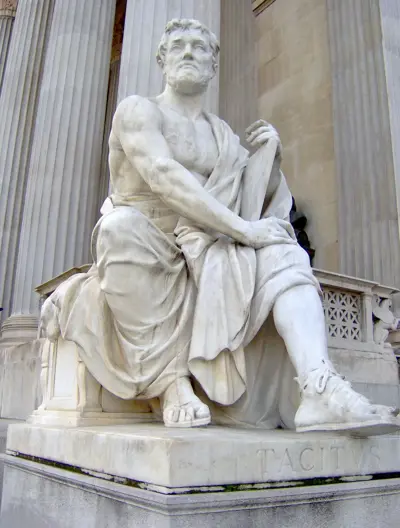
Publius (or Gaius) Cornelius Tacitus (AD 56 – c. 120) was a Roman historian and politician. Tacitus is widely regarded as one of the greatest Roman historians by modern scholars. He lived in what has been called the Silver Age of Latin literature, and has a reputation for the brevity and compactness of his Latin prose, as well as for his penetrating insights into the psychology of power politics.
