George F. Kennan Quotes
Were the Soviet Union to sink tomorrow under the waters of the ocean, the American military-industrial establishment would have to go on, substantially unchanged, until some other adversary could be invented. Anything else would be an unacceptable shock to the American economy.
George F. Kennan, 1904-2005, Historian & U.S. Ambassador to Russia and Yugoslavia, Quoted in "Foreword to 'The Pathology of Power'" by Norman Cousins, 1987
Sourced by: Eigen's Political and Historical Quotations

“Arsenal of Democracy” is the famous FDR phrase whereby America was able to provide weapons for the other democracies to fight Fascism. At the time, the United States had the greatest manufacturing capability of the world. When Gingrich made this quotation, much manufacturing that had been done in America had moved offshore. However, one area that did not move offshore was military weapons manufacturing where the United States manufacturing capability was thriving but America was the largest arms manufacturer in the world and exported much of its weapons. This quotation is an example of a political technique called “conflation.” Gingrich took an area where there was legitimate concern about the nation’s loss of manufacturing and implied that the problem was affecting our military and defense capability as well which was not do at all. However, while most Americans knew of the manufacturing job loss, they did not know that the defense manufacturing was the strongest in the world. So they became even more alarmed at the problem of general manufacturing loss.


In retrospect, the Marshall plan was so successful that most people forget or never knew that there was much domestic and foreign opposition and criticism. See {615799}.

In 1992 Russia was in terrible economic shape after the fall of the Soviet Union. Keeping up with the United States military expenditures had bankrupted the Russians. The United States which had strategically increased its defense spending to break the Russian economy if they tried to keep up. However, the U. S. expenditures had forced America into a deficit spending period which produced a national deficit greater than all the previous cumulative deficits in our history. So the American economy was not in great shape either. Meanwhile, Japan, whose constitution (imposed by America after WWII) forbade having a military and funding a military. The result was the Japanese economy was growing at a much more rapid rate, and did not have the unbalanced budget of the United States and Russia. Hence, Tsongas’ observation.


This quotation is often cited as it presages the concept of the Military Industrial Complex that was given by President Eisenhower in 1961--{641114}. It is not known whether Eisenhower had read or was briefed on this Mills quotation.


Chamberlain’s military assessment of Russia’s military ability was yet another example of his faulty judgment. He was not alone however in that many British military experts and American as well, thought that Stalin and Russia could not hold out against Hitler and any military aid given to Russia would just fall into German hands. It was FDR assistant Harry Hopkins who went to Russia, toured the front, met with Stalin and other Russian leaders and observed the Russian people and then recommended to FDR that we send arms to Russia. It was a critical judgment. In the end, the Germans suffered more casualties on their Russian front than any other part of the war and it was the Russians who took Berlin though they suffered large casualties themselves.


At the end of WWII there was much tension between Russia and the Anglo-American alliance. This plan was developed but never implemented. See {613195} for Prime Minister Winston Churchill’s description of the invasion idea.

This quotation illustrates the statements of White that caused conservatives to dislike him. However, most historians agree that White passed classified information to the Russians. He was accused of being a Communist, but there was never any evidence of that. Some people believe that he was a spy for the Russians and committed espionage, but others disagree observing that White was very much his own man and felt that much information that was classified never should have been. White substituted his own judgment, it is believed, about what could be given to the Russians for the security system. He was an admirer of what Russian socialism had accomplished economically, educationally and medically since the 1917 revolution deposing the Czar. Russia had been a valuable military ally, which had taken the brunt of both military and civilian casualties in WWII. White’s economics were certainly not Marxist but very much Keynesian. He was subpoenaed by the House Un-American Activities Committee where he was accused of being a Communist which he denied (see {634907}). He died of a heart attack 3 days later.

This was an amazing prediction for the time. Most Europeans were not sure that the United States would even survive, and Russia was looked upon as the most backward nation in Europe. By the middle of the 20th century—over 100 years after Tocqueville wrote this—The United States and Russia were the two superpowers of the world.

Ironically, at the time she wrote this column, Mrs. Roosevelt was being accused of being a communist by some Southerners who associated her strong views against racism and segregation. Some in the North thought she was a communist because of her active role in the New Deal, Yet here she was, willing to use military force to prevent Soviet expansion.

The Scientific Project that developed the Atomic Bomb. He was a strong advocate for disarmament and that was being debated at the United Nations. He was critical of Bernard Baruch’s tactics but it soon was clear to almost all that the Russians were not interested in a serious UN supervised disarmament. Oppenheimer was profoundly disappointed when it was clear that disarmament was being blocked by the Russians and their veto. After that he didn’t trust the Russians, and concentrated on trying have US policies that would not goad the Russians into an arms race. This quotation is particularly important because in an effort to discredit his views on nuclear policy some politicians accused him of being a security risk with the innuendo that he was a communist and even a Russian agent.


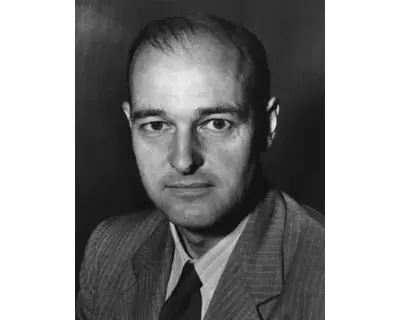
George Frost Kennan was an American diplomat and historian. He was best known as an advocate of a policy of containment of Soviet expansion during the Cold War. He lectured widely and wrote scholarly histories of the relations between the USSR and the United States. He was also one of the group of foreign policy elders known as "The Wise Men".
