Paul Pillar Quotes
Americans’ manner of viewing foreign adversaries today is rooted in the history of their country’s past relations with the outside world. Their attitudes have been shaped especially by the most costly and all-consuming episodes in that history, in particular the wars—hot and cold—of the 20th century.
Paul Pillar, CIA Analyst, “Iran and U. S. Foreign Policy”, Political Science Quarterly, Summer 2013
Sourced by: Eigen's Political and Historical Quotations


He was referring to the United States fighting against Al Qaeda and the Taliban in Afghanistan and Pakistan to keep Al Qaeda from attacking the United States easily.

Nasser was indeed planning an attack. Israeli intelligence had discovered it, and the Israeli’s informed President Lyndon Johnson who in turn called Kosygin. Nasser and the Arabs had miscalculated again and ended up being not only defeated in the war they wanted but totally embarrassed by the incredibly poor performance of the Arab armies who greatly outnumbered the Israelis but had no stomach for a fight.


There were many who thought that the Russians would view the Mutual Security Act as aggressive and they might respond with some kind of aggressive retaliation and this could lead to war. Others felt that containment would reduce the likelihood of war.


Every major Western power and Japan were looking to control parts of China for their own mercantile advantage. The Emperor, her adopted son, had stated that under no circumstances would the Chinese fight, but Cixi issued this decree, in effect, overruling the Emperor—a remarkable occurrence.

Boggs was working on some compromise positions that could be taken by the party at the 1968 Democratic National Convention to provide the anti war wing of the party with something. The President found out and met with Congressman Boggs.


He argued to take every statement or threat of violence against America or Americans made by a foreign leader, even if for local political purposes, as a clear and present danger that requires action, often including force to nullify that country's capability to harm America or to produce a regime change. Many point to Adolf Hitler who had, in Mein Kampf, told the world what he would try and do, and few paid any attention to him. On the other hand, when he was at his most dangerous and planning massive world aggression, his rhetoric was very moderate and peaceful. The vast majority of the foreign leaders who threaten America and her interests, never have acted on those threats. However, one danger is the incitement of others in the country or region who might become a threat to America as an individual or a non state terror group.


Although Great Britain had abolished slavery, British economic interests during the Civil War suffered because of the northern blockade of the South. Much political opinion in England was hostile to the blockade policies of the Union. Bright, a great admirer and supporter of the United Sates and the Union cause was concerned that the United States might drift into War with Great Britain. His letter to Senator Sumner was written with the understanding that it would be in shared with President Lincoln, and it was actually read at a cabinet meeting.

The Germans did not believe the British would send land troops. See {642105}.

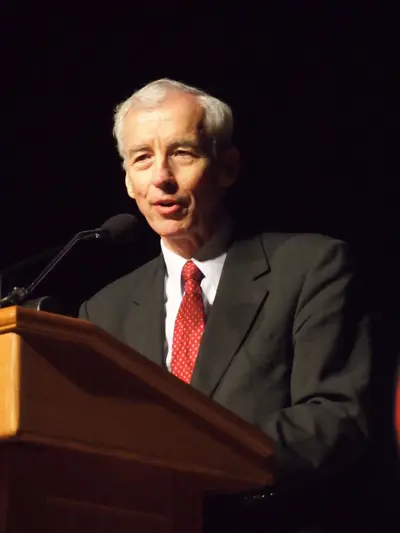
Paul R. Pillar is an academic and 28-year veteran of the Central Intelligence Agency (CIA), serving from 1977 to 2005. He is now a non-resident senior fellow at Georgetown University's Center for Security Studies, as well as a nonresident senior fellow in the Brookings Institution's Center for 21st Century Security and Intelligence. He was a visiting professor at Georgetown University from 2005 to 2012. He is a contributor to The National Interest.
