Bernard Baruch Quotes
If the history of the past fifty years teaches us anything, it is that peace does not follow disarmament -- disarmament follows peace.
Bernard Baruch, 1870-1965, Businessman & Chairman, War Industries Board, U. S. Delegate to U.N. Atomic Energy Commission, Statement regarding nuclear disarmament
Sourced by: Eigen's Political and Historical Quotations


There were many who thought that the Russians would view the Mutual Security Act as aggressive and they might respond with some kind of aggressive retaliation and this could lead to war. Others felt that containment would reduce the likelihood of war.


This was in the middle of the Cold War and the political leaders had to face the fact that their major military nuclear weapons, as a practical matter, could not be used. The result was not only too destructive but retaliation would produce MAD: Mutually Assured Destruction.


Samuel Langhorne Clemens, 1835-1910. His view was that the quality of statesmanship at the time was bellicose and imperialistic. We had annexed Puerto Rico and Cuba and then occupied the Philippines. He argued that if we did not have the bombastic and expansionist statesmen like McKinley and Theodore Roosevelt, we would not need so much armament to back them up.


The speaker was specifically referring to the situation in Manipur India where there were several warring factions fighting for control.

1st Earl Baldwin of Bewdley. Chamberlain was about to leave for the Munich Conference where his appeasement emboldened Hitler and the Germans and dashed all hope of peace. Baldwin was out of office, but his support of the Munich appeasement changed his image from that of a popular statesman, to a craven appeaser. See {626930} for Churchill’s view of Baldwin.


Russia announced ballistic missile testing in response to NATO announced deployment of a missile shield across Europe. It was the first mini arms race since the fall of the Soviet Union.

The documentation of this quotation comes from a memorandum summarizing the meeting written by Presidential aide Harry Hopkins.

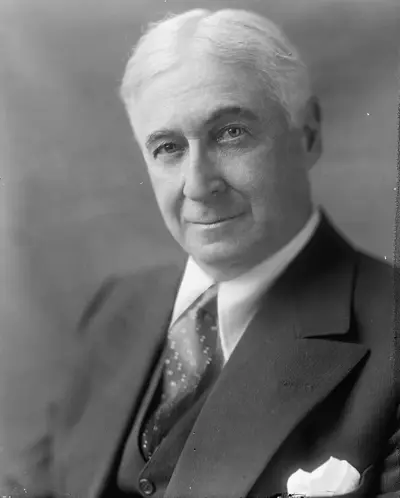
After amassing a fortune on the New York Stock Exchange, he impressed President Woodrow Wilson by managing the nation's economic mobilization in World War I as chairman of the War Industries Board. He advised Wilson during the Paris Peace Conference. He made another fortune in the postwar bull market, but foresaw the Wall Street crash and sold out well in advance. In World War II, he became a close advisor to President Roosevelt on the role of industry in war supply, and he was credited with greatly shortening the production time for tanks and aircraft. Later he helped to develop rehabilitation programs for injured servicemen. In 1946, he was the United States representative to the United Nations Atomic Energy Commission, though his Baruch Plan for international control of atomic energy was rejected by the Soviet Union.
