Ludwig Quidde Quotes
Disarmament or limitation of armaments, which depends on the progress made on security, also contributes to the maintenance of peace.
Quidde, Ludwig. "Security and Disarmament." 12 Dec. 1927, Oslo, Norway. Nobel Lectures, Peace 1926-1950, edited by Frederick W. Haberman, Elsevier Publishing Company, 1972.


The speaker was specifically referring to the situation in Manipur India where there were several warring factions fighting for control.


There were many who thought that the Russians would view the Mutual Security Act as aggressive and they might respond with some kind of aggressive retaliation and this could lead to war. Others felt that containment would reduce the likelihood of war.


After the First World War, the United States and other countries were very conscious of the possibility of foreign arms sales encouraging and facilitating war and aggression. Therefore, arms shipments were very limited. The exception allowed tyrannical governments often to suppress, and often kill, their own citizens. By the end of the 20th century, the United States would sell arms to almost anyone and was the largest arms supplier in the world. Much of the flip flop of position on arms exports was caused by the fact that other nations were shipping arms and getting the jobs and profits associated with those exports and almost anyone in the world with money could buy arms. So the United States allowed its arms manufacturers to compete in this lucrative business to all but a few arms embargoed nations with whom we were having international difficulty.


Hobson, like Mark Twain in America, was a major critic of imperialism.

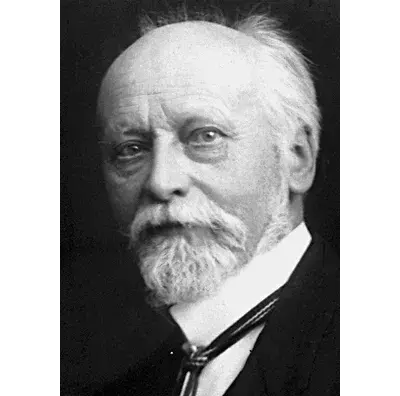
Born into a wealthy bourgeois merchant family, Quidde grew up in Bremen, read history and also got involved in the activities of the German Peace Society (Deutsche Friedensgesellschaft). In his younger years he had already opposed Bismarck's policies. In 1881 he received his PhD at the University of Göttingen. In 1894 Quidde published a 17-page pamphlet entitled Caligula. Eine Studie über römischen Caesarenwahnsinn (Caligula: A Study of Imperial Insanity). Containing 79 footnotes, the short essay is exclusively about the Roman Empire of the 1st century AD. However, Quidde drew an implicit parallel between the Roman Emperor Caligula and Wilhelm II, de facto accusing both rulers of megalomania. The author had insisted on publishing his pamphlet under his real name, which effectively ended his academic career as a historian when, in some periodical, a short review explained the parallels which otherwise might have gone unnoticed. After he made a derogatory comment on a new medal in honour of William I, German Emperor, German Emperor from 1871 to 1888, he was criminally convicted of lèse majesté, and sentenced to three months in prison, which he served in Stadelheim Prison.
