James Burnham Quotes
Armaments do not, generally speaking, cause wars. This notion, the logical crux of all arguments in favor of disarmament, turns the causal relationship upside down. Actually, it is wars, or conflicts threatening war, that cause armaments, not the reverse.
Burnham, James. The Struggle for the World. John Day Company, 1947.


There were many who thought that the Russians would view the Mutual Security Act as aggressive and they might respond with some kind of aggressive retaliation and this could lead to war. Others felt that containment would reduce the likelihood of war.

1st Earl Baldwin of Bewdley. Baldwin has been castigated since WWII for being part of the “appeasement group” in England. As Prime Minister in 1935 he would not face the threat of Fascism, Germany and the Nazis and did not initiate a major arms buildup. Churchill, among others, never forgave him. See {626930} for Churchill’s view of Baldwin.


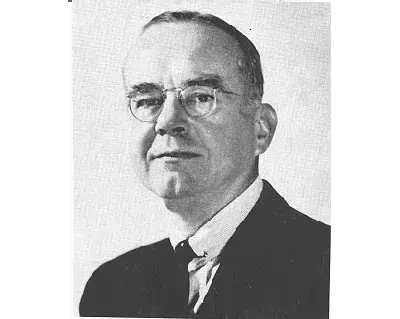
James Burnham was an American philosopher and political theorist. He chaired the philosophy department at New York University; His first book was An Introduction to Philosophical Analysis (1931). Burnham became a prominent Trotskyist activist in the 1930s. He rejected Marxism and became an even more influential theorist of the right as a leader of the American conservative movement. His book The Managerial Revolution, published in 1941, speculated on the future of capitalism. Burnham was an editor and a regular contributor to William F. Buckley's conservative magazine National Review on a variety of topics. He rejected containment of the Soviet Union and called for the rollback of communism worldwide.
