Haile Selassie Quotes
Disarmament has become the urgent imperative of our time. I do not say this because I equate the absence of arms to peace, or because I believe that bringing an end to the nuclear arms race automatically guarantees the peace, or because the elimination of nuclear warheads from the arsenals of the world will bring in its wake that change in attitude requisite to the peaceful settlement of disputes between nations. Disarmament is vital today, quite simply, because of the immense destructive capacity of which men dispose.
Haile Selassie, 1891-1975, Ethiopian Emperor, Address to the United Nations, 1963
Sourced by: Eigen's Political and Historical Quotations


1st Earl Mountbatten of Burma


The President had asked for the views of the Joint Chief’s of Staff. At the time, the major U. S. defense doctrine depended on our nuclear deterrent which if used against the Russians would have meant mutually assured destruction since they had enough of a nuclear arsenal to destroy America as we know it.


As the atomic bomb evolved to the hydrogen bomb and the test results were learned by political and military leaders, the perception of the danger became much greater, especially when the Russians and French also developed their nuclear weapons. After that, and Einstein’s predictions about the cost and quantity, leaders in the world all became conscious of the danger of Mutually Assured Destruction (MAD), most leaders realized that it was impossible see atomic weapons as anything but defense.


The Palestinians in Gaza, led by the Terrorist Group Hamas, fired over 1000 rockets into Israel killing 5 people. The Israeli Defense forces finally retaliated and destroyed much of the Hamas infrastructure and killing the Hamas military leader. A number of other countries were trying to broker a cease fire and Blitzer was trying to determine what each side wanted.

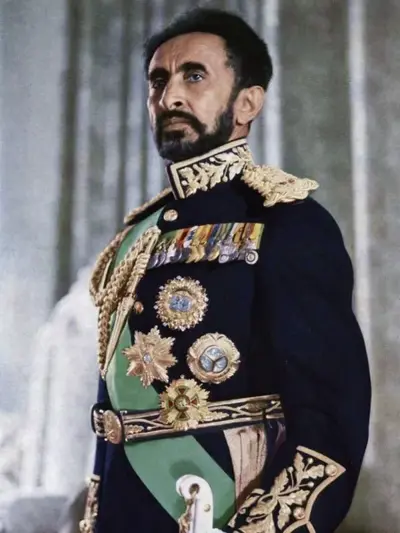
Haile Selassie I was the Emperor of Ethiopia from 1930 to 1974. Prior to his coronation, he had been the Regent Plenipotentiary of Ethiopia from 1916. He is a defining figure in modern Ethiopian history. He was a member of the Solomonic dynasty who traced his lineage to Emperor Menelik I.
