Herman Kahn Quotes
In a world which is armed to its teeth with nuclear weapons, every quarrel or difference of opinion may lead to violence of a kind quite different from what is possible today.
Kahn, Herman. Thinking About the Unthinkable. Horizon Press, 1962, p. 18.


The President had asked for the views of the Joint Chief’s of Staff. At the time, the major U. S. defense doctrine depended on our nuclear deterrent which if used against the Russians would have meant mutually assured destruction since they had enough of a nuclear arsenal to destroy America as we know it.


This quotation is very important in helping to understand the 1950s in America with respect to nuclear weapons policy. McCormick was one the better educated, sophisticated, and influential Americans. Yet he appears to be a technological and nuclear ignoramous. Most people had not yet realized that atomic weapons were not just much larger traditional bombs. They could do terrible damage, but it would always be localized they thought. Chicago might be destroyed but the people out of range would be OK. He never got it that a dirty bomb could be dropped on Detroit and depending on which way the wind is blowing could wipe out Chicago and much of the Midwest as well. He knew nothing of the genetic effect the radiation, nor the implications for the environment of maintaining a large nuclear manufacturing industry. He and many like him did not realize that after the first bombs were created, how easy it would be for the Russians and others to also develop a nuclear arsenal. And 50,000 warheads was just a matter of effort. The implications of these things would inhibit our carrying out his and others ideological views of foreign policy. Oppenheimer and most nuclear scientists explained all this, but believing them and acting on those beliefs would have been too much of a change.
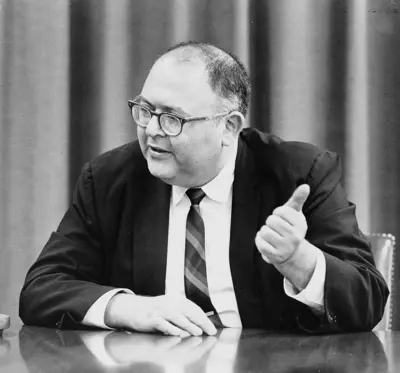
Herman Kahn was a founder of the Hudson Institute and one of the preeminent futurists of the latter part of the twentieth century. He originally came to prominence as a military strategist and systems theorist while employed at the RAND Corporation. He became known for analyzing the likely consequences of nuclear war and recommending ways to improve survivability, making him one of the historical inspirations for the title character of Stanley Kubrick's classic black comedy film satire Dr. Strangelove.
