J. William Fulbright Quotes
The Soviet Union has indeed been our greatest menace — not so much because of what it has done, but because of the excuses it has provided us for our own failures.
J. William Fulbright, 1905-1995, U. S. Senator (Democrat, AR), Chairman, Senate Foreign Relations Committee, Fulbright of Arkansas: The Public Positions of a Private Thinker, 1963
Sourced by: Eigen's Political and Historical Quotations


In 1992 Russia was in terrible economic shape after the fall of the Soviet Union. Keeping up with the United States military expenditures had bankrupted the Russians. The United States which had strategically increased its defense spending to break the Russian economy if they tried to keep up. However, the U. S. expenditures had forced America into a deficit spending period which produced a national deficit greater than all the previous cumulative deficits in our history. So the American economy was not in great shape either. Meanwhile, Japan, whose constitution (imposed by America after WWII) forbade having a military and funding a military. The result was the Japanese economy was growing at a much more rapid rate, and did not have the unbalanced budget of the United States and Russia. Hence, Tsongas’ observation.


This was an incredible prediction with no other world leader thinking it possible for decades until that is exactly what happened.

FDR was right about Russia being a major factor in stopping Hitler, but partially wrong about the danger of Russia. The Soviets never did dominate Europe although the tried, but they did dominate Eastern Europe.

The "iron curtain" phrase was used here a few months before Winston Churchill's famous speech using it {411311}. Also, it appears to have been used earlier than that by Nazi Propaganda Minister Joseph Goebbels in Das Reich. And Viscountess Snowden used the phrase in her memoirs of a Past WWI trip to Russia {616546}. It is not known whether Troubridge or Churchill were familiar with those works.

At the time, the Red Scare was prevalent and many Americans were terrified of communists. It was a very effective political tactic to imply that an opponent was a communist or communist sympathizer. For another harsh smear of Stevenson, see {619523}.

Russia then had designs on Afghani Territory. About a century later, Russia Invaded Afghanistan and tried to impose a communist government. It failed and the Afghans drove out the Russians.


Ironically, at the time she wrote this column, Mrs. Roosevelt was being accused of being a communist by some Southerners who associated her strong views against racism and segregation. Some in the North thought she was a communist because of her active role in the New Deal, Yet here she was, willing to use military force to prevent Soviet expansion.

Bush wanted to expand NATO to include Poland and Hungary. However the German and American governments had previously (before the collapse of the Soviet Union) given promises to the Russians that NATO would never be expanded Eastward from East Germany. See {32678}. Bush went ahead and violated those promises anyway using the excuse that the agreement had not been part of a treaty. That decision had implications for Russian attitudes towards the United States and Western Europe. The Russians repudiated their agreements in 2014 and invaded the Crimea and took it from Ukraine. The Russians however had broken promises many time whereas the United States reversals of promises, like this were few. Bush’s logic however was not in keeping with traditional American standards. We made a deal with Russia when they were a strong superpower who could easily damage many of our national interests. However, when they were weak, we no longer have to do anything we agreed to when they were strong. The great irony was that reacting against Westernization of Ukraine, Premier Putin, by seizing the Crimea and successfully supporting ethnic Russian separatists in Ukraine put Russia back on the map as a major power in the world who could act with impunity against the interests of the West, Europe, the United States and the NATO countries. Most Russians rejoiced that Russia was again an empire that could not be dictated to.


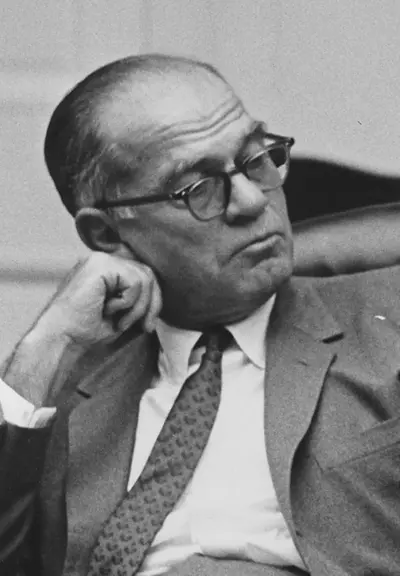
James William Fulbright was an American politician, academic, and statesman who represented Arkansas in the United States Senate from 1945 until his resignation in 1974. As of 2021, Fulbright is the longest serving chairman in the history of the United States Senate Committee on Foreign Relations. He is best known for his staunch multilateralist positions on international issues, opposition to American involvement in the Vietnam War, and the creation of the international fellowship program bearing his name, the Fulbright Program.
