William B. Richardson Quotes
We need a President who swears that he will ‘defend and protect the Constitution’ and then do it.
William B. Richardson, U. S. Ambassador to the United Nations, U. S. Secretary of Energy, U. S. Congressman (Democrat, NM), Governor of New Mexico, Speech, Democratic National Convention, Denver, August 27, 2008
Sourced by: Eigen's Political and Historical Quotations

Powell was the Secretary of State and Addington kept advising the administration that as long as the President was acting in defense of the country in his capacity as Commander in Chief, he did not have to obey any existing laws that had been Constitutionally passed which in the opinion of the President restricted or limited the President or the executive branch. Addington was an attorney and Assistant to the Vice President, but he was given much responsibility for administration policy. Powell the Secretary of State of the Administration could not have disagreed more and although most politicians including Republicans disagreed with the Addington thesis, Powell was one of the few Republicans to criticize the Addington position.

President George W. Bush had ignored a federal law and tapped the phones of Americans without probable cause and a warrant issued by a court. The President’s defenders argued that the President, as Commander in Chief, has the Constitutional responsibility to lead the military and protect the nation. Intelligence gathering is part of military activity. Therefore the intelligence gathering is a Constitutional duty and the Congress, under the separation of powers doctrine, may not interfere with the President’s Constitutional Duty to conduct intelligence. Under this doctrine, the President need not obey laws that he believes impinge on his management of the war effort and the defense of the nation. Most legal scholars believe that this argument is nonsense, but the George W. Bush administration has stated the doctrine and it was the subject of much litigation.


He had been fired by the George W. Bush White House because he would not rush an indictment against a democratic politician to make the newspapers before the election that year thus being “loyal” to the party and administration.

This was an insult to the George W. Bush administration which had stretched the Constitution more so than any previous administration, had asserted Presidential powers that had never been asserted before and had had several of its more controversial policies and practices overturned by the Supreme Court.

The Congress over the last century has ceded much of its Constitutional power to the President. Congress has much power to check the President, but just as Congress has not been very competent at legislating, oversight, and conducting hearings and investigations, it has not organized itself to use the powers it has very well.


Jefferson and many others thought the original drafting of the Constitution was deficient in not explicitly protecting rights from the government. See {586024}. When it came time for ratification, it was clear that ratification would not take place unless that was remedied and the Bill of Rights made the ratification possible by satisfying many critics of whom Jefferson was but one. Note that the protection sought was from the President and the Congress.
In the 1952 steel seizure case the justice department took the position that the President's actions were not reviewable by the courts. The judge ruled against Baldridge and the government.


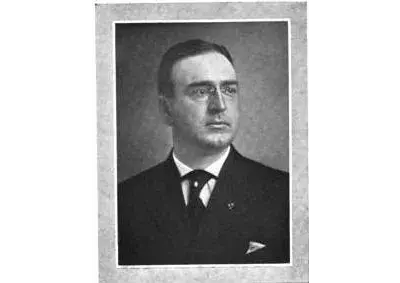
For other persons named William or Bill Richardson see William Richardson (disambiguation).
