Abdullah Ahmad Badawi Quotes
We have been given a role to play. We have been asked to provide, to give lectures on the role of Islamic development and the way we do it here, so the people who are Muslims there would understand what the role of Islam is.
Badawi, Abdullah Ahmad. Interview by Lorraine Hahn. Talk Asia, CNN, 2004.


Here Khomeini takes the classic Islamic view of the Koran that leaders should be obeyed unless they do not follow Islam. To the leaders of Islamic nations, this means that even if the state is not a theocracy, the Muslim clergy has the final say as to whether a ruler may justly remain in power since they are the ones who determine if a ruler is properly following Islam.


Perhaps this quotation gives the best insight to the major difference between an Islamic perspective of law and the Western. The latter places the rights of the individual on a par with or even superior to that of the society as a whole. The former is more concerned with the effect and result on society as a whole than concern with the individual rights of single individuals.

Theological & Legal Expert. The Sunnah, like the Koran, has statements of the Prophet, Mohammad. A fatwa is a religious legal ruling. This particular Fatwa shows the great difference between the Islamic State and a Republic or Democracy. In the latter forms, any religious practices must be consistent with the Constitution. Even though blasphemy might be prohibited by a religion, the United States Constitution for example protects anyone’s right to be blasphemous. In the Islamic system any constitution or law is subservient to and must be consistent with, the sayings of the Prophet Muhammad. In that sense, unless the Muslim populated nation is secular like Turkey, then the governments are partial or total theocracies.


English Muslim terrorist organization. This quotation illustrates what is perhaps the greatest difference between Muslims and most members of other religions. Most others think of their personal identity in national terms and then occupational, religious and racial. A Christian might say ‘I am a French Attorney who is a Christian’; a Buddhist , ‘I am a Cambodian Buddhist. But most Muslims would say, ’I am a Muslim from France’ or a ‘Follower of Islam residing in Lebanon.

This is another of De Tocqueville’s prescient statements that in retrospect seem so amazing given the time. This quotation could serve as an op ed in a newspaper of any of the industrial democracies of the early 21st century. However, he did not have the information of the details we have today that showed Islam as the pinnacle of scientific, philosophical, literary and medical achievement at the beginning of the second millennium, while the Christian nations of Europe were mired in the Dark Ages. It was the same Koran but a very different interpretation and framework that led to the decadence while it was the Protestant Reformation that triggered a Christianity that was hospitable to modernity and enlightenment.

Legal Religious Ruling. This is an example of a source of tension between some Muslims and others. Non-Muslims are required to have a Muslim Education in Muslim countries, but they insist that any required Christian or secular education in a non Muslim country is anti-Islamic.


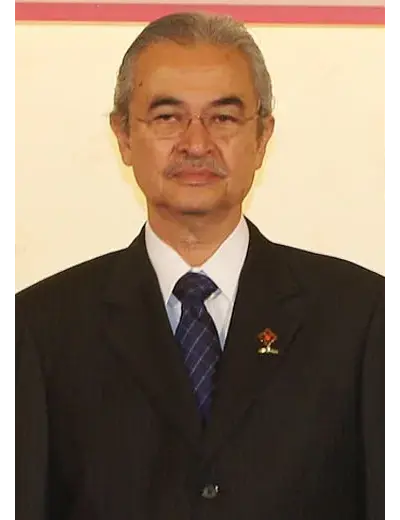
Tun Abdullah bin Ahmad Badawi is a Malaysian politician who served as the 5th Prime Minister of Malaysia from 2003 to 2009. He was also the President of the United Malays National Organisation (UMNO), the largest political party (that time) in Malaysia, and led the governing Barisan Nasional parliamentary coalition. He is informally known as Pak Lah, Pak meaning 'Uncle', while Lah is taken from his name 'Abdullah'. He is also referred to as the "Father of Human Capital Development" (Bapa Pembangunan Modal Insan).
