Mustafa Kemal Ataturk Quotes
We derive our inspiration, not from heaven, or from an unseen world, but directly from life..
This was another example of Ataturk’s honestly and overt admissions to his 99% Muslim constituency that he was not inspired by God, or The Prophet for purposes of making secular political decisions. Despite this, there has never been another politician of an Islamic nation who had the kind of popularity that Ataturk did, and few in world history who produced so much radical reform with such little bloodshed.
Kemal Ataturk, 1881-1938, 1st President and founder of the Turkish Republic, November 1, 1937
Sourced by: Eigen's Political and Historical Quotations

The report was praised by some of the intellectuals of Pakistan and most of the non-Islamic world. However, Pakistan the discussion of each of the cleavages, instigated the public passion of the cleavage and nothing significant was done.

At the time, Muslim clerics had a great deal of influence and in many cases legal control over all facets of Turkish society much as exists in other Islamic societies today. They even controlled what was taught in the schools. Remarkably, without bloodshed, Ataturk broke both the power and the influence of the clerics on all official and public activities. Many Turkish Muslims even developed a type of reformed Islam with the relationship between the individual and the clerics one of parity much like Protestant churches in the West. At the same time there was a more orthodox part of the population and while they sent their children to religious schools, they also attended public schools so even the orthodox Muslims in Turkey learned science and modern subjects which are still not taught in most Islamic schools and madrassas.

presently in Israel. The document purports to represent the views of the Ottoman Sultan of the time. Napoleon Bonaparte had launched an invasion of the Middle East bring foreign troops and foreign new ideas. The Governor led military and propaganda opposition to the French and fortified Acre and withstood Napoleon’s siege of 1799.

In 1856 Turkey and its Ottoman Empire was struggling with new ideas and attempts to reform before they were hopelessly engulfed by modernism. A set of reform laws were passed in February of 1856 which horrified the conservatives and traditionalists. But interestingly the orthodoxy of the Greek minority were unhappy with their legal elevation if it meant that all would be equal. The Minister’s description of opposition to the reforms was somewhat self-serving in that he opposed most of the reforms and wanted to maintain the traditional Islamic state.

Turkey under its great leader, Ataturk, underwent a major cultural revolution. Although Turkey is overwhelmingly Muslim, its constitution provides that it be a secular state with compulsory public non-sectarian education. They adopted a European style law and prohibited Sharia (Islamic law). The nation thrived as no other Muslim country has. Muslims, the world over, are divided on Turkey. For this Sheikh its secular government is an insult to Islam because there is complete separation of mosque and state. For others it is the model which all Muslim countries should emulate.


Kamal Attaturk had radically reformed Turkey into a secular state with many modern European elements. To this day Turkey is the only predominantly Muslim populated state which is a modern, industrial democracy.

This quotation illustrated the extreme polarization between the current fundamentalist Muslims, and the Muslim modernists and the West. Kamal Ataturk, the great leader and stateman who is the father of modern Turkey, is castigated by the author for leading the new Turkish parliament to depose the Caliph – the civil and religious autocrat, one of whom reigned from after the death of Muhammad till his abolishment in 1924. Most of the rest of the world credits Ataturk with being one of the great leaders of all time—one who led a democratic revolution which transformed Turkey into the only Muslim secular democracy, requiring pubic secular European type education for all children, giving women the right to vote (before the U. S. even), adopting a European alphabet and dress, and outlook on life—creating most remarkably a total cultural revolution with virtually no loss of life. No revolutionary leader, before or since has led so extensive a political and cultural revolution, and it was a bloodless revolution. Turkey, into the 21st century, was by far the most powerful, industrialized, scientific and modern nation of Muslims in the world and others were far behind. Yet many Islamic theologian still castigate Atatork for his great achievements as being against the will of God.
10 centuries ago was a time when the Arabs were far more advanced and modern than other cultures including the Christian West that was in the Dark Ages. However, in the 12th century there was a “closing”—a narrowing of allowable Islamic thinking, and since then, Islamic people have had great difficulty with change or modernity. Not all Muslim nations are equally rigid but the Arabs are at the extreme among Islamic counties.

This quotation illustrates how irrational this terrorist had been. He actually said that religious faith and belief is less important than the repulsing an enemy who is attacking that faith. The result is that he and his followers used methods that were immoral and hateful to the very religion he was “defending”. There is a logical parallel with those in the West who would give up Constitutional Rights to defend the Constitution from enemies.

Ibn al-Nafis was one of the great scientists of all time. He analyzed the human heart, lungs, and circulatory system. This quotation is often given by Muslim modernists and reformers to illustrate that Islam at one time was open to new knowledge, dissent, ideas of all kinds. A century later, Islam closed intellectually and later and even today, Muslims are killed for what became heresy. Truth became determined by the Koran and the words of The Prophet only, Christianity and the Church imposed a similar restrictive view of truth using the Bible and Jesus. However, the Reformation and modernity led Christianity to merge and adopt the more modern and scientific view with the exception of some Christian fundamentalists. Islam had the modern view and abandoned it causing the many educated Islamic reformers and modernists of today great difficulty in changing the culture and laws as a whole.
Modern versions are “practice what you preach”. Hypocrisy was always recognized if leaders did not set an example. The Caliph was both the civil ruler and the religious ruler as well. Therefore he made rules for the clergy as well as civil officials.

This sura poses a particularly distressing problem to many Islamic theologians and leaders. Since the closing of Islam in the Middle Ages, the Muslim world has not been as successful as has that of those that they would call disbelievers. But disbelievers were not to be successful. To rationalize this with the reality of history they speculated: What the West has achieved is not success. Evil corrupt rulers of Islamic nations have been holding the Islamic countries back. Islamic nations are punished by Allah because they have not spread Islam as Allah commanded. The barren traditional Islamic lands do not allow development and competition in the world. The latter a major reason there is so much enmity towards Israel and Turkey. The Turks who have become secular and the Israelis who were Jews both developed modern industrial countries without oil. The disbelievers had been extremely successful and this was not only a humiliation but threatened the understood integrity of Islam.

This quotation demonstrates that even in the Iranian Islamic Fundamentalist Theocracy, not all the religious leaders are extremists and anti-human rights. However, Saanei is no longer in the top level of the Iranian government and more extreme fundamentalists have control of the government. But Iran is by no means monolithic.

Mark Twain referring to and reflecting on his encounter with the Sultan of Turkey, Abdul Aziz.

Islamic modernists like Serageldin are many among the educated Muslims but their views are often drowned out by the violence and extremist statements of the fundamentalists.

At the time the Algerians leading the impendence movement were very secular, and were committed to modernity, multiculturalism and religious freedom and tolerance. Within Algerian Muslim society, there has been a constant battle against the right wing Islamic extremists and terrorists.
There are other religious groups that also fear modern secular invasion, so they tend to wall themselves off as do the Amish or have their own schools as many Catholics do. However, the Muslims believe that the danger calls for a jihad and the killing and intimidation of those who advocate, create, defend or spread the secularism. Notice also that Al-Qaradhawi refers to Communism as having destroyed “Muslim countries in Asia and Eurupe.” Many countries of Europe and Asia were fought over by Christians and Ottoman Turks with one side or the other gaining control, only to be displaced by the other in subsequent years. Fundamentalist Muslims therefore think of Albania, Yugoslavia, Crimea, Croatia, and Azerbaijan, for example as Islamic countries because at one point in history they were controlled by a Muslim empire. But that was years ago. When they were invaded by the Russians, Christians, Jews, Muslims, atheists all suffered and not a single country was then controlled by Islam.
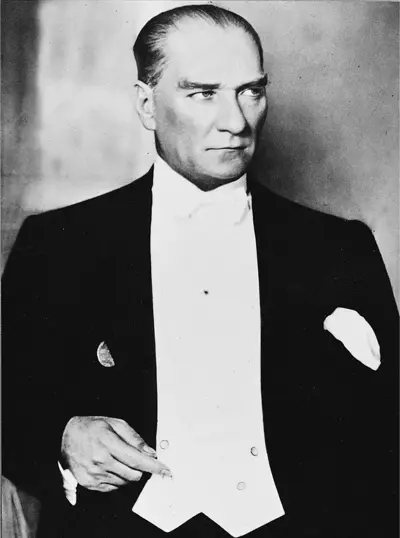
Kemal Atatürk was a Turkish field marshal, revolutionary statesman, author, and the founding father of the Republic of Turkey, serving as its first president from 1923 until his death in 1938. He undertook sweeping progressive reforms, which modernized Turkey into a secular, industrial nation. Ideologically a secularist and nationalist, his policies and theories became known as Kemalism. Due to his military and political accomplishments, Atatürk is regarded as one of the most important political leaders of the 20th century.
