Ahmad Pasha al Jazzar Quotes
The French … do not believe in the unity of the Lord of Heaven and Earth … but have abandoned all religion …. They assert … that all men are equal in humanity, and alike in being men; none has any superiority or merit over any other, and every one disposes of his soul and arranges his life. In this vain belief and preposterous opinion, they have erected new principles and set new laws, and established what Satan has whispered to them and destroyed the bases of religion…. With lying books and meretricious falsehoods they address themselves to every group and say, “We belong to you, to your religion, and to your community” …They are united under the banner of Satan.
presently in Israel. The document purports to represent the views of the Ottoman Sultan of the time. Napoleon Bonaparte had launched an invasion of the Middle East bring foreign troops and foreign new ideas. The Governor led military and propaganda opposition to the French and fortified Acre and withstood Napoleon’s siege of 1799.
Ahmad Pasha al-Jazzar, *-c. 1805, Ottoman Governor of Acre Proclamation, Late 18th Century
Sourced by: Eigen's Political and Historical Quotations

This quotation illustrated the extreme polarization between the current fundamentalist Muslims, and the Muslim modernists and the West. Kamal Ataturk, the great leader and stateman who is the father of modern Turkey, is castigated by the author for leading the new Turkish parliament to depose the Caliph – the civil and religious autocrat, one of whom reigned from after the death of Muhammad till his abolishment in 1924. Most of the rest of the world credits Ataturk with being one of the great leaders of all time—one who led a democratic revolution which transformed Turkey into the only Muslim secular democracy, requiring pubic secular European type education for all children, giving women the right to vote (before the U. S. even), adopting a European alphabet and dress, and outlook on life—creating most remarkably a total cultural revolution with virtually no loss of life. No revolutionary leader, before or since has led so extensive a political and cultural revolution, and it was a bloodless revolution. Turkey, into the 21st century, was by far the most powerful, industrialized, scientific and modern nation of Muslims in the world and others were far behind. Yet many Islamic theologian still castigate Atatork for his great achievements as being against the will of God.

In 1856 Turkey and its Ottoman Empire was struggling with new ideas and attempts to reform before they were hopelessly engulfed by modernism. A set of reform laws were passed in February of 1856 which horrified the conservatives and traditionalists. But interestingly the orthodoxy of the Greek minority were unhappy with their legal elevation if it meant that all would be equal. The Minister’s description of opposition to the reforms was somewhat self-serving in that he opposed most of the reforms and wanted to maintain the traditional Islamic state.

At the time, Muslim clerics had a great deal of influence and in many cases legal control over all facets of Turkish society much as exists in other Islamic societies today. They even controlled what was taught in the schools. Remarkably, without bloodshed, Ataturk broke both the power and the influence of the clerics on all official and public activities. Many Turkish Muslims even developed a type of reformed Islam with the relationship between the individual and the clerics one of parity much like Protestant churches in the West. At the same time there was a more orthodox part of the population and while they sent their children to religious schools, they also attended public schools so even the orthodox Muslims in Turkey learned science and modern subjects which are still not taught in most Islamic schools and madrassas.

At the time, Capetown was under the control of the Dutch East India Company which had recruited Gordon from Scotland. There was a wave of liberality following the Enlightenment, the American Revolution, and the very vocal English, anti-slavery, reformers. The Dutch were concerned mainly with making money, and that they thought that meant stability and the status quo. Gordon was their strong spokesman on this. Like American Southern slave owners, Gordon read the Bible as God endorsing slavery and the inferiority of Blacks. Thus, reformers did not "believe in God any more".

At the time the Algerians leading the impendence movement were very secular, and were committed to modernity, multiculturalism and religious freedom and tolerance. Within Algerian Muslim society, there has been a constant battle against the right wing Islamic extremists and terrorists.
This was another example of Ataturk’s honestly and overt admissions to his 99% Muslim constituency that he was not inspired by God, or The Prophet for purposes of making secular political decisions. Despite this, there has never been another politician of an Islamic nation who had the kind of popularity that Ataturk did, and few in world history who produced so much radical reform with such little bloodshed.

Robertson does not mention the fact that Hindus are the majority of the world’s largest democracy—India. Freedom thrives there and political equality is extensive. However, economic equality is sadly lacking as in the Untied States. However, India is more unequal.
The Ataturk reforms modernized Turkey and turned it into the most modern and democratic of the Islamic countries. However, there were always forces and populist governments that tried to erode the Ataturk reforms—especially secularism.

At the time Turkey was the only Muslim majority country where there was coexistence with secularism but with Christians and Jews as well. Ataturk, the great Turkish leader, turned Turkey around, modernized it, Westernized it, and made it a secular state with freedom of Religion, much like the United States. However, Erdogan’s party was constantly trying to make the state more Islamic as his electoral base were the poor, religious, Muslims.

This quotation demonstrates that even in the Iranian Islamic Fundamentalist Theocracy, not all the religious leaders are extremists and anti-human rights. However, Saanei is no longer in the top level of the Iranian government and more extreme fundamentalists have control of the government. But Iran is by no means monolithic.

Here we have an example of a government that tried to go into the Religion business. They wanted Christian religion but not the Catholic Church which at the time was the only Christian church. Many of the most extreme French revolutionists had a problem with religion. They were personally believers and recognized that most French people were. But the organized Roman Catholic Church was a major ally and supporter of the hated monarchy, and at the time was extremely corrupt at the expense of the people. The nobility were also the highest officials of the church in France. One solution they tried was to have the “people’s government” establish days and methods of worship, an effort that in retrospect appears ludicrous to us today.


Ibn al-Nafis was one of the great scientists of all time. He analyzed the human heart, lungs, and circulatory system. This quotation is often given by Muslim modernists and reformers to illustrate that Islam at one time was open to new knowledge, dissent, ideas of all kinds. A century later, Islam closed intellectually and later and even today, Muslims are killed for what became heresy. Truth became determined by the Koran and the words of The Prophet only, Christianity and the Church imposed a similar restrictive view of truth using the Bible and Jesus. However, the Reformation and modernity led Christianity to merge and adopt the more modern and scientific view with the exception of some Christian fundamentalists. Islam had the modern view and abandoned it causing the many educated Islamic reformers and modernists of today great difficulty in changing the culture and laws as a whole.


This sura has justified major discrimination against non-Muslims so that they should never appear “preeminent” over the faithful. See for example, {617157} and {617160}.

Carlile was one of the heroes of freedom of the press. He was jailed frequently for publishing anti government or anti Church of England criticisms, as were his wife and sister. The government grew so desperate trying to censor his publications that they placed a high minimum price on the sale of all newspapers assuring that the average citizen could not afford to buy the “seditious and blasphemous material.” In addition to press freedom he was an early reformer for birth control, religious freedom, women's suffrage and rights (which he called for in the 1820s), and against child labor.

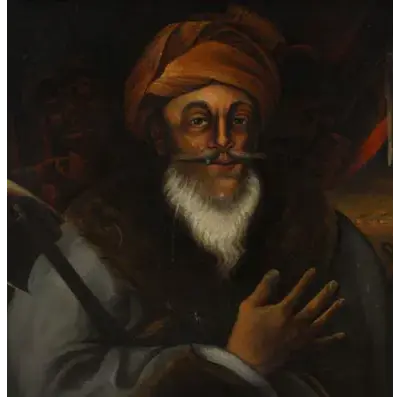
Ahmad Pasha al-Jazzar was the Acre-based Ottoman governor of Sidon Eyalet from 1776 until his death in 1804 and the simultaneous governor of Damascus Eyalet in 1785–1786, 1790–1795, 1798–1799, and 1803–1804. A Bosnian of obscure origins, he began his military career in Egypt in the service of various Mamluk officials, eventually becoming a chief enforcer and assassin for Ali Bey al-Kabir, Egypt's practical ruler. He gained the epithet of al-Jazzar (the Butcher) for his deadly ambush on a group of Bedouin tribesmen in retaliation for the death of his master in a Bedouin raid. Al-Jazzar fell out with Ali Bey in 1768 after refusing to take part in the assassination of one of his former masters. He ultimately fled to Syria, where he was tasked with defending Beirut from a joint assault by the Russian Navy and Zahir al-Umar, the Acre-based ruler of northern Palestine. He eventually surrendered and entered Zahir's service before defecting from him and fleeing with stolen tax money.
