Allen Dulles Quotes
We are engaged in the defense of a way of life, and the great danger was that in defending this way of life we will find ourselves resorting to methods that endangered this way of life.
The Russians had just tested a what was almost an atomic bomb and a nuclear weapon was only months away. Eisenhower was advised to initiate an all out nuclear attack before the Russians would have a nuclear weapon with which to retaliate. If Eisenhower did not take advantage of this window, there would be no more opportunity and the Russians would also become a nuclear power. The situation was similar to that facing the Americans and Israelis with Iran in the early years of the 21st century,
Allen Welsh Dulles, 1893-1969, Director of the Central Intelligence Agency, Briefing of President Eisenhower on the Soviet Progress in developing an atom bomb, August 1953
Sourced by: Eigen's Political and Historical Quotations


Although he could not find justification in International law, many others recognize preemption as part of the right of self-defense.

Fermi was the scientist who organized and planned the first controlled nuclear chain reaction as a part of the Manhattan Project and was one of the major scientific advisors to the Atomic Energy Commission until he, Oppenheimer, and several other scientists opposed the development of the Super (the name Edward Teller had given to the proposed hydrogen bomb). The scientists knew that we had and could make enough atomic bombs to destroy any nation and to make it doable with just a few bombs as opposed to many they saw as of little military
value. They further expected that the Russians and some others would be forced to keep up with us in an arms race and that the bomb would never be able to be used without retaliation in kind and the destruction of most of America. The politicians and military did not really believe that the Russians had the scientific capability to develop hydrogen weapons and some thought if we had them and no one else did, we could dictate a “pax Americana” to the world. Others feared that Russia or some other country would develop a hydrogen weapon and then dictate to us. We did have a monopoly on the Super for a few years and America never dictated to the rest of the world. When other countries developed the weapons, we entered the era of Mutually Assured Destruction (MAD).

No one knows whether or not Castro was really sincere in making this offer. The Russians rejected it of course. If they made a first strike on the United States, Russia would have been crippled completely by the retaliation, and they knew it. Castro knew that they knew it and might have been counting on the fact that the Russians would reject his heroic offer. Alternatively, he may have been enough of a fanatic to sacrifice his own life that that of every single Cuban.


The highest court in New York. Kent did not originate this concept. He was stating an age old principle of law: Posse vicinum impediri, ne in suo solo, sine alia causa suaque evidenti utilitate, munimentum nobis propinquum extruat, aut aliud quid faciat, unde justa formido periculi oriatur.

Although generally a right wing conservative, Clark today sounds like almost like an extreme leftist on the issue. At the time however, many thought that he had taken leave of his senses. He not only was completely contrary to bipartisan national policy but opposed by almost universal American public opinion. He is one of the very few significant American officials to oppose the war policies.


At the time, surprising to most people now, the use of the atomic bomb was not an issue of controversy at all. There were no Congressman who questioned it, no newspapers which editorialized against the use of the bomb. There were not even any other counties which protested its use. The blessing of ending the war, even at the cost of less than 200,000 deaths seemed a clearly desirable tradeoff when compared with the many millions of deaths that would have occurred had the bomb not been used. As an example, the conventional bombing of Tokyo before the nuclear weapons were used killed as many Japanese as either Hiroshima or Nagasaki.


Although it had conservative and progressive support, there was opposition in the middle and the vote failed in the House 188 to 209. See Hamilton Fish for the amendment text.


This statement told the world that the United States might preemptively attack Iraq because the Iraqis were developing nuclear weapons. Bush ordered the invasion of Iraq and there it turned out that was no nuclear program of any type in Iraq. There has been a debate ever since as to whether Bush and his key advisors lied knowingly to justify a war they wanted, wanted the war and pressured the intelligence agencies to warn of a clear nuclear development program, or were duped by incompetent intelligence agencies. While American troops were bogged down in Iraq, North Korea tested a nuclear weapon and Iran announced an enrichment program for weapons grade.


Estonia had moved a Russian Soviet era monument to WWII dead Soviet Soldiers from a prime location in the center of their capital to a location outside of town. Russian-speaking Estonians were outraged and fomented violent demonstrations and riots that almost paralyzed the city. At the same time 85,000 Estonian computers were hijacked and used to implement a denial of service attack on some of the major government sites including the main bank, blocking all those webservers from serving normal customers on the Internet. The Prime Minister and other Estonian officials accused the Russians of the cyber-attack and likened it to a blockade which is an act of war under international law. What complicates cyberattacks is that there might have been some Russian nationalists who, with no knowledge of the government could have implemented a denial of service attack where so many accesses to servers are engineered that the servers crash. The perpetrators may have been instigated by the Russian government or not. They could have been any place in the world when they did it.

3rd Earl Russell of Kingston

Llewellyn H. Rockwell, Jr.
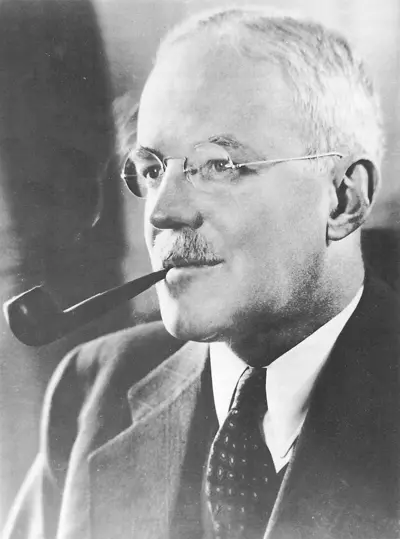
Allen Welsh Dulles was the first civilian Director of Central Intelligence (DCI), and its longest-serving director to date. As head of the Central Intelligence Agency (CIA) during the early Cold War, he oversaw the 1953 Iranian coup d'état, the 1954 Guatemalan coup d'état, the Lockheed U-2 aircraft program, the Project MKUltra mind control program and the Bay of Pigs Invasion. He was fired by John F. Kennedy over the latter fiasco.
