Andrus Ansip Quotes
What’s the difference between a blockade of harbors or airports of sovereign states and a blockade of government institutions and newspapers?
Estonia had moved a Russian Soviet era monument to WWII dead Soviet Soldiers from a prime location in the center of their capital to a location outside of town. Russian-speaking Estonians were outraged and fomented violent demonstrations and riots that almost paralyzed the city. At the same time 85,000 Estonian computers were hijacked and used to implement a denial of service attack on some of the major government sites including the main bank, blocking all those webservers from serving normal customers on the Internet. The Prime Minister and other Estonian officials accused the Russians of the cyber-attack and likened it to a blockade which is an act of war under international law. What complicates cyberattacks is that there might have been some Russian nationalists who, with no knowledge of the government could have implemented a denial of service attack where so many accesses to servers are engineered that the servers crash. The perpetrators may have been instigated by the Russian government or not. They could have been any place in the world when they did it.
Andrus Ansip, Prime Minister of Estonia, Rhetorical Question Asked When Estonia’s Government and Bank Computers were brought down in a cyber-attack, 2007
Sourced by: Eigen's Political and Historical Quotations


Note how the second paragraph nullifies the first of the government declares an emergency. This is a trick that is very common in constitutions.

In international law, a blockade is an act of war by the brocading country against the country that is blockaded—not against 3rd parties that may have to obey the blockade. For example before the War of 1812, France and England were at war and each blockaded the other’s ports. The United States was affected by the blockade in that our ships could not go in or out of blockaded ports with goods. However nether country was at war with us. All neutral nations must respect a blockade or the blockading nation is entitled to use force to enforce the blockade, but that is not an act of war. In 2011, Gaza was at war with Israel, and Israel blockaded Gaza. A Turkish ship tried to bring goods to Gaza and Israel seized the ship by force and brought it into a near natural port (Egypt). Israel was entitled to enforce its Gaza blockade, but they were not at war with Turkey. However if Israel, blockaded a country where there was not an existing war, the blockade itself would be an act of war.

You simply do not do that to a head of a democratic state wanting to cross [fly] over your airspace.
American (traitor of whistleblower depending on who is judging) Edward Snowden was in the Moscow International Airport seeking political asylum from several nations. The United States, wanting to extradite and try Snowden criminally had “intelligence” that Snowden was going to fly out of Russia in the private plane of Bolivian President Morales. The U.S. persuaded the European countries to refuse his plan “flyover” rights—usually a formality that is always granted for a foreign head of state. This forced Morales to land his plane for refueling in Austria where, under pressure from the United States, Austrian law enforcement officials boarded and searched the plane—something that is almost never done to a plane that is just refueling, much less the airplane of a head of state. The Secretary General was expressing the outrage of the OAS nations (and many others around the world). What made the situation even more embarrassing for the United States, Austria, and the other European nations which did not grant flyover rights, was the fact that the U. S. Intelligence was totally wrong. Snowden was not on the plane forcing the Austrians who had technically committed an act of war against Bolivia by forcing their way onto a Bolivian plane carrying diplomats and the president of Bolivia, to apologize. Snowden was still in Russia, and the Russians then gave him political asylum in large part because they too resented the behavior of Austria, Europe and above all the United States in the Bolivian plane incident as the pane had taken off from Moscow. This was a very difficult call for the American intelligence agencies, in that there may well have been a plan to put Snowden in that plane that was cancelled when it was clear that the Americans would try and intercept the plane somehow. The OAS and other complaining nations argued that even if Snowden had been on the plane, there was no right to intercept and search the plane anyway.


Many computer experts and security operatives view this kind of advice and strategy as counter-productive as there are some computer security extremists who so harden computer systems and networks that they function poorly and cause really harmful operational problems. The classic case was the FBI agent in Minnesota who before 9-11 had information that Muslims foreigners were taking flying lessons. She wanted to get the information to the national security FBI people, but she was not allowed to send the information by e-mail. Instead she had to use a "secure" system that was much slower and could not be viewed by the people who might have been able to connect the dots and do something about it. The FBI has now a better balance between functionality and security, but it is a good example of how "security fanaticism" can make us less safe.

A few weeks before, the computers of the Democratic National Committee were hacked and thousands of private and confidential e-mails were made public. The security experts claimed that the hackers came from Russia.

In both the First and Second World Wars the Western nations had a multilateral defense pact which did little good in the face of German aggression.
See {585493},65902, and {585496}, for more quotations on this.

Britain was mired in Iraq. They had, as the U. S. would do about 80 years later, gone into Iraq without a viable exist strategy.

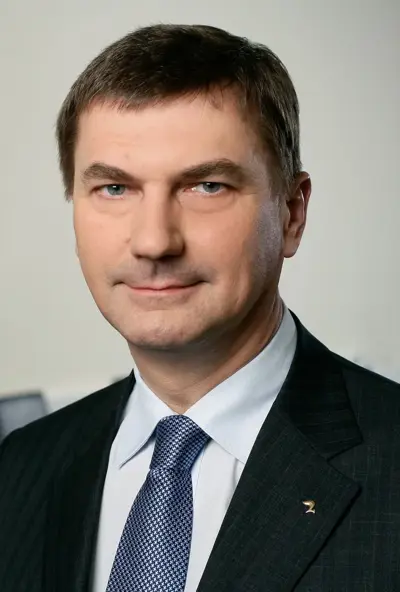
Andrus Ansip is an Estonian politician, a member of the European Parliament, the former European Commissioner for Digital Single Market and Vice President of the European Commission, in office from 2014 until 2019. Previously, he was Prime Minister of Estonia from 2005 to 2014 and chairman of the liberal Estonian Reform Party (Estonian: Reformierakond) from 2004 to 2014.
