George W. Norris Quotes
First, we could have defied both of them and could have gone to war against both of these nations for this violation of international law and interference with our neutral rights.
Norris, George W. "Speech Against the Declaration of War." Congressional Record, 65th Congress, 1st Session, vol. 55, 4 Apr. 1917, p. 213.


Although Great Britain had abolished slavery, British economic interests during the Civil War suffered because of the northern blockade of the South. Much political opinion in England was hostile to the blockade policies of the Union. Bright, a great admirer and supporter of the United Sates and the Union cause was concerned that the United States might drift into War with Great Britain. His letter to Senator Sumner was written with the understanding that it would be in shared with President Lincoln, and it was actually read at a cabinet meeting.


Lodge was particularly concerned that under the proposed treaty the United States would be obligated to support the League of Nations military efforts regardless of American public opinion or Congressional action.


He served Presidents Reagan, Clinton, and both Bushes


See Benedict Spinosa for an earlier absense or war view. Also, JFK more recently.


She and her husband, like many of the "America Firsters", believed that Hitler should be allowed to overrun Europe and Russia.


The report was from Heinrich von Tschirschky, the German ambassador to Austria-Hungary. He recommended that Germany persuade Austria-Hungary to not attack Serbia, not realizing the German leaders had already planned a war with Russia and saw the issues between the Austro-Hungarian Empire and Serbia was a good excuse to implement their war plans (see {642092}).
The Germans wanted war with Serbia and used the dispute between Austria and Serbia as an excuse to mobilize and go to war ostensibly to protect their ally, the Austrian Empire, from the Serbs who they knew would be likely supported by Russia which had traditionally supported their fellow Eastern Orthodox against Roman Catholic or Protestant enemies. Russia still tends to protect and support the Serbs. This statement was one of the many that showed that Germany was the major aggressor in the First World War and therefore had to pay reparations to France and others.

Actually, the two world wars were wars of necessity. The Korean War and the Vietnam war are considered by many as wars of choice. But most of our military incursions—the Mexican War, the Spanish American War, Grenada, the Serbian War, Hati incursions and many others were wars of choice for which there were often very good reasons. However, we have to go to war when America is existentially threatened. In that sense, the Iraq War which Kerry was primarily addressing, could be interpreted either way. If it was really true thread. That is what caused most members of Congress to vote to approve the war. However, when that turned out to have been untrue, and it was suspected that the weapons of mass destruction was a deliberate ruse by some.

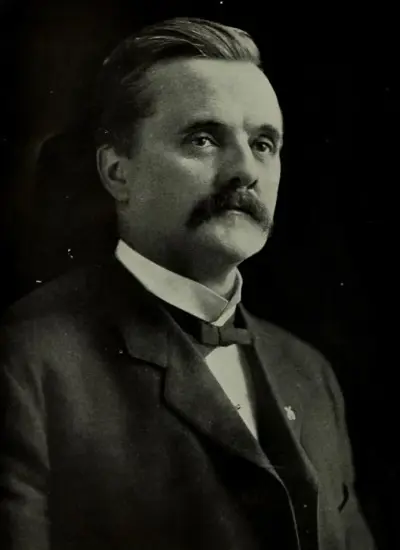
George William Norris was a politician from the state of Nebraska in the Midwestern United States. He served five terms in the United States House of Representatives as a Republican, from 1903 until 1913, and five terms in the United States Senate, from 1913 until 1943. He served four terms as a Republican and his final term as an independent. Norris was defeated for re-election in 1942.
