Peter Henry Goldsmith Quotes
I am aware that the USA has been arguing for recognition of a broad doctrine of a right to use force to pre-empt danger in the future. If this means more than a right to respond proportionately to an imminent attack … this is not a doctrine which, in my opinion, exists or is recognized in international law.
Although he could not find justification in International law, many others recognize preemption as part of the right of self-defense.
Peter Henry Goldsmith, English Attorney-General, Secret Memorandum to British Prime Minister Tony Blair, March 7, 2003
Sourced by: Eigen's Political and Historical Quotations


The English were at War with Napoleon and Denmark was neutral. British leaders feared that Denmark might either ally themselves with Napoleon or provide him with ships from their well equipped fleet. The English decided on a preemptive attack on Denmark and Paget and other Captains were ordered to Denmark. When they arrived they were ordered to bombard Copenhagen and force the Danes to surrender. When this happened, the British seized the Danish ships and simply took them as war prizes. The issues of the morality and wisdom of preemptive attacks, as with the Americans in the Iraq war, was thoroughly debated but the government view prevailed to the shame of most Englishmen.


The highest court in New York. Kent did not originate this concept. He was stating an age old principle of law: Posse vicinum impediri, ne in suo solo, sine alia causa suaque evidenti utilitate, munimentum nobis propinquum extruat, aut aliud quid faciat, unde justa formido periculi oriatur.


The inconsistency of the policy logic of attacking Iraq but not the other two countries of the "axis of evil" caused problems for our British allies who preferred justifying the attack on Iraq on its own merit without any linkage to Iran and North Korea. What made the Iraq invasion even more puzzling was that both Iran and North Korea were greater dangers to the United States and expressed a deep animus.


At the time of this speech virtually the entire world believed that. However world attitude changed markedly after the administration of George W. Bush and the United States invasion of Afghanistan after September 11 and the Iraq War which was for regime change.


The claims of the President that Hussein even had weapons of mass destruction were untrue. Eagleburger’s criteria for war would have been even more stringent as is clear in this quotation. Foreign affairs experienced members of the President’s own party tried to dissuade him from this disastrous plan of invading Iraq but were unable to.


This statement told the world that the United States might preemptively attack Iraq because the Iraqis were developing nuclear weapons. Bush ordered the invasion of Iraq and there it turned out that was no nuclear program of any type in Iraq. There has been a debate ever since as to whether Bush and his key advisors lied knowingly to justify a war they wanted, wanted the war and pressured the intelligence agencies to warn of a clear nuclear development program, or were duped by incompetent intelligence agencies. While American troops were bogged down in Iraq, North Korea tested a nuclear weapon and Iran announced an enrichment program for weapons grade.

Actually, the two world wars were wars of necessity. The Korean War and the Vietnam war are considered by many as wars of choice. But most of our military incursions—the Mexican War, the Spanish American War, Grenada, the Serbian War, Hati incursions and many others were wars of choice for which there were often very good reasons. However, we have to go to war when America is existentially threatened. In that sense, the Iraq War which Kerry was primarily addressing, could be interpreted either way. If it was really true thread. That is what caused most members of Congress to vote to approve the war. However, when that turned out to have been untrue, and it was suspected that the weapons of mass destruction was a deliberate ruse by some.

The Russians had just tested a what was almost an atomic bomb and a nuclear weapon was only months away. Eisenhower was advised to initiate an all out nuclear attack before the Russians would have a nuclear weapon with which to retaliate. If Eisenhower did not take advantage of this window, there would be no more opportunity and the Russians would also become a nuclear power. The situation was similar to that facing the Americans and Israelis with Iran in the early years of the 21st century,

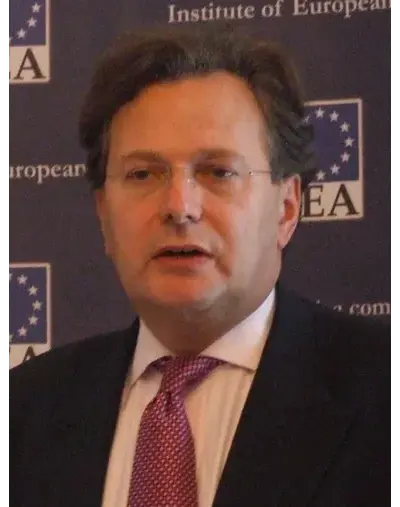
Peter Henry Goldsmith, Baron Goldsmith PC QC is a British barrister and a former Attorney General for England and Wales and for Northern Ireland. On 22 June 2007, Goldsmith announced his resignation which took effect on 27 June 2007, the same day that prime minister, Tony Blair, stepped down. Goldsmith was the longest serving Labour Attorney General. He is currently head of European litigation practice at US law firm Debevoise & Plimpton and Vice Chairperson of the Hong Kong International Arbitration Centre.
