P. J. O'Rourke Quotes
War expands government powers. The trouble is that, when the war goes away, the government powers do not.
O'Rourke, P. J. Give War a Chance. Atlantic Monthly Press, 1992.


Later quoted by Alexander Hamilton in the Federalist Papers

America is almost unique among nations where the military has never been a force that either dominated or controlled the government or acted independently from it. The Founding Fathers knew well the history of Europe and other nations, and built many checks into our Constitution and our traditions with George Washington, setting the example for American military men forever after.

He was referring to a transportation bill that had been packed with earmarks and pork by his own party.


Not the current Daily News. He was very critical of the NY State Legislature changing the laws affecting wills and inheritance in order to benefit some special interest when there was a profound effect on millions of other people that had not been considered by the legislature, the majority of which had never even read the legislation, but were following party leader’s instructions or that of powerful committee chairmen.

To Mises, “interventionism” is any government action that affects business and businessmen and women. In a large complex society, virtually every government action will benefit some more than others while harming some more than others. There are almost always winners and losers as a result of every government action. Most political philosophers see justice and fairness in benefitting the majority of people most of the time. However Mises and others observe that in a large complex society, in an absolute sense, politics and government can never be fair and just to all.
This is a very important historical quotation because it clearly stated the left wing view of regulation. Large Business had been so unethical and illegal at the time that the majority of Americans and Congress, together with a Republican President, thought that it would be good to “weld” the growth and development of large companies to the Government. The right wing saw this as extreme Communism. Over time, when corporate greed and excesses had been controlled by government and was not as prevalent, the inhibition on growth and development of welding corporations to Government was recognized and a period of deregulation followed with most Americans not wanting to allow large companies to be completely deregulated and also not wanting them welded to the government. The extent of regulation has been the political contest with the extreme left and extreme right still holding to their ideological positions and sometimes paralyzing the middle as in the Obama administration.

The "administrative state" was the term used for a government had had powers and used them to regulate things and areas of society without each specific regulation being voted upon by the legislature. In America sicne the New Deal there have been so many areas that have regulations that a single agency like the Environmental Protection Agency might issue in a year more regulations than the entire Congress considers in all areas put together. All these regulatory powers are delegated by Congress passing legislation authorizing it, and Congress can legislate any change in any regulation it wants, but the modern state is so complesx and areas so specialzied that Congress has preferred to delegate. There are a few who legal scholars and politicians who believe that it is unconstitutional for the legislature to delegate powers to the executive branch and no regulations have validity unless specifically passed by Comgress. There are some others who have not taken a position on this point but who believe that of an administrative state can regulate phases of citizens lives it is bound to circumscribe personal freedom as all legislation does to some extent. This quotation was used by opponents of Judge Gorsuch in arguing that he was unfit for the Supreme Court as he was out of touch with the Administrative State which America gradually became and rapidly in the New Deal and in the 80 years thereafter a very extensive administrative state. Gorsuch's views were based on classic political pholosophy but there were some ultra conservatives who did not want any regulation of business by Congress or Administrative Agencies and therefore supported Gorsuch and the few others with this view as if Agencies were not able to issue regulations there was no practical way that Congress could issue as many and regulation would be reduced which is what they desired.


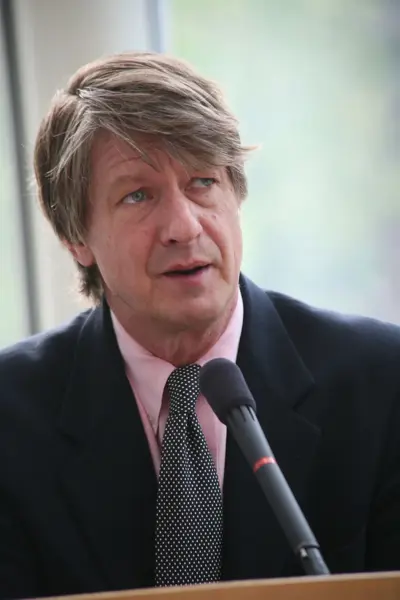
Patrick Jake O'Rourke is an American political satirist and journalist. O'Rourke is the H. L. Mencken Research Fellow at the libertarian Cato Institute and is a regular correspondent for The Atlantic Monthly, The American Spectator, and The Weekly Standard, and frequent panelist on National Public Radio's game show Wait Wait... Don't Tell Me! Since 2011, he has been a columnist at The Daily Beast.
