Murray Rothbard Quotes
The State has invariably shown a striking talent for the expansion of its powers beyond any limits that might be imposed upon it.
Rothbard, Murray N. The Anatomy of the State. Rampart College, 1965.


The issue was whether the Federal government could enforce a federal law against a citizen of a state if the state did not agree. There were some who argued that the State had the supreme authority over any citizen within the state. That view has been rejected and the Federal government may enforce its laws on anyone in any state regardless of the views of the state.


Madison was defending the proposed Constitution against a vocal minority who complained that the Federal government would be dominant over the States and the large cities. Madison pointed out that it was people who fought the Revolution and sacrificed for it, not States or political entities. The Constitution was to be for the people, not the existing governmental entities. It was for Americans and not for local politicians. The “State’s Rights faction lost the debate, and the Constitution and Bill of Rights was adopted. That is why this quotation is so important. The slavery enthusiasts, racists, and others have constantly tried to diminish the Federal supremacy even to this day.


Slavery was Hammond’s pet example where the Federal Government was constantly trying to limit, and control the South. However, he and later anarchists many libertarians of this day see the issue as a general principle.

To Mises, “interventionism” is any government action that affects business and businessmen and women. In a large complex society, virtually every government action will benefit some more than others while harming some more than others. There are almost always winners and losers as a result of every government action. Most political philosophers see justice and fairness in benefitting the majority of people most of the time. However Mises and others observe that in a large complex society, in an absolute sense, politics and government can never be fair and just to all.

The message was conveyed by the Secretary of State, Sir George Calvert (Lord Baltimore). Parliament and the British King were jockeying for position in their relative powers. King James took the position that Parliament could NOT make laws that affected the American Colonies. Parliament disagreed. Later, some of the American patriots would use this quotation to claim that they were only subject to the King and not to Parliament. For related quotes on the King/Parliament issue, see {639144}, {639143}, {639142}, {639141}, {639140}, & {639137}


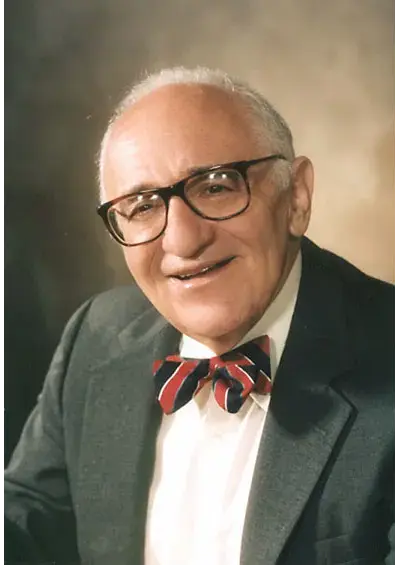
Murray Newton Rothbard was an American heterodox economist of the Austrian School, economic historian and political theorist. Rothbard was the founder and leading theoretician of anarcho-capitalism, a staunch advocate of historical revisionism and a central figure in the 20th-century American libertarian movement. He wrote over twenty books on political theory, revisionist history, economics, and other subjects.
