Robert H. Jackson Quotes
Always, as in this case, the government urges hasty decision to forestall some emergency or serve some purpose and pleads that paralysis will result if its claims to power are denied.
Robert Houghwout Jackson, 1892-1954, Chief Prosecutor, Nuremberg War Crimes Tribunal, U. S. Attorney General (Democrat), U. S. Supreme Court Justice, Woods v. Miller, 1948
Sourced by: Eigen's Political and Historical Quotations


Explaining his civil rights strategy in the 1947 "Journey of Reconciliation:"

At that point in American History there were some who thought that the Congress was aggregating too much power. At the beginning of the 21st century we bemoaned a weak Congress and worried about an imperial and too powerful an executive while a few thought that the Judicial branch had become too powerful in “legislating from the bench.”

While this may have been true in some European nations, many disagree completely with this assertion for America. They point to the thousands of laws passed by Congress to cut back or diminish the power that they had earlier given the agency. These counter-examples to Hayek’s view are particularly evident after most wars. What often does happen is that Congress votes a temporary power to a government agency, and when the temporary power time is coming to an end, many citizens and officials are so happy with the result of granting the power, that the power is then granted permanently, sometimes to the distress of some legislators who voted for the power with the understanding that it would be temporary. However, Congress may, and often does, change its collective mind. Coercion to Hayek includes for example, taxation if there are criminal penalties for failure to pay the tax or regulation where a government agency may require or prohibit certain behavior of a business or individual and most people would agree that even in a democracy there are coercive aspects of much government activity.


In the Watergate crisis H. R. Haldeman had asked for a Presidential pardon. A discussion of the request was held by some White House staff members:


To Mises, “interventionism” is any government action that affects business and businessmen and women. In a large complex society, virtually every government action will benefit some more than others while harming some more than others. There are almost always winners and losers as a result of every government action. Most political philosophers see justice and fairness in benefitting the majority of people most of the time. However Mises and others observe that in a large complex society, in an absolute sense, politics and government can never be fair and just to all.


This is a very important historical quotation because it clearly stated the left wing view of regulation. Large Business had been so unethical and illegal at the time that the majority of Americans and Congress, together with a Republican President, thought that it would be good to “weld” the growth and development of large companies to the Government. The right wing saw this as extreme Communism. Over time, when corporate greed and excesses had been controlled by government and was not as prevalent, the inhibition on growth and development of welding corporations to Government was recognized and a period of deregulation followed with most Americans not wanting to allow large companies to be completely deregulated and also not wanting them welded to the government. The extent of regulation has been the political contest with the extreme left and extreme right still holding to their ideological positions and sometimes paralyzing the middle as in the Obama administration.

Gets was commenting on the Apple Computer Company who refused to obey a court order to create a program that would break into any iPhone. Apple thought the court order was not only bad public policy, but was not legal, so they refused and appealed to start the legal process. However, the FBI which had claimed that they had no other way to view some critical investigative data, found one, and not wanting the case to go to higher courts where they might or might not lose, the dropped the case, thus stopping the legal appeal as in the United States courts will hot hear theoretical cases as they will in some countries. Since apple was not in danger of being held in criminal contempt any longer the could not longer appeal.


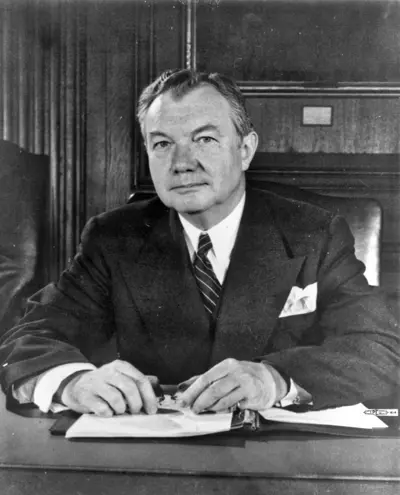
Robert Houghwout Jackson was an American attorney and judge who served as an Associate Justice of the United States Supreme Court. He had previously served as United States Solicitor General and United States Attorney General, and is the only person to have held all three of those offices. Jackson was also notable for his work as Chief United States Prosecutor at the Nuremberg trials of Nazi war criminals following World War II.
