Hyman Rickover Quotes
Until about two billion years ago, it was impossible to have any life on earth; that is, there was so much radiation on earth you couldn't have any life — fish or anything. Gradually, about two billion years ago, the amount of radiation on this planet—and probably in the entire system—reduced and made it possible for some form of life to begin... Now when we go back to using nuclear power, we are creating something which nature tried to destroy to make life possible... Every time you produce radiation, you produce something that has a certain half-life, in some cases for billions of years. I think the human race is going to wreck itself, and it is important that we get control of this horrible force and try to eliminate it.
Any object that has been contaminated gradually loses its radioactive strength. It has a “half life”. This is the amount of time that it takes for the radiation in an object to lose half its strength. Different materials have different half lives. Nuclear waste from a power plant for example might have a half life of tens of thousands of years.
Hyman Rickover, 1900-1986, U. S. Navy Admiral, "Father" of the nuclear submarine, Testimony to Congress, January 28, 1982
Sourced by: Eigen's Political and Historical Quotations


Breslin was criticized in a Federal report for his alarmist news coverage of the Three Mile Island nuclear mishap:


In 1950 a number of experiments were planned and carried out under the auspices of the Atomic Energy Commission where humans were exposed to radiation, often without their informed consent.


The fear of a nuclear accident is not based on the statistics or probability of death or injury. When a person chokes, it is only that person who may die. IF there is a nuclear power plant meltdown, millions of people can be injured or killed. It is the possible scale of the problem which makes most citizens fearful.


Corporations in the nuclear business argue that Nuclear power is less expensive than otehr forns of ower that are in common use. However, when a nation adds the huge cost of maintianing a scientific infrastructure to inspect and regulate the nuclear power plants, and the costof establishing the contingency capability of popularion evacuation and containment when there is a nuclear accident, and then the cost of safely stopring and containing the spent but deadly radioactive fuel, the incredibly high cost of insurance, then it is clear that nuclear power is the most expensive form of power. However, some countries do it better than others with France being the only country at the beginning of the 21st century that operated nuclear power safely and efficiently. The United States, Russia and Japan had huge costs

This rhetoric turned out to be just that. When Israel developed a nuclear capability, the Egyptians became more rational and sobered. It was Anwar Sedate however who was the Egyptian leader wise enough and strong enough to make peace with Israel.


Her critics later started to ask whether the same wise God gave the atomic bomb to the Russians, and to the Pakistanis and the North Koreans.


Nuclear fusion is different from nuclear fission that currently powers atomic power plants. Fusion is the process the sun uses to generate all its power. Scientists understand exactly how fusion works—it’s much simpler than fission, but actually creating a way of doing it on earth has been a very difficult challenge. The National Ignition Facility has been trying to produce a fusion reaction for a number of years with no success.


There had been so much nuclear activity—military and civilian—that he thought it inevitable, either by intention or accident, that there would be some catastrophes. Chernobyl and the crash of a nuclear bomb equipped plane in Spain destroyed the two areas for years thereafter proved him prescient but fortunately none of the “incidents” were bad enough to affect millions of people significantly although the damage of Chernobyl is still being discovered.

Rocky Flats was operated for the government by Dow Chemical Company, which unfortunately violated the terms of their contract and improperly buried nuclear waste which ended up producing so much radiation that the plant had to be closed down and the government had to buy up property around the nuclear plant as a buffer zones so that private people would not receive high radiation doses by being too close to the plant.
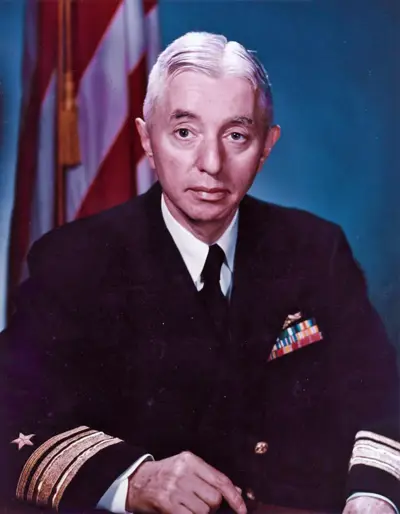
Hyman G. Rickover was an admiral in the U.S. Navy. He directed the original development of naval nuclear propulsion and controlled its operations for three decades as director of the U.S. Naval Reactors office. In addition, he oversaw the development of the Shippingport Atomic Power Station, the world's first commercial pressurized water reactor used for generating electricity. Rickover is also one of four people who have been awarded two Congressional Gold Medals.
