Dixie Lee Ray Quotes
A nuclear-power plant is infinitely safer than eating, because 300 people choke to death on food every year.
The fear of a nuclear accident is not based on the statistics or probability of death or injury. When a person chokes, it is only that person who may die. IF there is a nuclear power plant meltdown, millions of people can be injured or killed. It is the possible scale of the problem which makes most citizens fearful.
Dixie Lee Ray, 1914–1994, Chair, U.S. Atomic Energy Commission, Assistant Secretary of State (Democrat), Governor of Washington (Democrat), October 1975
Sourced by: Eigen's Political and Historical Quotations


Corporations in the nuclear business argue that Nuclear power is less expensive than otehr forns of ower that are in common use. However, when a nation adds the huge cost of maintianing a scientific infrastructure to inspect and regulate the nuclear power plants, and the costof establishing the contingency capability of popularion evacuation and containment when there is a nuclear accident, and then the cost of safely stopring and containing the spent but deadly radioactive fuel, the incredibly high cost of insurance, then it is clear that nuclear power is the most expensive form of power. However, some countries do it better than others with France being the only country at the beginning of the 21st century that operated nuclear power safely and efficiently. The United States, Russia and Japan had huge costs


Breslin was criticized in a Federal report for his alarmist news coverage of the Three Mile Island nuclear mishap:

Rickover, the father of the nuclear submarine was not only an expert in nuclear reactors and power, but he was known as a safety perfectionist with a safety record in the Navy that is still marveled at. President Carter, as a naval officer, had worked for Rickover and himself was technologically knowledgeable about nuclear power. He asked his old mentor to chair the investigating the Three Mile Island incident. Rickover actually recommended to the President that much of the report be secret, assuming that reform would take place quickly if the nuclear power industry were not killed by the damning expose of inept personnel and the lack of safety processes with a very dangerous process. However, few reforms were made nationally, and Rickover, 6 years later, grew to regret his recommendation for secrecy.

Any object that has been contaminated gradually loses its radioactive strength. It has a “half life”. This is the amount of time that it takes for the radiation in an object to lose half its strength. Different materials have different half lives. Nuclear waste from a power plant for example might have a half life of tens of thousands of years.


There had been so much nuclear activity—military and civilian—that he thought it inevitable, either by intention or accident, that there would be some catastrophes. Chernobyl and the crash of a nuclear bomb equipped plane in Spain destroyed the two areas for years thereafter proved him prescient but fortunately none of the “incidents” were bad enough to affect millions of people significantly although the damage of Chernobyl is still being discovered.
He was speaking from retirement. When he was Prime Minister--2001-2005, and active politically, he was in favor of nuclear power for Japan. But after the meltdown of the reactors at Fukishima, he saw happening exactly what the corporation executives running the nuclear power told him could never happen. He aslo supported the claims of American Sailor who had provided much help in the nuclear emergency that they were suffering from deseases brought on by teh excessibe radiation that they encountered.


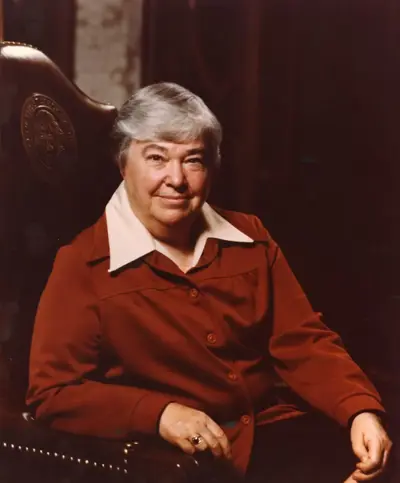
Dixy Lee Ray was an American scientist and politician who served as the 17th Governor of the U.S. state of Washington. Variously described as idiosyncratic, and "ridiculously smart," she was the state's first female governor and was in office during the 1980 eruption of Mount St. Helens. She was a supporter of atomic energy.
