Jimmy Breslin Quotes
I don't know why people are always afraid of a nuclear blast.
Breslin was criticized in a Federal report for his alarmist news coverage of the Three Mile Island nuclear mishap:
Jimmy Breslin, Political Columnist, Quoted in M. J. O'Neil and William Brink, The World According to Breslin
Sourced by: Eigen's Political and Historical Quotations


There had been so much nuclear activity—military and civilian—that he thought it inevitable, either by intention or accident, that there would be some catastrophes. Chernobyl and the crash of a nuclear bomb equipped plane in Spain destroyed the two areas for years thereafter proved him prescient but fortunately none of the “incidents” were bad enough to affect millions of people significantly although the damage of Chernobyl is still being discovered.


He was the first man to see the experimental evidence of nuclear power and he realized that it had the potential for an incredibly powerful weapon. It was his message about the possibilities about the atomic bomb that Albert Einstein transmitted to FDR, leading to American development of the bomb.(See {624449}.) By the time the atomic bomb had been developed, Germany had surrendered and Szilard and others felt that there was no longer a need to beat the Germans to the development. So he went from the biggest enthusiast to the most serious opponent.

Canada had the same absurd civil defense propaganda in the Cold War as the U. S. did. Both governments wanted to persuade their publics that a nuclear attack was survivable.


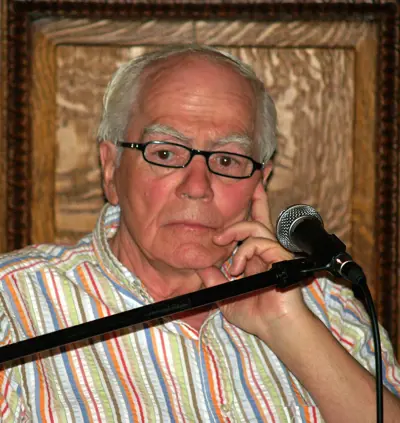
James Earle Breslin was an American journalist and author. Until the time of his death, he wrote a column for the New York Daily News Sunday edition. He wrote numerous novels, and columns of his appeared regularly in various newspapers in his hometown of New York City. He served as a regular columnist for the Long Island newspaper Newsday until his retirement on November 2, 2004, though he still published occasional pieces for the paper until his death. He was known for his newspaper columns which became the brash embodiment of the street-smart New Yorker, chronicling wise guys and big-city power brokers but always offered a sympathetic viewpoint of the working-class people of New York City, and was awarded the 1986 Pulitzer Prize for Commentary "for columns which consistently champion ordinary citizens".
