John Cheever Quotes
… literature is the only consciousness we possess and that its role as consciousness must inform us of our ability to comprehend the hideous danger of nuclear power.
John Cheever, 1912 –1982, Writer, The Journals of John Cheever
Sourced by: Eigen's Political and Historical Quotations

There had been so much nuclear activity—military and civilian—that he thought it inevitable, either by intention or accident, that there would be some catastrophes. Chernobyl and the crash of a nuclear bomb equipped plane in Spain destroyed the two areas for years thereafter proved him prescient but fortunately none of the “incidents” were bad enough to affect millions of people significantly although the damage of Chernobyl is still being discovered.


Breslin was criticized in a Federal report for his alarmist news coverage of the Three Mile Island nuclear mishap:


There was no problem with Iran having nuclear power. However, they wanted to utilize a process with which fuel for nuclear bombs could be made. Russia had offered to provide them with nuclear fuel for any power plant that they might want to create, but Iran refused insisting that they had a right to enrich their own uranium. Then they lied to the inspectors for the United Nations Atomic Energy Commission. They had threatened to “wipe Israel off the map” and the major Arab nations in the area secretly asked the United States to prevent Iran getting nuclear weapons even if force had to be used. Economic sanctions were tried first.


This quotation is frequently cited by those politicians in favor of reasonable government regulation of business. As the quotation illustrates, making profit is the driving market force and it can overcome issues of safety, well-being, health, fairness, or even sensibility.
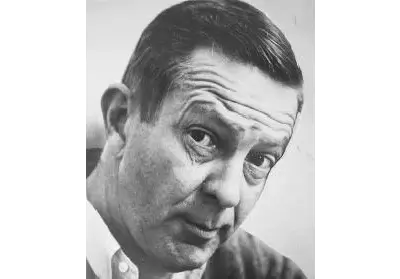
John William Cheever was an American novelist and short story writer. He is sometimes called "the Chekhov of the suburbs". His fiction is mostly set in the Upper East Side of Manhattan, the Westchester suburbs, old New England villages based on various South Shore towns around Quincy, Massachusetts, where he was born, and Italy, especially Rome. His short stories included "The Enormous Radio", "Goodbye, My Brother", "The Five-Forty-Eight", "The Country Husband", and "The Swimmer", and he also wrote five novels, comprising The Wapshot Chronicle (National Book Award, 1958), The Wapshot Scandal (William Dean Howells Medal, 1965), Bullet Park (1969), Falconer (1977) and a novella Oh What a Paradise It Seems (1982).
