Naoto Kan Quotes
Nearly one third of Japan would have had to evacuate from their communities…. I came to believe that we should halt further operations of nuclear energy that entail such huge risks…. Japan can supply its energy needs without nuclear power
Naoto Kan, Japanese Prime Minister, Explanation of what would have happened if they Japanese workers had not risked their lives to get the Fukushima nuclear power plant under control, Interview Al Jazeera, Return to Fukushima, January 9, 2014
Sourced by: Eigen's Political and Historical Quotations


Rickover, the father of the nuclear submarine was not only an expert in nuclear reactors and power, but he was known as a safety perfectionist with a safety record in the Navy that is still marveled at. President Carter, as a naval officer, had worked for Rickover and himself was technologically knowledgeable about nuclear power. He asked his old mentor to chair the investigating the Three Mile Island incident. Rickover actually recommended to the President that much of the report be secret, assuming that reform would take place quickly if the nuclear power industry were not killed by the damning expose of inept personnel and the lack of safety processes with a very dangerous process. However, few reforms were made nationally, and Rickover, 6 years later, grew to regret his recommendation for secrecy.

He was speaking from retirement. When he was Prime Minister--2001-2005, and active politically, he was in favor of nuclear power for Japan. But after the meltdown of the reactors at Fukishima, he saw happening exactly what the corporation executives running the nuclear power told him could never happen. He aslo supported the claims of American Sailor who had provided much help in the nuclear emergency that they were suffering from deseases brought on by teh excessibe radiation that they encountered.
During the meltdown of the Japanerse nuclear reactors at Fukashima, American sailors were deployed to provide critical assistance fram an American aircraft carrier in the area. They played a significant role in getting the reactors under control. Many of the Japanese at the emergency area had suffered serious illness from the radiation exposure abd a number died. The crew of the aircraft carrier had developed a highly unusual prevelance of serious illness assocated with radiation exposure. The U. S. Defense Department was "styding the matter" but had not decided that the unusual illness patern was related to their assignment assisting in th emergency. A number of the sailors had come to japan and asked for damages from the Raactor company which like most American Corporations would not do or say anything. The Japanese government also was silent on the issue when the sailors came to Japan, However, this former prime minister felt so strongly that he visited the Sailors and took up their cause in letting the Japanese public know what had happened and how the government and the electic company were acting. This was Koizumi's tearful response to the press covering the saolors and their request.

There had been so much nuclear activity—military and civilian—that he thought it inevitable, either by intention or accident, that there would be some catastrophes. Chernobyl and the crash of a nuclear bomb equipped plane in Spain destroyed the two areas for years thereafter proved him prescient but fortunately none of the “incidents” were bad enough to affect millions of people significantly although the damage of Chernobyl is still being discovered.


Rocky Flats was operated for the government by Dow Chemical Company, which unfortunately violated the terms of their contract and improperly buried nuclear waste which ended up producing so much radiation that the plant had to be closed down and the government had to buy up property around the nuclear plant as a buffer zones so that private people would not receive high radiation doses by being too close to the plant.


The fear of a nuclear accident is not based on the statistics or probability of death or injury. When a person chokes, it is only that person who may die. IF there is a nuclear power plant meltdown, millions of people can be injured or killed. It is the possible scale of the problem which makes most citizens fearful.


TEPCO was the Japanese Corporation that operated the Fukushima Nuclear Power Plant that so badly hurt Japan. The company was not candid and forthcoming during the disaster and in the aftermath. The governor would not allow TEPCO to restart other reactor in his province until they adopted a new policy of candor and truthfulness.

Corporations in the nuclear business argue that Nuclear power is less expensive than otehr forns of ower that are in common use. However, when a nation adds the huge cost of maintianing a scientific infrastructure to inspect and regulate the nuclear power plants, and the costof establishing the contingency capability of popularion evacuation and containment when there is a nuclear accident, and then the cost of safely stopring and containing the spent but deadly radioactive fuel, the incredibly high cost of insurance, then it is clear that nuclear power is the most expensive form of power. However, some countries do it better than others with France being the only country at the beginning of the 21st century that operated nuclear power safely and efficiently. The United States, Russia and Japan had huge costs

Nuclear fusion is different from nuclear fission that currently powers atomic power plants. Fusion is the process the sun uses to generate all its power. Scientists understand exactly how fusion works—it’s much simpler than fission, but actually creating a way of doing it on earth has been a very difficult challenge. The National Ignition Facility has been trying to produce a fusion reaction for a number of years with no success.


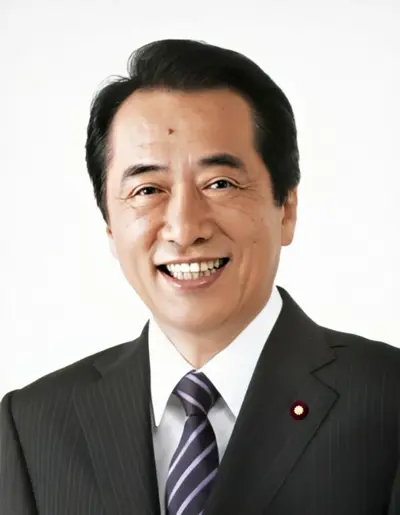
- Born: October 10, 1946
- Nationality: Japanese
- Profession: Politician
Naoto Kan is a Japanese politician who was Prime Minister of Japan and President of the Democratic Party of Japan (DPJ) from June 2010 to September 2011. Kan was the first Prime Minister since the resignation of Junichiro Koizumi in 2006 to serve for more than one year, with his predecessors Yukio Hatoyama, Tarō Asō, Yasuo Fukuda, and Shinzō Abe either resigning prematurely or losing an election. On 26 August 2011, Kan announced his resignation. Yoshihiko Noda was elected as his successor. On 1 August 2012, United Nations Secretary-General Ban Ki-moon announced Kan would be one of the members of the UN high-level panel on the post-2015 development agenda.
