Pierre Schaeffer Quotes
It's ridiculous that time and time again we need a radioactive cloud coming out of a nuclear power-station to remind us that atomic energy is extraordinarily dangerous.
Hodgkinson, Tim. "Pierre Schaeffer Interview." ReR Quarterly, vol. 2, no. 1, Recommended Records, 1987, pp. 4-9.


Rickover, the father of the nuclear submarine was not only an expert in nuclear reactors and power, but he was known as a safety perfectionist with a safety record in the Navy that is still marveled at. President Carter, as a naval officer, had worked for Rickover and himself was technologically knowledgeable about nuclear power. He asked his old mentor to chair the investigating the Three Mile Island incident. Rickover actually recommended to the President that much of the report be secret, assuming that reform would take place quickly if the nuclear power industry were not killed by the damning expose of inept personnel and the lack of safety processes with a very dangerous process. However, few reforms were made nationally, and Rickover, 6 years later, grew to regret his recommendation for secrecy.


Rocky Flats was operated for the government by Dow Chemical Company, which unfortunately violated the terms of their contract and improperly buried nuclear waste which ended up producing so much radiation that the plant had to be closed down and the government had to buy up property around the nuclear plant as a buffer zones so that private people would not receive high radiation doses by being too close to the plant.


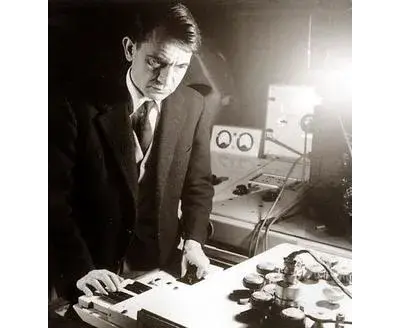
Pierre Henri Marie Schaeffer was a French composer, writer, broadcaster, engineer, musicologist and acoustician. His innovative work in both the sciences—particularly communications and acoustics—and the various arts of music, literature and radio presentation after the end of World War II, as well as his anti-nuclear activism and cultural criticism garnered him widespread recognition in his lifetime.
