Hirohiko Izumida Quotes
TEPCO is guilty of institutionalized lying…. TEPCO knew on March 12 that fuel had melted down, but they continued to lie for almost 2 months. They haven’t made an accounting of the past. We first have to determine why they lied.
TEPCO was the Japanese Corporation that operated the Fukushima Nuclear Power Plant that so badly hurt Japan. The company was not candid and forthcoming during the disaster and in the aftermath. The governor would not allow TEPCO to restart other reactor in his province until they adopted a new policy of candor and truthfulness.
Hirohiko Izumida, Japanese Governor of Niigata Prefecture, Quoted on Al Jazeera, Return to Fukushima, January 9, 2014
Sourced by: Eigen's Political and Historical Quotations


There had been so much nuclear activity—military and civilian—that he thought it inevitable, either by intention or accident, that there would be some catastrophes. Chernobyl and the crash of a nuclear bomb equipped plane in Spain destroyed the two areas for years thereafter proved him prescient but fortunately none of the “incidents” were bad enough to affect millions of people significantly although the damage of Chernobyl is still being discovered.

The quotation was given by Defense Secretary Donald Rumsfeld just prior to the war with Iraq, 2003.

Every military establishment has secrets that they should maintain and are not always forthcoming with facts d explanations. However, the Pentagon is so large with so many layers that there are subgroups and vested interests, prevaricate and lie, even to their own superiors. No one knows how prevalent this is, but there have be a number of major incidents where the were lies and cover-ups—usually to prevent public embarrassment to some element of the military industrial complex.


During the meltdown of the Japanerse nuclear reactors at Fukashima, American sailors were deployed to provide critical assistance fram an American aircraft carrier in the area. They played a significant role in getting the reactors under control. Many of the Japanese at the emergency area had suffered serious illness from the radiation exposure abd a number died. The crew of the aircraft carrier had developed a highly unusual prevelance of serious illness assocated with radiation exposure. The U. S. Defense Department was "styding the matter" but had not decided that the unusual illness patern was related to their assignment assisting in th emergency. A number of the sailors had come to japan and asked for damages from the Raactor company which like most American Corporations would not do or say anything. The Japanese government also was silent on the issue when the sailors came to Japan, However, this former prime minister felt so strongly that he visited the Sailors and took up their cause in letting the Japanese public know what had happened and how the government and the electic company were acting. This was Koizumi's tearful response to the press covering the saolors and their request.


Gelb was referring to the Cuban Missile Crisis in 1963. The Russians had installed ICBMs in Cuba and more were coming by sea. WWIII could have started with a misstep by the United States or the Soviet Union. President rejected the advice of some hawks to attack and/or invade Cuba and be ready to attack Russia with nuclear weapons. Instead, he authorized a naval blockade of all ships and planes going in or out of Cuba. There were some negotiations with the Russians, and in a few days, the Russians dismantled and removed the missiles from Cuba and we lifted the naval blockade. The perception was that Kennedy faced down the Russians who capitulated when faced with firmness and force. Actually, Kennedy gave the Russians much more. He agreed to remove the American ICBM Jupiter missiles from Turkey. But if that were known in America, the right wing would criticize Kennedy mercilessly for appeasing and capitulation to the Russians. The Russians agreed to keep it secret, and the Executive Branch classified it top secret and kept the entire deal from the public. 50 years later, Gelb, one of the few people in the government then who knew the entire deal, wrote this article pointing out that there was a serious danger to what we did to make that deal a secret. Many hawks took the Cuban Missile Crisis as proof that the Russians would back down when faced with a fait accompli and would not retaliate. They then formulated much American foreign and military policy on the assumption that the Russians will capitulate when faced with our tough unilateral terms. The reality of course was just the opposite. The Russians would only agree to a peaceful solution if we withdrew all our missiles that were threatening them and end the naval blockade of Cuba. The Russians got us to remove our missiles for the relatively cheap price of removing from Cuba just a few missiles that they had just installed. Kennedy looked like the strong hero who stood up to the Russians while in reality, he and our military and state department lost a diplomatic contest of sorts. Kennedy apologists argue that because America had developed longer range ICBMs, the Jupiter Missiles in Turkey were not that important, and Kennedy really gave up nothing of value. The Kennedy team clearly didn’t want to argue that point in a public debate, and chose secrecy where the enemy clearly knew the whole story, but our allies, our civilians, our politicians and even most of our military were in the dark.

Allan Dulles was a long time Director of the CIA.
The CIA has never denied this, and it seems to be corroborated in that none of the CIA reports to the Presidents ever mentioned the failures and there is no CIA official who ever claimed that they informed either of the Presidents. In particular, when Kennedy initially went along with the ill-fated CIA Bay of Pigs invasion plan not realizing that the CIA had a dismal record of major misjudgments and failures of covert operations.

Corporate lies and cover-ups seem common in industrialized democracies—BP and the oil spill in the United States, nuclear power plant safety in Japan or Airline Safety in New Zealand.


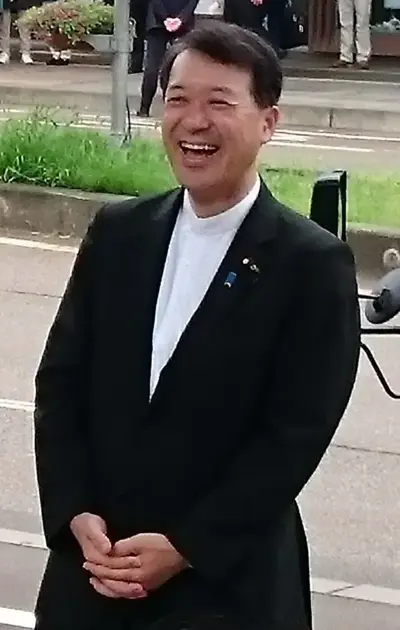
Hirohiko Izumida is a Japanese politician and the governor of Niigata Prefecture since October 25, 2004.
