James Anthony Froude Quotes
To tell a man it is his duty to submit his judgment to the judgment of the church, is like telling a wife it is her duty to love her husband — a thing easy to say, but meaning simply nothing. Affection must be won, not commanded.
Much of the then prevailing opinion was the opposite—that men and women should be taught these things from birth and education. Right and God’s plan, they argue, need not be contested for with temptation and wrong or worse, the word of Satan.
James Anthony Froude, 1818–1894, English historian, novelist, philosopher biographer, and editor of Fraser's Magazine, “Confessions Of A Sceptic”, 1849
Sourced by: Eigen's Political and Historical Quotations


Ingersoll was considered to be the greatest orator and political thinker of his day, but his overt atheistic views curtailed his elected political career.


There are some who question the authenticity of this Bull. However, its existence was supported by John of Salisbury who claimed to be the emissary who arranged the Bull. See {611696}. However, those who are shocked that the Pope could have been so crass as to “give” a country to Henry II for money have claimed that the writing of John was also a forgery,

Pen name: Jack Nipps


While most of the Council of Trent was very conservative in that they were dealing with the threat of Reformation and the Protestants, this particular Cannon is profoundly liberal. Women, who had virtually no rights had often been “sent” to a convent by a father or guardian, the local priest or bishop, and in some cases even a husband. This established for the first time that women could not be forced to take vows—a major step in the evolution of the freedom of women in Western society.

Madison was a deist, but was firm that religion was to be an individual matter and not an area in which the state ought be involced.


This anarchist vision of religion in the state is that of America with its first amendment, The reason that religion was still an issue for American Anarchists were that at the time and earlier, community norms and customs throughout the country dominated life and the First Amendment separation of church and state was commonly transgressed with few citizens willing to stand up against the community majority and force the issue in courts or in the political arena. That changed in the remainder of the 20th century and while there still are violations, they are relatively few in the 21st century.


3rd Earl Russell of Kingston. He wrote this just after turning 16.

Spinoza’s ideas were considered so radical and dangerous that he was the only man in history who was excommunicated by the Catholics, the Jews and the Muslims. This was his observation after his first excommunications -- by his Jewish Congregation in Amsterdam.


Although English, Cobett spent time in America and published a newspaper, The Porcupine Gazette, in Philadelphia. We was very conservative but on the issue of slavery his resembled a liberal point of view. He never used sugar, coffee, or rum because slave labor produced them. However, he advocated legally enslaving lazy people, blacks and whites, who would not work.

Jorge Mario Bergoglio

This quotation is often used to illustrate the complete intellectual conformity that was (and for some still is) required of the Roman Catholic Church. Although this was a theological statement, it is sometimes functionally used as a definition of loyalty to a President or other political figure with respect to staff.
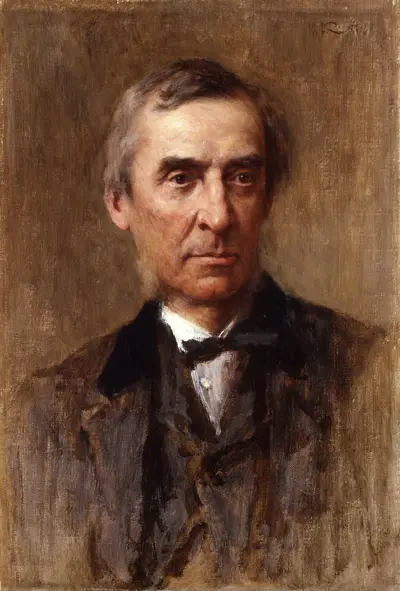
James Anthony Froude FRSE was an English historian, novelist, biographer, and editor of Fraser's Magazine. From his upbringing amidst the Anglo-Catholic Oxford Movement, Froude intended to become a clergyman, but doubts about the doctrines of the Anglican church, published in his scandalous 1849 novel The Nemesis of Faith, drove him to abandon his religious career. Froude turned to writing history, becoming one of the best known historians of his time for his History of England from the Fall of Wolsey to the Defeat of the Spanish Armada. Inspired by Thomas Carlyle, Froude's historical writings were often fiercely polemical, earning him a number of outspoken opponents. Froude continued to be controversial up until his death for his Life of Carlyle, which he published along with personal writings of Thomas and Jane Welsh Carlyle. These publications illuminated Carlyle's often selfish personality, and led to persistent gossip and discussion of the couple's marital problems.
