Saint Ignatius Quotes
That we may be altogether of the same mind and in conformity with the Church herself, if she shall have defined anything to be black which appears to our eyes to be white, we ought in like manner to pronounce it to be black.
This quotation is often used to illustrate the complete intellectual conformity that was (and for some still is) required of the Roman Catholic Church. Although this was a theological statement, it is sometimes functionally used as a definition of loyalty to a President or other political figure with respect to staff.
Ignatius of Loyola, 1491-1556, Spanish, Knight, Catholic Priest, & Theologian, Founder and 1st Director General of the Jesuits, Roman Catholic Saint, Spiritual Exercises, Rule 13
Sourced by: Eigen's Political and Historical Quotations


In 1877 Wasburn was dropped from the List of Ministers by the Unitarian Church. He had become quite atheistic.


Ingersoll was considered to be the greatest orator and political thinker of his day, but his overt atheistic views curtailed his elected political career.

Coughlin was a great admirer of Adolf Hitler and Benito Mussolini and the Fascists. He was one of the American “heroes” in Nazi Germany, receiving assistance from the Nazi government. Between his anti-Semitism and support for Hitler, Fascism and radical socialism, the Vatican ordered him off the air and shut down his political demagoguery.


Of all the Western Colonial Powers, Spain was the worst. They took the most from their possessions and contributed the least. Worst, they killed off almost all the indigenous people.

Samuel Langhorne Clemens, 1835-1910

Jorge Mario Bergoglio

Priests at the time were mostly uneducated. They would tend to make up their own Biblical stories that the people would prefer rather than the official church versions. The bishops wanted this practice stopped.


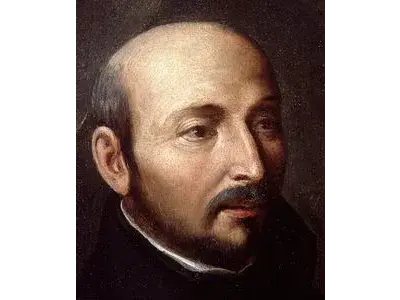
Ignatius of Loyola, venerated as Saint Ignatius of Loyola, was a Spanish Basque Catholic priest and theologian, who together with Peter Faber and Francis Xavier founded the religious order called the Society of Jesus (Jesuits) and became its first Superior General at Paris in 1541. The Jesuit order is dedicated to teaching and missionary work. Its members are bound by a special (fourth) vow of obedience to the sovereign pontiff to be ready to fulfill special papal missions. The society played an important role during the Counter-Reformation.
