Joseph Smith Jr. Quotes
… to maintain sincere neutrality towards belligerent nations; to prefer in all cases amicable discussion and reasonable accommodation of intrigues and foreign partialities, so degrading to all countries, and so baneful to free ones; to foster a spirit of independence too just to invade the rights of others, too proud to surrender their own, too liberal to indulge unworthy prejudices ourselves, and too elevated not to look down upon them in others; to hold the union of the States as the basis of their peace and happiness; to support the constitution, which is the cement of the union, as well in its limitations as in its authorities; to respect the rights and authorities reserved to the states and to the people, as equally incorporated with, and essential to the success, of the general system; to avoid the slightest interference with the rights of conscience, or the functions of religion, so wisely exempted from civil jurisdiction; to preserve in their full energy, the other salutary provisions in behalf of private and personal rights, and of the freedom of the press; as far as intention aids in the fulfillment of duty, are consummations too big with benefits not to captivate the energies of all honest men to achieve them, when they can be brought to pass by reciprocation, friendly alliances, wise legislation, and honorable treaties.
First edition typo error -- dropped: "differences to a decision of them by an appeal to arms; to exclude foreign" Smith had written to most of the then likely Presidential candidates of both major parties asking for their position on the Mormons who were facing persecution wherever they went. None of the politicians would make any satisfactory commitments. Smith took Direct Action and became the only major religious official to have run for the Presidency of the United States until Pat Robertson tried and failed in 2000. Smith’s assassination shortly thereafter cut his run for the Presidency short before it made much headway and politically he had no chance to affect the race. In this platform he quoted and gave credit to Madison for many of the ideas.
Joseph Smith, Jr., 1805-1844, Founder of the Mormon Religion, General Smith's Views on the Powers and Policy of the Government of the United States, Platform for his run for the Presidency, February 7, 1844
Sourced by: Eigen's Political and Historical Quotations


Holland was then a Republic and federation of the separate states. Each elected representatives to the ruling legislature, however, many states had not been pleased that their representatives did not reflect the desires and public opinion in the individual states and in some cases took bribes to vote in favor of special interests. The Dutch did NOT want their representatives to use their own judgment but wanted them to seek and follow the instructions of the legislatures of each state.


The Federal Fugitive Slave Act required all in free states to assist owners of escaped slaves to return them to their owners. In 1854 a Missouri slave owner tracked his escaped slave to Wisconsin and the Federal officials incarcerated the slave pending his return. A Wisconsin mob broke the slave out of jail and helped him escape to Canada. Sherman M. Booth, Publisher & Editor of the Wisconsin Free Soil Democrat was convicted under the Fugitive Slave Act for aiding the escape. Smith’s opinion overturned the Fugitive Slave Act on the grounds that it had usurped state’s rights. The Supreme Court overturned Smith’s ruling, but Booth was pardoned. See {587927} & {587928}.


The words are those of President Andrew Jackson. See {604550}. After occupying New Orleans, General Butler infuriated the Confederate Sympathizers with this act. Jackson was the hero of the Battle of New Orleans and an unapologetic slave owner. The Southerners had erected a magnificent statue of their hero Jackson on horseback in a major section of the city. Butler, then ordered that the Jackson quotation be chiseled in the stone base. The townspeople were furious that this Union General would make up words and attribute them to Jackson; however, when they finally realized that Jackson had actually said those words they felt even more humiliated. There are still a few Southernors who consider this terrible insult to the Confederacy, and of course that is just what Butler intended.

Shortly thereafter the United States joined the allies and the First World War.


Federal officials and commissioners issued laws, directives and orders that were very unpopular with the Mormons who were in the overwhelming majority of the Utah territory. The Mormon “government” was a type of theocracy but a very popular one. The Mormons tried to test the constitutionality and legality of the Federal laws and orders before they would obey. The government position was that they should obey and then could test the laws in the courts. The Mormons eventually lost in the courts anyway, but the principle of obedience to law until it can be tested and reversed has generally been the rule of U. S. Law. However, civil disobedience in which many religions have engaged in our history argues the obverse. Eventually Taylor had to go “underground” and rule the church from exile in which state he died.
“Celestial Marriage” is the term then used be Mormons to describe plural marriage.


This was a very interesting quotation in that there was no scripture of any religion that even mentions the United States nor which nations would lead the world and which should follow.


This is an interesting historical quotation because it shows the role of the Queen in the English Government at the middle of the 19th century. What the quotation shows is that the drafts of significant foreign policies were sent to the young 29 year old Queen for approval. However, her review was not perfunctory, In {630732} it showed how she analyzed proposed policies and pointed out flaws and shortcomings. In this quotation she not only criticized a part of the draft policy but actually wrote her own copy to be included. War was then raging in Lombardy between the Austrians under Marshal Radetzky and the Piedmontese under the King of Sardinia and she believed the Palmerston draft did not do enough to make the Austrians see England as an objective party. And she wanted to be much more proactive and have the British Foreign Ministry mediate the conflict. This would be like a President of the United States taking a draft of a foreign policy from the State Department, instead of either approving or disapproving it, redrafts it to add some additional elements and make the language more comfortable for the parties. And she did this when by U. S. standards she was not old enough to even run for Congress. (And women in the United Kingdom could not even vote.) Note that the formality of the time required that the Queen refer to herself in the third person and not the first.

The Union troops had just been routed at Bull Run. Many in the North thought that the war would be a short one with little disruption of loss of life. Here Norton, like so many others, provided a a more realistic assessment. Also note the reference to “barbarism” in the South, When the Union was formed, the Southern states were not as well developed as the North from an industrial, educational or cultural perspective. There were vestiges of aristocracy, crude law enforcement, and much more poverty (Virginia excepted) than in the North. Most Northerners thought that the South would reform—modernize and become more like the North, but instead the gulf became greater as the North itself developed and changed rapidly while the South was mired in its traditions with their aristocracy gaining more political, economic and cultural control. This attitude of Northern superiority, objectively valid though it may have been, was sorely resented by the South and this resentment has persisted into relatively modern times.

This is an interesting retrospective on slavery after the tragedy of the Civil War was recognized.

The Republican controlled Senate had turned down the ratification of the League of Nations presented by Democratic President Wilson, and looked like they would turn down any international treaty even if presented by a Republican President. This statement allowed the treaty ratification by only a few votes. However, after that the Senate turned down our participation in the Permanent Court of Arbitration at the Hague. See {640099}.

Not all the Muslim nations of the Middle East want Israel destroyed. The Kurds and the Turks both maintain relations with Israel. The problem lies with the Arab Nations.

In Ireland at the time the established church—the Protestant Anglican Church of Ireland—had the legal right to collect annual Tithes from the population in order to fund the activities of the Church. One difficulty however, was that the majority of the population were Roman Catholics. The poorest of them could not afford the tithe payments to any church. Whereas in the past, the Protestant Church officials did not force the issue of tithe collection from the poor, in about 1830 they changed and seized the property of the poor (Protestants and Catholics) and auctioned it off to pay for the tithe. The Cardinal organized this campaign of using the technicalities of the laws to combat the Tithe. For example, the poor Catholic farmers gave title to their cattle to the Catholic Church and the Archbishop then had them feed and care for “his” cattle in exchange for their ability to use the milk for drinking and cheese.
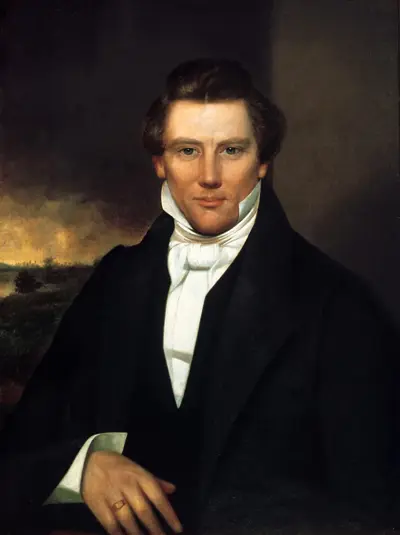
Joseph Smith, Jr. was an American religious leader and founder of Mormonism and the Latter Day Saint movement. When he was twenty-four, Smith published the Book of Mormon. By the time of his death fourteen years later, he had attracted tens of thousands of followers and founded a religious culture that continues to the present.
