George Washington Quotes
… they should experience the benefits of an impartial dispensation of justice …. That the mode of alienating their lands, the main source of discontent and war, should be so defined and regulated as to obviate imposition and as far as may be practicable controversy …. commerce with them should be promoted under regulations tending to secure an equitable deportment toward them, and that such rational experiments should be made for imparting to them the blessings of civilization as may from time to time suit their condition efficacious provision should be made for inflicting adequate penalties upon all those who, by violating their rights, shall infringe the treaties and endanger the peace of the Union. That the Executive of the United States should be enabled to employ the means to which the Indians have been long accustomed for uniting their immediate interests with the preservation of peace …. efficacious provision should be made for inflicting adequate penalties upon all those who, by violating their rights, shall infringe the treaties and endanger the peace of the Union …. A system corresponding with the mild principles of religion and philanthropy toward an unenlightened race of men, whose happiness materially depends on the conduct of the United States, would be as honorable to the national character as conformable to the dictates of sound policy.
George Washington, 1732-1799, 1st President of the United States (VA), Recommendations for Indian Relations, Message to Congress, October 25, 1791
Sourced by: Eigen's Political and Historical Quotations


First edition typo error -- dropped: "differences to a decision of them by an appeal to arms; to exclude foreign" Smith had written to most of the then likely Presidential candidates of both major parties asking for their position on the Mormons who were facing persecution wherever they went. None of the politicians would make any satisfactory commitments. Smith took Direct Action and became the only major religious official to have run for the Presidency of the United States until Pat Robertson tried and failed in 2000. Smith’s assassination shortly thereafter cut his run for the Presidency short before it made much headway and politically he had no chance to affect the race. In this platform he quoted and gave credit to Madison for many of the ideas.


Mediating the conflict between Cuba, Angola and South Africa:


This was before secession and “Confederacy” as Lincoln was using the term referred to the Confederacy or the original 13 states and the territories that joined the Union thereafter.

The Republican controlled Senate had turned down the ratification of the League of Nations presented by Democratic President Wilson, and looked like they would turn down any international treaty even if presented by a Republican President. This statement allowed the treaty ratification by only a few votes. However, after that the Senate turned down our participation in the Permanent Court of Arbitration at the Hague. See {640099}.

For over 50 years both the United States and Cuba had carried grudges about the Bay of Pigs, the boycott on purcuase of life saving medicine and U. S. attempts to assassiate Fidel Castro on the Cuban site, and the expropriation of Americans' Coban Prepoert, the poor record on human rights, the Mariel Boat Lift, and the harboring of American criminals for the United States. The policy positions held by the two nations had not produced anything constructive so the parties agreed to try and build closer ties. In just two years of a limited reproachment some progress had been made and Prices point about getting beyond the past tried to get all focussed on the future.


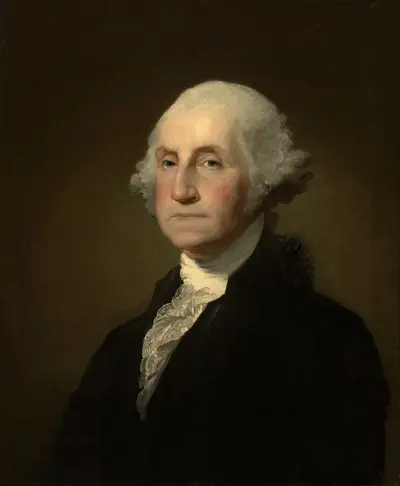
George Washington was the first President of the United States (1789-97), the Commander-in-Chief of the Continental Army during the American Revolutionary War, and one of the Founding Fathers of the United States. He presided over the convention that drafted the current United States Constitution and during his lifetime was called the "father of his country".
