Ernesto Teodoro Moneta Quotes
The Italian Revolution was fought first of all to obtain the liberty and unity of the nation, and then, with that achieved, to join the freest and most advanced nations in inaugurating a new era of peace, justice, and joint cooperation in the work of civilization.
Moneta, Ernesto Teodoro. "Peace and Law in the Italian Tradition." Nobel Lectures, Peace 1901-1970, edited by Frederick W. Haberman, Elsevier Publishing Company, 1972, pp. 118-126.

See Noah Webster and Timothy Pickering for similar positions. The War of 1812 was very unpopular with the New England states. They had the most developed trade with England and were economically injured by the curtailment of that trade. The citizens of Essex wanted to give the State Legislature the most possible moral and political power to negotiate an end to the war.


The Union troops had just been routed at Bull Run. Many in the North thought that the war would be a short one with little disruption of loss of life. Here Norton, like so many others, provided a a more realistic assessment. Also note the reference to “barbarism” in the South, When the Union was formed, the Southern states were not as well developed as the North from an industrial, educational or cultural perspective. There were vestiges of aristocracy, crude law enforcement, and much more poverty (Virginia excepted) than in the North. Most Northerners thought that the South would reform—modernize and become more like the North, but instead the gulf became greater as the North itself developed and changed rapidly while the South was mired in its traditions with their aristocracy gaining more political, economic and cultural control. This attitude of Northern superiority, objectively valid though it may have been, was sorely resented by the South and this resentment has persisted into relatively modern times.


1st Earl of Beaconsfield


President Benjamin Harrison and Congress proclaimed that October 31, 1892 be a national celebration of the 400th Anniversary of Columbus landing in America. Bellamy represented a juvenile weekly publication and was named chairman of the committee to conduct the celebration. A first draft of the pledge was written by James B. Upham, a staff member of the publication. The words "under God" were added in 1952 by an Act of Congress. The original had “to my flag.” The pledge was first used publicly at the Chicago World’s Fair on October 21, 1892. It was not endorsed by Congress until 1942. It is officially recognized as law in 36 United State Code 172.


This is one of the most idealistic and hopeful statements ever constructed by man. It was ironic that UNESCO which began with so much principle and hope became corrupt and even moved into the political arena taking positions on international disputes which was at odds with the Security Council.


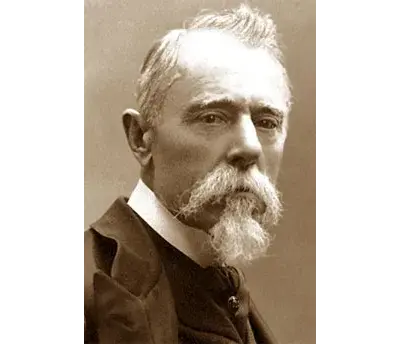
Ernesto Teodoro Moneta was an Italian journalist, nationalist, revolutionary soldier and later a pacifist and Nobel Peace Prize Laureate. He adopted the motto In varietate unitas! which later inspired Motto of the European Union.
