Leonard Boswell Quotes
Each state in the Union is honored in the order of when it ratified the Constitution and became a part of the United States. This September it is Iowa's turn. Iowa became the 29th state to be admitted to the union on December 28, 1846.
Boswell, Leonard L. Remarks on the Iowa State Quarter. Congressional Record, vol. 150, U.S. Government Printing Office, 2004.


Jackson was reacting to the claimed right of South Carolina to nullify Federal tariffs and other Federal laws.
Soon after Jackson's reelection, delegates from South Carolina, led by John C. Calhoun, moved quickly to declare "null, void, and no law" the Tariff Act of 1832. The president's reaction to the Ordinance of Nullification was swift.

First edition typo error -- dropped: "differences to a decision of them by an appeal to arms; to exclude foreign" Smith had written to most of the then likely Presidential candidates of both major parties asking for their position on the Mormons who were facing persecution wherever they went. None of the politicians would make any satisfactory commitments. Smith took Direct Action and became the only major religious official to have run for the Presidency of the United States until Pat Robertson tried and failed in 2000. Smith’s assassination shortly thereafter cut his run for the Presidency short before it made much headway and politically he had no chance to affect the race. In this platform he quoted and gave credit to Madison for many of the ideas.

George W. Bush. See {618119} for the rejoinder to the defense.


The First and Official Use of the Name

This was his political speech about the importance of the state militia. However, in the War of 1812 in September the British attacked and burned the town of Portland which the militia feebly tried to defend. See his private view then: {613332}.

Dix finally broke with the Democrats over the slavery question and became a Republican.
The political machine of New York City, unlike most others in the Northeast were supporters of the Southern position on slavery. They had strong economic relations with the Southern planters and wanted to keep the federal government far away from state and local affairs.

Federal officials and commissioners issued laws, directives and orders that were very unpopular with the Mormons who were in the overwhelming majority of the Utah territory. The Mormon “government” was a type of theocracy but a very popular one. The Mormons tried to test the constitutionality and legality of the Federal laws and orders before they would obey. The government position was that they should obey and then could test the laws in the courts. The Mormons eventually lost in the courts anyway, but the principle of obedience to law until it can be tested and reversed has generally been the rule of U. S. Law. However, civil disobedience in which many religions have engaged in our history argues the obverse. Eventually Taylor had to go “underground” and rule the church from exile in which state he died.


Surprising to many is the fact that the Federal Courts did not automatically get established when a new state joined the Union. Congress had to legally reorganize the Federal Court structure and appropriate additional money. In addition Senators then were elected by the State Legislatures who were not anxious to have any Federal Legal presence in their state if they could avoid it, as it might interfere with their State Court system. The Constitution provided for the Federal Courts but left it up to Congress to decide on all the details. It would not be until after the Civil War that the Federal Courts were very active in all States.

From this quotation, {615902} and {615901} it is clear that the framers of the Constitution intended the treaty making powers to be shared by the President and the Senate. In practice, in modern times treaties are usually initially negotiated by diplomats under the supervision of the President and the Senate gets to concur or not in the ratification process. However, there have been a number of treaty failures including the League of Nations where the lack of coordination has resulted in a situation where the Senate had to accept or reject something which the President had negotiated and the Senate rejected the treaty.

It was commonly asked of Blacks applying to register. There are few people who could give a cogent response to this. What made it terrible was that the white racist registrars had the unilateral authority to determine whether or not the oral response was adequate. Recording of responses were prohibited so that no Black who was disenfranchised could ever appeal when he/she was rejected. This is one of the thousands of techniques that were used throughout the South to prevent Negro voting. They were so egregious that Lyndon Johnson was abe to force through Southern filibusters The Voting Rights Act which has eliminated the worst of the racist restrictions on Black voting. As the worst of the racist white generation has died off, Southern discrimination in voting has lessened and the situation is better each year. By 2012 there were some who claimed that the law was no longer necessary do to changes in attitude and practice, but others worried that if there were no longer any forms of discrimination in voting, why some wanted to repeal the Voting Rights Act.
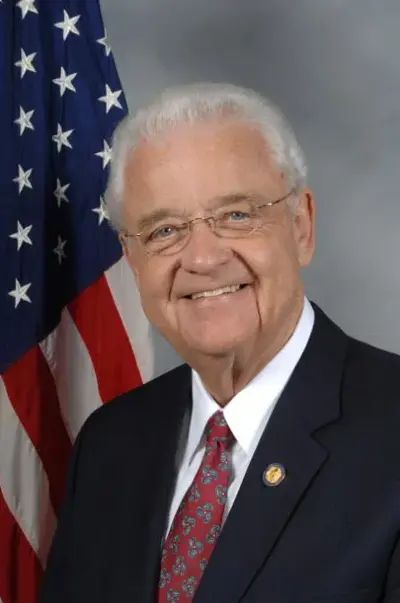
Leonard Leroy Boswell was an American politician who served as the U.S. Representative for Iowa's 3rd congressional district from 1997 to 2013, a district based in Des Moines. A member of the Democratic Party, he was defeated for reelection in 2012 by 4th district incumbent Tom Latham, who decided to run against him after redistricting. Boswell left Congress in January 2013.
