Massachusetts Quotes
There shall never be any bond slavery, villeinage, nor captivity among us, unless it be lawful captives, taken in just wars, and such strangers as willingly sell themselves or are sold to us, and these shall have all the liberties and Christian usages which the law of God established in Israel requires.
This law, reflecting the religious values of the Puritans, would form the basis and example of slavery prohibition in some of the other Northern States of Colonial America. They colony allowed indentured servitude, if voluntary, but required that even indentured servants have certain freedoms, and of course when the period of indenture was served, the servant was totally free.
Massachusetts General Court. The Massachusetts Body of Liberties. 1641. The Colonial Laws of Massachusetts, edited by William H. Whitmore, City Council of Boston, 1889, p. 53.

In contrast to Massachusetts with had passed a law in 1641 banning slavery (Quote 643567), Maryland 22 years later became to first state to pass a law to formally recognize and allow Negro slavery.


Fitzhugh was a Southern iconoclast whose view of Northern labor was much like that of Karl Marx but who was an enthusiastic supporter of slavery. Fitzhugh was of the opinion that slavery would be reinstated in the North and his treatise agues for that. More and more intellectual opinion was coming to the conclusion that slavery must be abolished or made universal before Lincoln’s famous statement in his debate against Douglas. Although Northerners and Southerners had come to agree on this point, they disagreed about which alternative would and should prevail.


In early New England the General Court served as both a legislature and a judiciary before separation of powers was introduced. 5 years later the Court banned importing African slaves at all. While slavery was not common in Rhode Island, the laws was not seriously enforced on those who would defy them. It does represent a public anti-slavery sentiment that existed in Early America. It would take 200 years for Rhode Island to finally eliminate all forms of slavery.

Baldwin was a young lawyer at the time. He represented a shipload of ex-slaves who had taken over their Spanish slave ship and landed in America. The Spanish claimed, the ship owners and some of the crew all claimed the “property.”


Southern secession and the Civil War This is one of the major quotations with which historians rebut the revisionist view that the Civil War was about States’ Rights or other economic factors.


During the same year England outlawed the slave trade and English citizens and ships from participating in it.

In this case, the Pope was obeyed on the issue of slavery. However, Papal injunctions against slavery have not always had the desired effect. See {617632}

Brown was the richest man in Rhode Island and made much of his money in the slave trade. This quotation shows that slavery was not completely a North verses South split. Northerners like Brown for whose family Brown University was named, was as virulent supporter of slavery as the most ardent Southerner.

This quotation illustrates the strong abolitionist tendency in the Ohio Territory. Under this clause, escaped slaves from Southern states would not be returned by the state authorities. Even more insulting to the slave enthusiasts of the South, if a Southerner brought any slaves into Ohio with them as was common for Southerners traveling with their personal slaves or horse team drivers, those slaves would be free. An interesting aspect of this clause of the Ohio Constitution was that the beginning was, word for word, copied from the Northwest Ordinance of 1787. See {618100}.


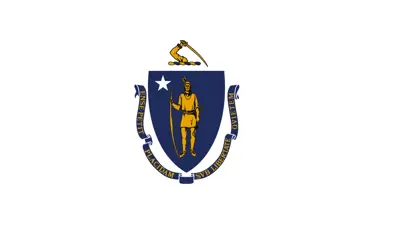
Massachusetts (/ˌmæsəˈtʃuːsɪts/ (listen), /-zɪts/), officially the Commonwealth of Massachusetts, is the most populous state in the New England region of the United States. It borders on the Atlantic Ocean to the east, Connecticut to the southwest and Rhode Island to the southeast, New Hampshire to the northeast, Vermont to the northwest, and New York to the west. The capital of Massachusetts is Boston, which is also the most populous city in New England. It is home to the Greater Boston metropolitan area, a region influential upon American history, academia, and industry. Originally dependent on agriculture, fishing and trade, Massachusetts was transformed into a manufacturing center during the Industrial Revolution. During the 20th century, Massachusetts's economy shifted from manufacturing to services. Modern Massachusetts is a global leader in biotechnology, engineering, higher education, finance, and maritime trade.
