Edward Ball Quotes
The topic of slavery is like an electric fence. Touch it and people will react.
Ball, Edward. Slaves in the Family. Farrar, Straus and Giroux, 1998.


Southern secession and the Civil War This is one of the major quotations with which historians rebut the revisionist view that the Civil War was about States’ Rights or other economic factors.


The language was removed in the negotiations that followed Jefferson's draft.


In early New England the General Court served as both a legislature and a judiciary before separation of powers was introduced. 5 years later the Court banned importing African slaves at all. While slavery was not common in Rhode Island, the laws was not seriously enforced on those who would defy them. It does represent a public anti-slavery sentiment that existed in Early America. It would take 200 years for Rhode Island to finally eliminate all forms of slavery.


As an entertainer she had toured much of the world and seen American slavery and that of some other nations. She became a staunch abolitionist and like entertainers in the 20th and 21st centuries she used her celebrity to give anti-slavery lectures and perform for audiences where she donated the proceeds of the event to the abolition cause. She is a particularly interesting political figure in that she seems to be one of the first entertainers to perform for a social cause and become an activist.

This was a very creative solution to the problem of slavery. Slave holders and their supports have always claimed that the paid valuable money to acquire a slave and slaves were valuable personal property. Freeing slaves was the government confiscating their wealth. The Pennsylvania solution was to say that the labor of a slave for 7 years was worth far more than the cost of a slave, so that under this law, slave owners could get their monetary value back and make a modest profit, and slavery would gradually disappear over a 7 year period if no new slavery were allowed. Although it made a lot of sense, the Southern States felt that their economy was different—that they could never get free white men to pick cotton.


What was particularly interesting about this quotation is that Pinkney was a political leader of Maryland, a slave state. He saw the injustice and immorality of slavery but like many others of our founding fathers assumed that ending slavery would infringe on the property rights of the slave holders. Others argued that there can be no right to deny others their basic rights—property and wealth are subordinate to natural rights. See {632258} and {632259} for more on this point.

Brown was the richest man in Rhode Island and made much of his money in the slave trade. This quotation shows that slavery was not completely a North verses South split. Northerners like Brown for whose family Brown University was named, was as virulent supporter of slavery as the most ardent Southerner.

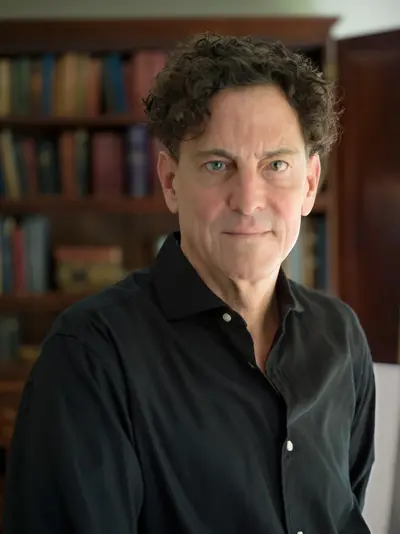
Edward Ball is an American author with six books of history and biography. The Ball Family Slaveholder Index (BFSI) reports that between 1698 and 1865, six generations of Ball family "owned more than twenty rice plantations in Lowcountry South Carolina and enslaved nearly 4,000 Africans and African Americans." Edward Ball, who completed his MA in 1984, began research into his family complex history and a series of books including Slaves in the Family in 1998 and the Life of a Klansman: A Family History in White Supremacy in 2020. In Slaves in the Family he described his great-great grandfather, Isaac Ball (1785-1825)—a fifth generation of the Ball family slaveholders—who had inherited the Comingtee plantation, near Charleston, and owned 571 enslaved people. In the Life of a Klansman: A Family History in White Supremacy, he told the story of his maternal great-great-grandfather, Constant Lecorgne (1832 - ), who had been officially classified as "colored", had changed his name, passed as white, and became an "embittered racist".
