Robert Smalls Quotes
There shall be a system of common schools ... to be open without charge to all classes of persons
It did not pass. Smalls had a hand in re-writing the Constitution of the State into which he had been born into slavery.
Robert Smalls, 1839-1915, U. S. Congressman (Republican, SC), Army General, Delegate to the South Carolina Constitutional Convention, Resolution at the Convention, 1868
Sourced by: Eigen's Political and Historical Quotations

Ironically, as important as education was to the early Americans, the words “education” and “school” never appeared in the Constitution nor is education even alluded to.


The phrase “national care and expense” was one that was seen as precedent for those advocating federal aid to education and a strong Department of Education. However, the majority of Adams contemporaries saw education, even public education, as a local matter. The word “education” or “school” never appeared in the Constitution. Adams was well before his time on this point.


This appears to be the first statewide free public education system available to the poor.


Quoted in the Court’s notes of the meeting


Oliver was a right wing, racist, fanatic and extremist. His quotations are interesting because he often said in public what many right wing extremists only said in private. Paranoia and conspiracy theories were common with the extremists, then as now. In this case, they actually believed that Communists had infiltrated and taken over the 30,000 different school districts in the United States.

In almost all societies until recent times, many uneducated people—especially from rural areas—were not enthusiastic about sending their children to school. They worried about losing the farm or factory labor of the children, losing control / influence, children learning unacceptable moral or religious ideas, and social mobility was so poor that many parents thought that it would never help the children.

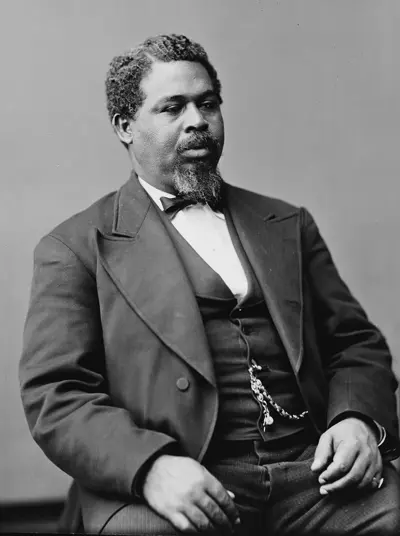
Robert Smalls was an American politician, publisher, businessman, and naval pilot. Born into slavery in Beaufort, South Carolina, he freed himself, his crew, and their families during the American Civil War by commandeering a Confederate transport ship, CSS Planter, in Charleston harbor, on May 13, 1862, and sailing it from Confederate-controlled waters of the harbor to the U.S. blockade that surrounded it. He then piloted the ship to the Union-controlled enclave in Beaufort-Port Royal-Hilton Head area, where it became a Union warship. His example and persuasion helped convince President Abraham Lincoln to accept African-American soldiers into the Union Army.
