Hezekiah Niles Quotes
There is no doubt as to the right of Congress to prohibit ... slaves in the territories, but also we would adhere to the bond of union at almost any sacrifice.
Missouri was to be admitted to the Union. But the anti-slavery forces of Congress insisted that slavery be outlawed in the new state. Most Southerners argued that Congress had no right to regulate the slavery issue claiming among other arguments that the fact that slavery had not been regulated in the Constitution or the Bill of Rights was evidence of the agreement of the founding fathers that slavery was never to be interfered with. However the specific agreement on the subject called for no legislation on slavery to be debated in Congress in its early years, but the time of that agreement was up. The “Missouri Compromise” ended the debate for a short time. Niles knew his fellow Southerners and felt that Civil War was coming and strived to hold the Union together by compromise even though he was a personal opponent of slavery.
Hezekiah Niles, 1777-1839, Editor and Publisher of Niles’ Weekly Register, Editorial, January 29, 1820
Sourced by: Eigen's Political and Historical Quotations


as opposed to bringing slaves into the territory of California. There was a recognition that the institution of slavery corrupted the whole society. It therefore was preferable to use Chinese contract labor to diminish agricultural labor costs. If the price of admission to the union was to allow slavery, this paper and its readership would think it too high and would rather be independent.


The Federal Fugitive Slave Act required all in free states to assist owners of escaped slaves to return them to their owners. In 1854 a Missouri slave owner tracked his escaped slave to Wisconsin and the Federal officials incarcerated the slave pending his return. A Wisconsin mob broke the slave out of jail and helped him escape to Canada. Sherman M. Booth, Publisher & Editor of the Wisconsin Free Soil Democrat was convicted under the Fugitive Slave Act for aiding the escape. Smith’s opinion overturned the Fugitive Slave Act on the grounds that it had usurped state’s rights. The Supreme Court overturned Smith’s ruling, but Booth was pardoned. See {587926} & {587928}. The more “dread calamity” was civil war which of course came a few years later.


See {613416} for the clause that the Southerners found so offensive.

Southerners from the slave states wanted California to be admitted to the Union as a slave state. But a large majority of Californians saw that as a terrible alternative. It was argued that the Southern states would never vote to admit California if it were a free state (see {613404}) and in order to make it clear to the South that admission as a slave state was out of the question, this clause was passed at the Constitutional Convention.

This is an example of the claim that slavery can not stand criticism. See William Lloyd Garrison: {613489}.

This editorial reflected majority Southern political positions of the time. There was never going to be any compromise by ending or curtailing slavery in any way. Amongst the abolitionists, there was an equally rigid view towards compromise. Many Northerners felt that the anti-slavery Americans had been compromising for half a century and slavery was a larger institution that it ever was. They wanted no further compromise. The South had never budged from its original position at the founding of the nation. Historically, it was just a matter of time before there would be a showdown politically and probably militarily. The explosion took 10 more years.
Some Lincoln critics point to this quotation to illustrate their belief that Lincoln’s emancipation of slaves was not based on deeply held personal moral convictions but was the result of pragmatic political forces pure and simple. Others believe that this statement to Greeley represented a political tactic to hold Maryland and Kentucky—then slave states—in the Union, but that Lincoln was waiting for the right time to adopt a policy of making emancipation paramount.


He also quoted this pledge in his Inaugural Address of March 4, 1837. Van Buren was a New Yorker but took this position to curry favor with the South and the merchants of New York City who made a great deal of money on the cotton trade of the Southern slave plantations. He kept his immoral pledge as the issue of slavery moved the nation closer and closer to the Civil War.

He was a Southerner who was opposed to Slavery. He understood both North and South and feared the Civil War 20 years before the event. See also his letter {615642}.
This quotation is often given by those who argue that Lincoln really did not care about the slavery issue. It is a terrific example of the limitations of quotations where there is artful rhetoric. Douglas, had in the 1st debate posed 7 “interrogatories” to Lincoln asking if he were pledged to certain positions regarding slavery. Douglas was trying to associate Lincoln with the most radical abolitionists in the land. By asking if Lincoln were pledged to the positions, Douglas thought that he had cornered Lincoln. For if Lincoln denied the pledges, he would appear to be backing off his anti slavery positions, and if Lincoln would not, then he would appear to support the most radical elements. Lincoln turned the rhetorical tables on his opponent. He first answered the question literally, emphasizing “pledged”. Just as Douglas thought he had forced Lincoln off his anti-slavery views, Lincoln stated what he would “like to see” as opposed to what he was pledged for. See {615826}.


In many respects, it is amazing that secession did not take place earlier.
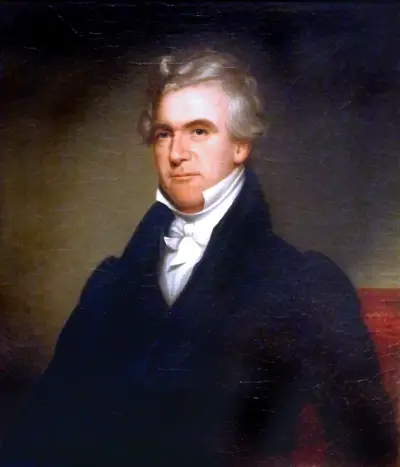
Hezekiah Niles, was an American editor and publisher of the Baltimore-based national weekly news magazine, Niles' Weekly Register (aka Niles' Register) and the Weekly Register.
