Elizabeth Cobbs Hoffman Quotes
There founding fathers not only wanted no military alliances, but they wanted no standing army.
American Military, PBS, September 23, 2016
Sourced by: Eigen's Political and Historical Quotations

No military alliances has been a tradition in American politics which broke down and changed in our allied effort in WWI. Harding and the Republicans of his day, wanted to reestablish that principle of American Foreign policy. They succeeded, but WWII and its Cold War aftermath made a major change in U. S. policy on this point, and NATO was not only a major permanent military alliance, but lasted well beyond the fall of the Soviet Union. America and our NATO allies were so pleased with the benefits of a permanent military alliance, that they preserved it by looking hard for missions that it could take on rather than dissolve NATO.

President James Madison expressed a similar sentiment in his first inaugural address.

America is almost unique among nations where the military has never been a force that either dominated or controlled the government or acted independently from it. The Founding Fathers knew well the history of Europe and other nations, and built many checks into our Constitution and our traditions with George Washington, setting the example for American military men forever after.


These two states actually prohibited their legislatures from maintaining a standing army. Similar sentiments were in the constitutions or bill of rights of New Hampshire, Delaware, Maryland and Massachusetts but the option was left with the legislatures. A similar phrase appears in the Virginia Bill of Rights of 1776.

The “entangling alliances” phrase was first used by Thomas Jefferson in his First Inaugural Address. He had been Secretary of State in George Washington’s cabinet. The phrase is often misattributed to Washington. The sentiment was definitely his also however.


Inscribed in the John Adams Building of the Library of Congress. On this subject Jefferson was in agreement with George Washington {37176} and his political opponent, John Adams {592705}.

Monroe was then Secretary of State and the U. S. was at war.


In early America, there was great concern about a standing army—a military force that exists and is organized in peacetime. History showed the founding fathers that tyrants who siezed power almost always did so by getting control of the standing army. The logic was if there is no standing army, no one can control it and therefore no tyrant can control the country by force. At the time, however, with oceans protecting us, there was penty of time to mobilize a defensive army should any foreign power invade. However, with modern military technology, and the importantance of retaliation as a protective3 strategy, it is virtually impossible to not have a standing army and stoll be secure.

Many modern Americans who look to the founding fathers for modern guidance regarding gun rights, foreign policy, and many other facets of government are shocked to learn that there was almost unanimous opposition to maintaining a standing army in times of peace. That there was very little concept of military preparedness.

The American sense of exceptionalism of the democratic republic we created and the almost messianic duty to extend freedom and democracy throughout the world is actually relatively new in American history. For most American existence, the sense of the desirability of spreading the American freedom was held from the very beginning, but it was very much inhibited by American isolationist tendencies and entanglements on other nation’s affairs.


This size standing army which alarmed so many at the beginning of the 20th century, looked very small when compared with the standing army of America a century later. For earlier American Politician’s views on a standing army, see {592824}, {631687}, {622888}, and {641008}.

at the NSA collection of every American’s private e-mails, phone calls, and other digital communications. Referring to the NSA program of collecting information on all electronic communications of all American Citizens. See {636963} for more on the case.
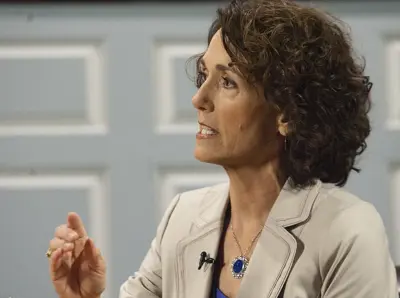
Elizabeth Cobbs Hoffman is an historian, commentator, and author of eight books including three novels, a two-volume textbook, and four non-fiction works. She holds the Melbern Glasscock Chair in American History at Texas A&M University and is a senior fellow at Stanford's Hoover Institution.
