Henry Vane Quotes
When once the whole body of the good people find that the military interest and capacity is their own, … and that in this posture they are most properly sovereign, … they will presently see a necessity of continuing ever one with their army, raised and maintained by them for the promoting this cause against the common enemy
Henry Vane, 1613-1662, English Diplomat & Religious Reformer, Governor of Massachusetts, Healing Question, 1656
Sourced by: Eigen's Political and Historical Quotations


President James Madison expressed a similar sentiment in his first inaugural address.


If a military loses a war, it has shown to be insufficient quality; if it wins, the evaluation is good. With all the talk about what makes for an effective and quality military, as the General states, it is war that is the final arbitrator. So ideally we never want to really know how good our military is.


The lack of military preparedness of the United States for the First World War by then was evident and a major subject of political discussion. Mitchel was a “hawk” for his day. He was defeated the next year and joined the military flying service but died in 1918 when he forgot to fasten his seat belt in the airplane and fell from the plane to his death.

The French and English, with larger numbers and more experienced troops and officers, wanted the American units to come under the command or their officers and be integrated into the allied army. However Wilson established the tradition that American troops fighting abroad most always fight as an American Army under American Command. Although resented then and into the 21st century by America’s allies who are expected to fight under American command, it is a tradition that no American major politician has seriously challenged since then.

If we replace the word “socialist” with “capitalist” this statement would be approved by almost every American Senior Military officer and Defense Official as well as most members of Congress. The reality was that the basic defense posture of the Soviet Union and the United States was essentially the same during the Cold War.


More than a decade before Hamilton wrote this, a Maryland commission used the phrase “well regulated militia” earlier. (See {588394}.) It would be less than 2 years before the phrase “well regulated militia” would be added into the Constitution in the 2nd Amendment of the Bill of Rights—September 25, 1789. The Maryland resolution was the last of several passed at a meeting by which Maryland endorsed resistance to the British before the actual Revolution. So these resolations would have been widely distributed throughout the colonies and known by the leaders. Whether the drafters of the 2nd Amendment got the phrase from Hamilton’s Federalist 29 or from the Maryland Resolutions is not known but Hamilton’s was much more current. Did he get the phrase from Maryland? Did Congress get it from him? Did Maryland originate the phrase or was there an earlier use that influenced the Maryland drafters? At this point no one is sure, but the phrase is critical to the meaning of the 2nd Amendment because the Supreme Court has repeatedly held that the Second Amandment does not apply to individuals but only to the State’s right to bear arms within the “well regulated militia” and not as individual citizens. The right is that of the State government and that is why a state can control guns including banning them if they choose. So an individual in America does not have the constitutional right to bear arms. He may have a state constitutional right but in other states he may not use a gun in certain places and may not possess certain types of guns like hand guns which are illegal in New York, Washington DC and some other places.


Just 7 months earlier the King had made a direct appeal to the people for enlistment in the military—See {587166}. The response was very good, but the First World War developed in such a way that huge manpower resources were needed and the King had to reluctantly assent to a military draft.


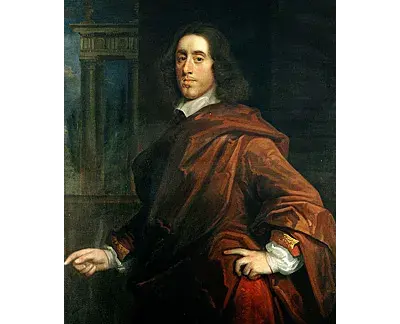
Sir Henry Vane (often referred to as Harry Vane and Henry Vane the Younger to distinguish him from his father, Henry Vane the Elder) was an English politician, statesman, and colonial governor. He was briefly present in North America, serving one term as the governor of the Massachusetts Bay Colony, and supported the creation of Roger Williams' Rhode Island Colony and Harvard College. A proponent of religious tolerance, as governor, he defended Anne Hutchinson and her right to teach religious topics in her home which put him in direct conflict with the Puritan leaders in the Massachusetts Colony. He returned to England after losing re-election and eventually, Mrs. Hutchinson was banned from the colony.
