Naotake Sato Quotes
There crises are of Japan’s own making.
The Crises to which he was referring were the rapidly increasing hostility between Japan and the United States, Britain, and Russia. The very heavily military influence and participation in the government produced a very aggressive foreign policy of expansion in Asia. Sato resigned after two months in office, and served as a senior diplomat thereafter. Towards the end of the war with America & Britain, he was selected as the Japanese diplomat to try and keep Russia out of the war and assist with a negotiated peace. However, by the time he was authorized to approach Russia, the Japanese military situation was so bad that it was clear to the Russians that Japan could not win, so they joined the Allies, declaring was against Japan. After the war, he was one of the few Japanese political figures who had both moral credibility with the Allies and the respect of the Japanese people. He was appointed President of a group of diplomats that would advise the Japanese Parliament regarding foreign affairs.
Naotake Sato, 1882–1971, Foreign Minister of Japan, President of House of Councilors of the Diet, Speech to the Diet (Parliament), 1937
Sourced by: Eigen's Political and Historical Quotations

The United States and England maintained officially that their stance was moral and ethical. And it was for most Americans and Britons. However, there were some, whose motivation was economically self-serving as this quotation suggests. The less control Japan had over China, the more other countries could freely trade with China.

The then Attorney General had established a back channel to the Russian agent. There was genuine fear by the Russians and some in America that there were still many Nazis and German nationalists who would try and influence, if not take over, German politics to produce another aggressive German fascist state. The Russians had lost 22 million citizens to the Germans in the war and had faced a defeated Germany where virtually every German over the age of 30 had been cheering for and supporting Hitler a decade ago. Neither the Russians nor we and the other allies had not yet seen the remarkable turn-around that the German nation would make and the intense anti-fascist, non-military ethos that would be brought by the younger German generations. The direction of Germany was then very unpredictable.


The final decision regarding the attack on Pearl Harbor and war with America had to be made. The Emperor Hirohito, Prime Minister Tojo, the full cabinet and leading elder statesmen were invited. Hara attended as one of the latter class. America had instituted an embargo of critical raw material whose end was contingent of Japan withdrawing from the territory that they had invaded and stop their territorial aggression in Asia, an aggression which some Japanese leaders—notably the military—was absolutely necessary to provide for the growing Japanese population and its increasing standard of living. At the time, an embargo was a powerfully effective weapon, which left Japan only two choices: Withdrawal or War. In modern times nations have chosen to endure and evade embargoes rather than be forced into undesirable positions.

This was very much a minority opinion at the time, and has much historical significance as he was the father of the British Prime Minister, Neville Chamberlain, 1869-1940, whose appeasement of Germany led to Word War II. . See {585941}.


A little over a decade later the struggle began.

A few months later, that is exactly what Germany did. She was hoping that England would not enter the war despite her treaty obligations, but she was willing to risk the possibility. The Czar had a strong espionage and intelligence service active in Germany, but, like so many other intelligence failures, the intelligence operatives and analysts had military and economic facts but had little understanding of the German culture which propelled Germany to what to most other cultures was “irrational policy making.” People and nations often engage in irrational activities, even against their own self-interest.


Chamberlain’s policy was to appease Hitler and Germany to avoid war. Although he did not see Czechoslavkia as a critical British national interest and claimed he had secured peace {585941} , the reality was that he gave Germany room to start its aggression which would engulf all of Europe and much of the world. The British became the only bulwark against Hitler until the Russians stopped the Germans and America entered the war.


This was the 14th part of the Japanese reply to a previously made American peace proposal. The Japanese policy was to unite all of Asia into a co-prosperity sphere controlled by Japan where Japan would militarily conquer those Asian countries which did not “voluntarily” want to join. The Japanese were in the process of conquering China and the United States and Britain had embargoed oil and other material to Japan trying to pressure them to withdraw their troops from China and cease Japanese conquest by force. Japan believed that it was their right to conquer and control Asia and it was beneficial to the region, and that the U. S. and Britain had no right to curtail the expansion that Japan required to assure raw materials and other necessities. At the very time that these negotiations were on going, the Japanese fleet was sailing for the sneak attack on Pearl Harbor. The attack took place the very day this part of the Japanese reply was received.

At the beginning of the Battle of Britain, it appeared that England would not be able to hold out against Germany. King was asked by Roosevelt to try and persuade British officials that if they sued for peace that they would not turn over the British fleet to the Germans but would convey it to Canada. Such an act would have produced serious retribution by the Germans.

In 1945 a message was sent to Joseph Stalin from the Japanese purportedly authorized by the Emperor asking the Russians to receive a peace envoy to discuss possible terms for a Japanese surrender. A prince of the imperial household was proposed as the emissary. The allies had already agreed and announced that unconditional surrender was the only alternative, but Stalin and the Russian Foreign Office thought that there might be some advantage gained to have the meeting. However there was one problem that the Japanese had never considered. When Stalin told Truman of the initiative, Truman agreed that no one should meet him.
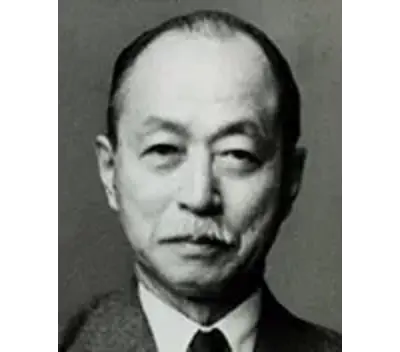
Naotake Satō was a Japanese diplomat and politician. He was born in Osaka. He graduated from the Tokyo Higher Commercial School (東京高等商業学校| Tōkyō Kōtō Shōgyō Gakkō, now Hitotsubashi University) in 1904, attended the consul course of the same institute, and finished studying there in 1905.
