Mary Boykin Chesnut Quotes
The Yankees in their papers claim every victory that we claim in ours. It is very tantalizing, puzzling.
She was not alleging parity of the two sides here. While many of the military of the North tried to put the best face on battles, the Northern newspapers were actually savage about reporting Union casualties and battles lost—often exaggerating the ineptitude of the Union military leaders. In the South however, in most cases where there was a Union Victory the Southern papers reported it as a hard fought, high casualty, narrow victory for the South. The major Northern newspapers would also claim a Union victory hence her quotation. However, later she and many other educated Southerners really understood the that the South—all the institutions and most people tended to be in denial about the war. See {633930} for her more realistic view late the following year.
Mary Boykin Chesnut, 1823-1886, Wife of South Carolina U.S. Senator, Confederate Army General, James Chesnut, Jr., Diary Entry, September 18, 1861
Sourced by: Eigen's Political and Historical Quotations

General Grant had just accepted the “Unconditional Surrender” of the 15,000 Confederate troops and 48 large cannon. Yet the South described the battle as a “standoff” and a “draw”. This quotation is very significant because it illustrates two very important dynamics of the Confederacy. First that the Southerners consistently lied to themselves and to each other about their situation in the war. Whether this was the elite manipulating the mass of the people or large scale self-delusion by most has been debated since. Second, Chesnut’s statement illustrates that it was common knowledge that the reports about the war were false and exaggerated for the Confederate side and just part of the extensive propaganda campaign of the Confederacy.

This quotation is historically very interesting. Southern educational materials were extremely scarce with paper one of the commodities most in short supply as the only book paper in the South came from England and had to be smuggled through the Union blockade. Yet the priority was so high that paper was made available in the midst of the Civil War. Confederate civilian morale was a very serious problem while at the same time large numbers of Southern civilians and military were delusional about the Confederate fighting capability. Central to that theme was the myth that the Southern soldier, fighting for such a righteous cause, was several times more effective than his Yankee counterpart. Therefore, the fact that the South was outmanned, out gunned, and out supplied, did not imply a Union victory. So teaching this to the young Southern children who would spread it to the adults on the home front, was a conscious Confederate propaganda effort at this time. Also, the use of these kinds of death and killing arithmetic problems for young children, while considered patriotic in the South was thought to be gross, crude, uncivilized and unchristian by most in the North. The implied 90 to 1 superiority ratio was laughed at in the North, but actually believed by a substantial number of Southerners.


by recent Southern military losses Ironically, it was the Southern States and Southern politicians who had ever since President Andrew Jackson, illegally appropriated most of the Indian lands. It was the Supreme Court who ordered Jackson not to remove the Cherokee, but he and the other Southerners did so anyway with mild protest coming from the North. Neither section treated the Indians fairly, but the South had been much worse.

One of the puzzles of American Civil War history has been how the poor whites of the South (who provided most of the military manpower that fought and died in the Civil War) were persuaded to fight against a much stronger, more highly industrialized, and more affluent few, that had many more soldiers. One of the main reasons, though difficult for us to understand today, was that the Southern leadership actually persuaded the Southerners that men from the North were cowards and lacked the character, virtue or will to fight. The general “party line” of the South was that one Southern solder was worth more than 5 Northern Soldiers,


When he referred to "the noose" he was connoting one of the major ways the Southern Segregationists and racists maintained white supremacy and Jim Crowe after the Civil War: Lynching. They terrorized blacks and whites who had different views by kidnapping their victims, torturing them, hanging them, and often mutilating their bodies after the murder. They never were convicted because the Southern law enforcement officers were often part of the lynch mob, the judges were usually themselves racist segregationists, and if jurors voted to convict in the few cases that went to trial, they themselves were risking lynching. From 1882-1968, 4,743 lynchings occurred in the United States. Of these people that were lynched, 3,446 were black.

As Secretary of State, Powell was going to address the UN Security Council on the 5th and he was coordinating his speech with the other agencies of the government. His criterion was that he only wanted to make accusations that were backed up by incontrovertible evidence. However, VP Richard Cheney and his aide, Scooter Libby, kept inserting an accusation that Iraq was involved with and supported Al Qaeda. This was one of the many speculations that those who wanted to justify attacking Iraq kept using as Domestic propaganda. When Powell asked for proof or intelligence reports and none could be provided, he removed the accusation from the speech explaining why. However, at the last minute, Cheney and his staff put the accusation back in, and that triggered the quotation. Unfortunately, Powell was so busy fending off totally absurd accusations, that he accepted the CIA assurances {79468} that Iraq was developing nuclear weapons that were about to be operationalized and never heard from those who questioned the credibility of the sources for the basic accusation. Powell had great trust among the diplomats of the world then gave the United States version to the Security Council and justified our coming invasion of Iraq. But the intelligence report, despite the assurances of the CIA and the Vice President, was false and Iraq not only was not close to a nuclear weapon but he had no program at all at that time to try and develop one. Powell resigned and his credibility about the world was ruined as he was then seen as just another lying politician.


The Attorney General, Edwin Meese, told the senator that the United States was winning the war on drugs. The senator asked him:


Garrison and some of the other radical abolitionists actually argued for dissolution of the Union as a means to end slavery. These abolitionists were convinced that if the United States split in two, slavery would end. See {613764} & {613626} for a description of the logic.

Committee of the Congress. This was the prevailing Congressional and public view except for the South which had coalesced around an intellectual rationalization. See {618013}.


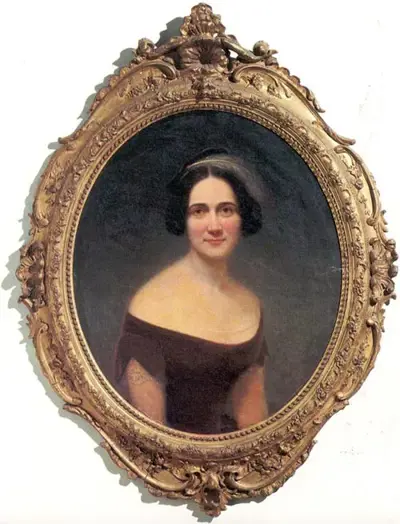
- Born: March 31, 1823
- Died: November 23, 1886
- Nationality: American
- Profession: Author
Mary Boykin Chesnut (née Miller) was an American author noted for a book published as her Civil War diary, a "vivid picture of a society in the throes of its life-and-death struggle." She described the war from within her upper-class circles of Southern planter society, but encompassed all classes in her book. She was married to a lawyer who served as a United States senator and Confederate officer. Chesnut worked toward a final form of her book in 1881–1884, based on her extensive diary written during the war years. It was published in 1905, 19 years after her death. New versions were published after her papers were discovered, in 1949 by the novelist Ben Ames Williams, and in 1981 by the historian C. Vann Woodward. His annotated edition of the diary, Mary Chesnut's Civil War (1981), won the Pulitzer Prize for History in 1982. Literary critics have praised Chesnut's diary—the influential writer Edmund Wilson termed it "a work of art" and a "masterpiece" of the genre—and the most important work by a Confederate author.
